


Treatment Of Lupus. Part 2
Description
This section is from the book "A Treatise On The Materia Medica And Therapeutics Of The Skin", by Henry G. Piffard. Also available from Amazon: A Treatise On The Materia Medica And Therapeutics Of The Skin.
Treatment Of Lupus. Part 2
The scarifications being made in one direction they are then to be crossed, as in the cut (Fig. 13). In a week the incisions will have healed, and the operation is to be repeated four or five times or more, if necessary. The pain of the operation may be controlled by local anaesthesia.
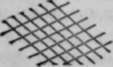
Fig. 13.
It is claimed that by this procedure the cells constituting the infiltration will undergo organization and transformation into connective tissue * and that very little, if any, scar will result. If relapse should occur, the operation is to be repeated.
The lupous infiltration may also be destroyed in situ by the application of powerful caustics, as chloride of zinc, Vienna paste, etc., or the use of the actual cautery.
The mechanical removal of the infiltration was first attempted by Volkmann, + with the aid of a small spoon-shaped curette. With this instrument the lupous tissue is removed by scraping. As the infiltration is softer than the normal tissue, there is no difficulty in removing most of it in this way, but unfortunately it is rarely possible to remove the whole of it. Removal of all the lupous cells, however, is the necessary condition of ultimate success. Healing occurs promptly after Volkmann's method, and the scar is a good one.
These are the methods chiefly in vogue among dermatologists at the present day, and if asked which is the best one, or what is the best method of treating this disease, I should be forced to reply that there is no one "best method," but that each case must be studied by itself, and the method adopted which seems best suited to it, and, as a general rule, a combination of two or more of the methods above mentioned will give, on the whole, more satisfactory results than an exclusive employment of any single one of them. Bearing in mind that the sole surgical indication is to remove or destroy the entire infiltration, and, to do it in such a manner as to infliet the least damage on neighboring structures, the probable efficiency of the different methods may be readily estimated, and their adaptability to a given case accurately determined.
For several years the author has entirely abandoned the use of alkaline or acid applications, employed with a view to procure absorption of the infiltration, the method being too tedious and too uncertain in its results to be recommended. This brings us at once to surgical procedures, and experience leads me to advise the following: If the patch be small and conveniently located, as on the cheek, forehead, etc., it should be immediately excised, together with at least one-sixteenth of an inch of apparently healthy surrounding integument. The edges of the wound may be approximated with a suture, the parts dressed with a lotion or ointment of calendula, and permitted to heal. If the patch have attained an area of one-half to three-quarters of an inch in diameter, and exhibits no evidence of commencing central interstitial atrophy, the dermal curette is brought into play and the diseased surface thoroughly scraped. The infiltration will break down like old cheese, while the normal integument will resist the action of the scraper. When as much of the infiltration as possible has been thus removed, and the surface of the traumatic ulcer thoroughly cleaned and dried, a potential caustic, or the actual cautery, should be" applied. This is necessary, as it is impossible to remove, by scraping alone, all of the lupous cells; some of them at the margins of the infiltration extending into the apparently healthy adjacent skin. Of the potential caustics, the chloride of zinc, alone, or mixed with an equal quantity of the solution of the chloride of chromium, is, on the whole, so far as my experience goes, the most satisfactory. The caustic being applied, a little absorbent cotton (as much as will stick to the part), is pressed on, and the wound left to take care of itself. In from two to three weeks, sometimes longer, the crust will become detached, and the whole or greater part of the lesion will be found healed, or in a healing condition. The caustic is somewhat painful, and the swelling and reaction greater with the mixed chlorides than with the zinc alone. The mixture, however, appears to me to be more effective than either of the chlorides used by itself. The actual cautery (Paquelin's), however, is for several reasons better than the potential. First, the pain, except at the moment of application, is much less; second, the slough separates more quickly; third, the part heals sooner; fourth, there is less local reaction; and fifth, a better scar results. The lesion having been properly scraped and dried, the Paquelin is brought to as near a white heat as possible, and slowly moved over the surface, being kept in contact with the tissue long enough to produce an eschar about one millimetre or a little more in thickness. A bit of absorbent cotton is then applied, and without further dressing the wound is left to take care of itself, which it will usually do in the most satisfactory manner.
* Beraier, 106.'80. 702.
+ Lupus and Mine Behandlung, 1870.

Fig. 14. - The author's dermal curette. Of this instrument I employ several sizes, the one shown being the smallest. and in the cut is reduced one-third in size.
If the lesion has existed for several years, and has attained an area of a square inch or more, the probabilities are that interstitial atrophy will be evident in the central and older portions, while the advancing margin will be in slight relief above the surrounding skin. In these cases the central parts already undergoing resolution do not absolutely require active treatment; but the advancing margin should be vigorously attacked. The curette should be employed, followed by either an efficient caustic or the actual cautery. The central portions may afterward be treated to advantage by multiple scarification, in order to transform the cells into fibres,* and thus procure an earlier and less depressed cicatrix than if the involution of the lesion is left to the unaided efforts of nature. While I consider the compound methods, just advocated, better than exclusive devotion to a single one, it must not be supposed that any plan of treatment yet devised is infallible. The tendency to relapse, or reappearance of the lesion in the cicatrix, is more frequent in Lupus erythematosus, I think, than in any other form of the disease; and the recurrence of the lesion may be looked for any time within a year after the operation. If this does not occur within a twelvemonth the case may be regarded as cured, unless fresh lesions shall have developed elsewhere in consequence of a strong constitutional predisposition in that direction. The whole question of relapse in situ resolves itself into the simple matter of thoroughness of operation. This thoroughness, however, must be tempered with suitable respect for the neighboring healthy tissue. It will not do to remove half the cheek to get rid of a pea-sized lesion. It is simply a question as to how much of the apparently healthy structure should be destroyed in addition to that which is manifestly diseased.
* The statement of Vidal that this will occur as a result of scarification at first seems hardly credible, but it must be remembered that organization and fibrillation of lupous cells sometimes occurs spontaneously in hypertrophic lupus vulgaris, as I have personally observed and elsewhere recorded (87, 110).
Continue to:


My Books

