


Treatment Of Lupus
Description
This section is from the book "A Treatise On The Materia Medica And Therapeutics Of The Skin", by Henry G. Piffard. Also available from Amazon: A Treatise On The Materia Medica And Therapeutics Of The Skin.
Treatment Of Lupus
The extreme difficulty of successfully combating many, if not most, cases of Lupus, necessitates a very thorough consideration of every point bearing on the subject. In this, as in all chronic affections, the hygienic surroundings of the patient should first be inquired into. Is he living under the best conditions possible? If not, is it practicable to improve them? These points being satisfactorily settled, we come to what may be termed the etiological treatment, that is to say, the management of the underlying scrofulous diathesis. In many instances this diathesis does not present wry pronounced features, and less attention may be paid to it, and the ultimate prognosis may be regarded more favorably. On the other hand, the most obstinate and continually relapsing cases are those in which we find the most marked evidences of constitutional impairment. The drugs that are supposed to be most useful in this connection are cod-liver oil and preparations of iodine and iron, together with a few others that have been less extensively employed. Among these, juglans regia, chlorate of potassium, small doses of mercury, etc., may be mentioned. Cod-liver oil deserves the first place, and may be riven in almost any dose to advantage, and most usefully, I think, in the largest doses that the patient can bear. Emery, of Paris, was the first to employ in Lupus what must certainly be considered very large doses of the oil, namely, from half a pound to a pound daily, with asserted advantage. Personally, we have in one instance given half a pound daily for several weeks, with apparent temporary benefit. We believe, however, that all the good that is attainable from the oil will be derived from doses much smaller than these, but yet larger than are ordinarily employed. Of the metallic preparations the Iodide of iron is the favorite, and probably the most useful. The ordinary dose of ten or fifteen minims of the officinal syrup two or three times a day, given in the oil or separately would be appropriate. With Juglans regia the author has no experience, but believes that the statements concerning it by Negrier (p. 72) deserve consideration.
* I have elsewhere (87, pp. 103-114) quite fully discussed the histology of the various forms of Lupus, both from the standpoint of my own observation and that of others.
Besides what may be termed the etiological treatment, additional in-ternal medication will often be advisable, and energetic, local treatment will, in most, if not all cases, be requisite. The importance of local treat-ment will be appreciated when we consider the fact that we are dealing with lesions which tend to gradual extension and involvement of new regions by an apparently infective process similar to, but less in degree than that manifested by cancer. This infective quality is evidenced by the fact that, if a patch of lupus be incompletely destroyed, the disease will most certainly return. The plain indication then, is to remove the lupous infiltration as soon and as thoroughly as possible. From these general considerations we pass to treatment of the different forms of the disease.
Treatment Of Lupus Erythematosus
Internal treatment first requires notice. So far as I am aware, we possess no medicinal agents capable of exerting a specific or elective influence over the lupous process. It does not follow, however, that benefit will not ensue from the judicious use no! only of the drugs already mentioned, but also of some others. Phosphorus is certainly capable of influencing the disease, but it is a two-edged sword that must be handled with great circumspection. How it acts in Lupus, I cannot say, but as we know that one of the pathogenetic effects of Phosphorus is the induction of fatty degeneration, it is not unreasonable to suppose that it induces fatty degeneration in the lowly vitalized lupous cells in doses that are insufficient to effect a like result in healthy organs.
Quite recently Anderson has introduced to notice an internal remedy that has proved of service in his hands. This is the Iodide of Starch, given in doses of from one to two drachms three times a day. I have, as yet, been unable to form an opinion concerning its real utility. Besnier (106, '80, 698) states that he has cured two cases of erythematous lupus by the internal administration of Iodoform, in doses of from eight to fifteen grains daily. It is not wise, however, to rely on internal treatment alone, but in conjunction with it suitable local measures should be employed. The methods of local treatment at present in vogue endeavor to accomplish one of three objects, either to produce absorption of the lupous cells, to destroy them in situ, or to remove them mechanically.
The first of these methods has been extensively employed. Absorption of the infiltration, when limited, may sometimes be procured by the use of strong alkaline applications, such as the Sapo Viridis, Liq. Potassae, etc.
The green soap, if employed, should be thoroughly rubbed into the part night and morning, until considerable reaction is induced. When this has subsided, the use of the soap is resumed, until, after a number of courses, the infiltration has disappeared, which will be the case in a certain number of instances. Instead of pure green soap, a mixture of four parts of soap with one of oil of cade may be employed, or the Spirit us saponatus kalinas, may be used. The Liq. Potassae may be employed daily, or thrice or twice weekly, according to the degree of reaction produced. Instead of alkalies, acids may be employed, the most useful, in my experience, being the glacial, acetic, or the mono-chlor-acetic acids. Some of the French authors strongly recommend the use of the biniodide of mercury in ointment of sufficient strength to produce very decided local reaction. This method of treatment is certainly effective in a certain number of cases. The objections to it, however, are weighty. These are the length of time (usually several months) required to procure the absorption of a patch of even limited extent, and the pain and suffering that the patient has to undergo during this period. The second method - that is, the destruction of the lupus cells in situ - is more quickly effective, and, on the whole, accompanied with less inconvenience to the patient. In carrying this out several modes are at our command. First that of Hebra, which consists in thoroughly perforating the lesion with a pointed stick of nitrate of silver. This I have facilitated by using an irido-platinum needle (Fig. 10), coated by fusion with the nitrate salt.

Fig. 10. - Irido-platinum needle.
Second, the method of Dubini * deserves mention. This consists in making hundreds of fine punctate scarifications, with some double-edged sharp-pointed instrument, as an ordinary lancet. The punctured spots should be covered with lint, well pressed on to stop the bleeding, and left attached till it falls spontaneously. The operation should be repeated in from two to four weeks, from three to eight operations being usually sufficient. Vidal+ believes that he has improved on this procedure by employing linear instead of punctate scarification. He uses a scarifier of the form shown in the cut (Fig. 11).
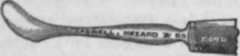
Fig. 11. - Vidal's lupus scarifier.
* Rapp. dell' Ospedale magg. Milano, 1865. + Du Lupus. Paris, 1879.
Squire (116, 1/80, 654) believes that he has imparted still greater efficiency to the operation by the use of his multiple scarifier (Fig. 12).
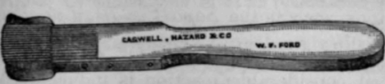
Fig. 12. - Squire's multiple scarifier, one-half size.
Continue to:


My Books

