


Chapter XXXIII. Typhoid Fever
Description
This section is from the book "Diet In Sickness And In Health", by Mrs. Ernest Hart. Also available from Amazon: Diet in Sickness and in Health.
Chapter XXXIII. Typhoid Fever
Typhoid fever is caused by the presence in the intestines of a minute bacillus, which is most commonly introduced into the body by the means of polluted water or milk, or, as some suppose, by aerial transport in sewer gas, etc. It finds its proper soil or nidus for vigorous life and multiplication in the solitary glands and in Peyer's patches of the small intestine, as well as in the mesenteric glands. The solitary glands of the small intestine are about the size of a millet seed, and are found scattered over every part of the mucous membrane of the ileum. They are simple in structure, being composed merely of dense net-like tissue, the meshes of which are closely packed with lymph corpuscles. They are pervaded by fine capillaries and surrounded by a rich plexus of lymphatic vessels. The nodules bulge towards the interior of the gut, and their bases are situated in the submucous tissue. Their upper surfaces are free from villi. Peyer's patches are simply collections of solitary glands. They are oblong in shape, and are about an inch in width and from half an inch to two or even four inches in length; they are found placed lengthways opposite the side of the intestine which is attached to the mesentery.
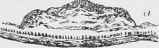
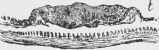
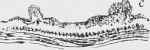
Fig. 12. - Diagrammatic Representation of Peyer's Patches in Typhoid Fever.
a. Early stage with swelling of the patch; b. Later stage with sloughing; c. Ulcer with infiltrated walls (from Thierfelden).
Continue to:


My Books

