


Rhythmic Segmentation And The Pendulum Movement
Description
This section is from the book "The A. B. - Z. Of Our Own Nutrition", by Horace Fletcher. Also available from Amazon: The A. B.-Z. Of Our Own Nutrition.
Rhythmic Segmentation And The Pendulum Movement
There is little doubt that the segmentation of the food which I have seen is due to an activity of the intestinal musculature similar to that which causes the so-called pendulum movement. This activity, as already noted, is rhythmic, and, although accounts differ, analytical methods prove that it involves both the longitudinal and the circular layers of muscle. Observations of the effect of the rhythmic contractions upon the food show that the action of the circular fibres is most prominent. It is probable, however, that the longitudinal fibres also play an important part in the process of segmentation. Examination of Figure 2 makes clear that in line 2 the regions of constriction appear between the regions of constriction in line 3; before c can be formed, therefore, the constriction between a and b must relax. Contraction of the longitudinal fibres between two segments would help to enlarge the constricted lumen of the gut. It seems probable that, as the constrictions on either side of c occur, the longitudinal fibres between them contract; almost simultaneously the constriction between a and b relaxes, and the two particles are thus brought swiftly together. A similar process naturally would take place for each of the shifting segments.
Thus the function of the longitudinal muscles would be to contract between new rings of constriction and thereby aid in relaxing the former ring between them. During my one observation of the segmenting process, as seen on the surface of the intestine, I could not be sure that the distance between neighbouring segments was shortened as the constriction relaxed; that activity of the longitudinal fibres is present, however, is indicated by observations of Raiser on the intestines of the rabbit and the cat. Raiser observed the outer surface of the coils, and describes the normal movement as an alternate contraction and relaxation of single divisions of the longitudinal fibres; he notes that these short divisions shift. But whether they shift in alternation with the shifting circular constrictions, as seems probable, is an interesting point not yet determined. Bayliss and Starling state that the swaying pendulum movements are essentially due to peristaltic waves recurring in the same place and running rapidly downward. This form of the movements I have seen only once. At this time about 90 c.c. of soapy water had been injected. This procedure has the effect of exaggerating in every particular the movements of the small intestine.
In this instance a broad constriction appeared about the middle of a long string of food and persisted there while it spread down the gut. As the contraction spread, the gut swayed slowly to and fro before it. Then there was a relaxation, followed by a recurrence of the constriction in the same place, a spreading of the contraction, and a swinging of the loop just as before. This phenomenon was repeated again and again, till finally the string was divided and the forward piece pushed through a tortuous course to the colon.
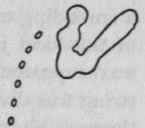
Figure 5. - Tracing showing seg-mentation of chyme in the duo-denum . This and other tracings reduced two-thirds.
Continue to:


My Books

