


Peristalsis
Description
This section is from the book "The A. B. - Z. Of Our Own Nutrition", by Horace Fletcher. Also available from Amazon: The A. B.-Z. Of Our Own Nutrition.
Peristalsis
The phenomena of peristalsis and segmentation are usually combined in some manner while the food passes through the small intestine. Peristalsis is observed normally in two forms: as a slow advancing of the food for a short distance in a coil, and as a rapid movement sweeping the food without pause through several turns of the gut. The latter form is frequently seen when the food is carried on from the duodenum; and it may readily be produced in other parts of the small intestine by giving an enema of soapsuds.
1 Without the possibility of seeing the relations of a movement to the ends of the intestine, it cannot be stated absolutely whether the movement is peristaltic or antiperistaltic. Such relations can be seen on the fluorescent screen only near the stomach and near the ileocecal valve. The evidence that advancing peristalsis is the normal movement is so overwhelming that I have assumed that when food is moving in loops not visibly related to fixed points it is moving forward.
When a mass of food has been subjected for some time to the segmenting activity of the intestine, the separate segments, instead of being again divided, may suddenly begin to move slowly along the loop in which they lie.
That this movement is not a swinging of the coil as a whole, but a peristaltic advance of separate rings of its circular musculature, is made probable by the fact that the succeeding segments follow along the same path their predecessors have taken. The advance of the little pieces may continue for seven or eight centimetres, when finally the front piece stops or meets other food. Then all the succeeding pieces are swept one by one into the accumulating mass, which at last lies stretched along the intestine, a solid string manifesting no sign of commotion.
Another form of slow peristalsis is frequently observed when the food is pushed forward, not in small divisions, but as a large lump. The relatively long string of food is first crowded into an ovoid form as the forward movement begins, and as it is collecting thus, it seems at the last to be suddenly formed into a more rounded ball, as if the mass were pulled or pushed together at the two ends. The next moment it is indented in the middle by a circular constriction (as shown in Fig. 4, line 2), which spreads it in both directions along the loop. The trailing portion (a) is next cut in two, and the severed part sometimes flies back over its course about a centimetre. Now the whole mass is swept together again and slightly forward as shown in line 4, Fig. 4, and the segmenting process is repeated. At stage 3, Fig. 4, a constriction sometimes appears around the middle of the advanced portion (b). Thus, with many halts and interruptions, the food slowly advances.
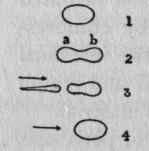
Figure 4. - Diagram showing combined peristalsis and segmentation.
A slight variation of the movement just described is observed when the amount of food is greater and extends farther along the intestine. Under such circumstances, as the mass moves forward, constrictions appear just in front of the rear end, which separate it from the main body, and cause it to shoot backward sometimes through the distance of a centimetre. The main body meanwhile is not disturbed. No sooner has the rear section been shot away than it is swept forward again into union with the rest of the food, and the whole mass then advances until another interfering constriction repeats the process.
Continue to:


My Books

