


Corn Or Indian Meal Mush
Description
This section is from the book "Food And Health: An Elementary Textbook Of Home Making", by Helen Kinne, Anna M. Cooley. Also available from Amazon: Food And Health: An Elementary Textbook Of Home Making.
Corn Or Indian Meal Mush
How to cook. This is cooked by the same method as the other cereals, except that the amount of water is larger and the first boiling should continue longer. The meal must be scattered slowly into the boiling water, or else be mixed first with cold water, as it lumps very easily. The second stage of the process should continue several hours.
A word about rye and rye meal. We Americans are forgetting to use rye as our forefathers used it. This is a great pity. Rye is a most wholesome grain, ground into meal and made into "mush." Mixed with corn meal it gives us delicious yeast bread and quick breads. If rye is raised in your neighborhood, do supply yourselves with rye meal, and use it. Rye flour is easier to find for sale than rye meal, but it cannot be used in quite the same way. The rye flour will make a yeast bread.
Cooking rice. Rice varies very much in quality and in the shape of the grain. Louisiana and Chinese rice are among those that have a firm and large grain, keeping its shape well when cooked. Inferior varieties become too soft, and the finished product is pasty and poor in color and flavor. Much is said at present about the harmful effect of the polishing process upon the quality of the rice. An unpolished rice may sometimes be found on the market, brownish in color and with a good flavor.

Fig. 72. - Sections of a rice kernel: I, bran coat; 2, aleurone layer, containing valuable mineral salts; 3, cells packed with starch grains; 4, germ, containing fat and mineral matter.
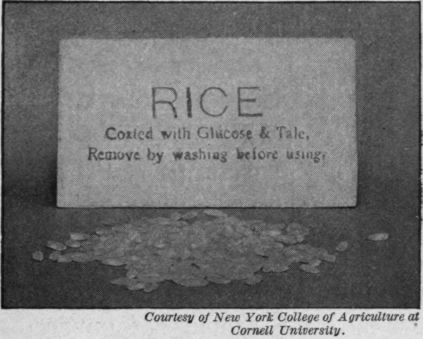
Fig. 73. - Pure food regulations require the dealer to label coated rice.
Continue to:


My Books

