


Lesson 2. Water And Fruit Beverage
Description
This section is from the book "Food And Health: An Elementary Textbook Of Home Making", by Helen Kinne, Anna M. Cooley. Also available from Amazon: Food And Health: An Elementary Textbook Of Home Making.
Lesson 2. Water And Fruit Beverage
What can we prepare to drink at school in addition to water, on warm days in fall and spring?
Let us think about some of the ways of making agreeable cool and hot beverages.
Fruit juices with water. "What fruits may be used in place of or with lemon juice?"
The answer to this is very simple : any fruit that is acid and juicy, and has a decided flavor, makes a pleasant drink. The beverage is wholesome, if one does not take too much and if it is not too sweet. Perhaps we are all more used to making lemonade than any other fruit drink, but the Pleasant Valley Club is trying other fruits on some of the warm days in September. Marjorie Allen experiments at home; when she sees that her Mother is warm and tired, she surprises her with a glass of cool fruit juice and water. Strawberry, currant, and raspberry juices are delicious in this way, and so is the juice from tart summer apples, slightly cooked. Canned fruits, jellies, or jam may be used; and, if the flavor is flat, a little lemon juice or cream of tartar may be added.
"How does Marjorie make the fruit juice into a refreshing drink?"
Marjorie sees first that the water is cooling. She allows one fourth to one third cup of sugar to a quart of water. Can you explain why the quantity of sugar varies from time to time? If it is convenient, she melts the sugar in some hot water. Why? Next she prepares the fruit. The lemons must be washed, cut in two and squeezed, and have the seeds strained out. A glass lemon squeezer costs only five cents and is very handy. Two or three lemons to a quart of water will be enough, depending on the size of the lemons.
If Marjorie is working with another kind of fruit, she must squeeze the juice out, sometimes after cooking. The amount used must be "to taste" or, if currant jelly is at hand, two or three teaspoonfuls to a glass of water are enough.
Marjorie has a dainty way of tasting things with two spoons, one for dipping out, and the other for the tasting. Finally, the water, sugar, and juice are mixed in a pitcher and cooled on the ice. When there is not ice, wrap a wet cloth around the pitcher and set it in the breeze. Do you know why this cools it?
These beverages may be prepared at school as easily as at home. Here is a chance to use your arithmetic in calculating the quantity.
A cool drink. On a hot day, the men in the field are glad of some refreshing drink. One of the girls in the Pleasant Valley School was taught by her grandmother how to make an old-fashioned beverage.
Have ready molasses, cream of tartar or vinegar, ground ginger, and nutmeg. Use about a quarter of a cup of molasses to a quart of water, and a teaspoonful of cream of tartar, which some people think more wholesome than the vinegar. Stir into the molasses a tea-spoonful of ground ginger and a grating of nutmeg, and mix all with the water. It is better when one is heated to have a cool, rather than an ice-cold drink; the temperature of well water is cool enough.
Fruit-ade. A fruit drink is sometimes called fruit-ade; and sometimes, fruit punch.
If the girls become very expert, they may be invited to make and serve a fruit beverage at a meeting of the Woman's Club or at some evening entertainment. Do not be afraid to try experiments with several kinds of fruit at a time. Use lemon juice first; add a glass of currant jelly, and a can of cherries or raspberries. Cut a banana in small pieces and serve in the fruit punch. Does some one say, "How odd to spend so much time talking about fruit juice and drink!"
Why are fruit juices valuable? They contain something most valuable to the body, - he mineral matter that you cannot see. How much better to take iron in fruit juice than in patent medicine. It not only tastes better, but the body can use the iron in fruit when that in the medicine bottle is useless.
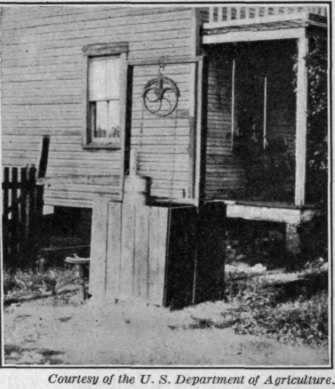
Fig. 7. - An old-fashioned open well is subject to surface wash.
Why should we be careful about drinking pure water freely? Water is the important material in all our beverages, and we need to remember to drink it clear as well as flavored with other substances. It is found, too, in almost all our foods. Several years ago, when a number of Zuni Indians were visiting the large cities of the eastern United States, some one asked them what was the most interesting object they had seen. One of them replied, "Water. You have all you want, and you can always get it out of a pipe in the wall." To people who live in dry lands, water is a precious thing. Do you know that we can live longer without food than without water? It helps to build the body, it aids digestion, it carries off waste matter, and it helps to keep the body at an even heat. It is given off from the body all the time, and therefore we need to drink freely many times a day. We may take it at meals; if we do not drink it to wash down food, but between mouthfuls. Be careful to drink rather slowly; then you need not hesitate to take as much as you want.
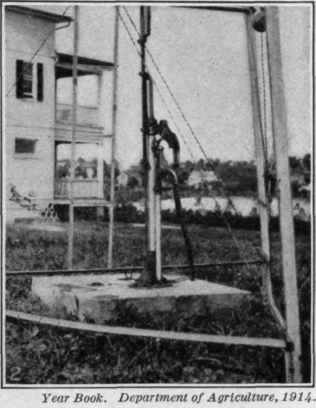
Fig. 8. - We cannot be too careful about the place from which the water comes. A cemented cover and carefully adjusted pump prevent surface wash.
Yet this water may bring us illness, - and this we must study to prevent. Even though water is sparkling and clean, it may still be impure. As we cannot judge by its appearance, we must find out where the water comes from.
Keeping water pure. Nature has many ways of making water clean. Some of them are : letting it filter through the soil, purifying it in ponds and rivers; in both of which processes some of the lower forms of life known as bacteria, help. But when we allow large quantities of filth to get into the water, nature cannot always work fast enough, harmful bacteria grow, and sickness results if people drink the water. Typhoid fever, malaria, and other diseases are often due to impure water. We cannot be too careful about the place from which the water comes; for such a disease as typhoid is often carried to people far away, and many lives are lost because some one person or family has been careless.
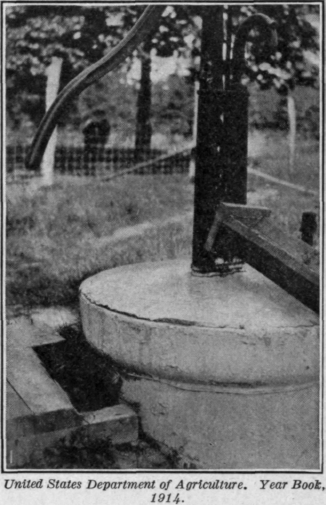
Fig. 9. - A cement or stone cover, with a trough beneath the spout of the pump, is a necessary protection for a dug well.
The picture (Fig. 10) shows how unclean material may seep into a well from a barnyard or outhouse.
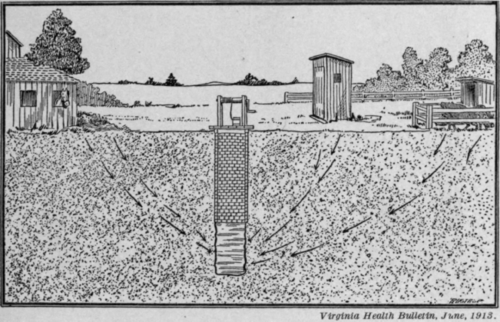
Fig. 10. - Unclean material may seep into a well from a barnyard.
Let each girl and boy study the water supply at home. If the water comes from a spring, see whether the spring is cleaned every year and covered. Are farm animals allowed near it? Is the well covered? (See Fig. 9.) Is it cleaned every year? Are slops ever poured near it? It is a good plan to have cement around the well. Remember that health costs less than sickness. At times, if the doctor says that sickness has come from the water, it should be boiled before drinking.
Be watchful, too, about ice, because freezing does not kill certain harmful germs. If the ice is dirty and, indeed, unless you are very sure that it has come from a clean source, cool the water on the ice and never put the ice into the water.

Fig. 11. - Do not use public drinking cups.
Be careful to drink from a clean cup. Sore throats and even consumption (tuberculosis) may result, if more than one person drink from one cup or dipper. Each pupil should have his own cup. Paper cups cost very little. The luncheon club at the Pleasant Valley School has decided to use them. Do not use public drinking cups. (Fig. 11.)
After a sad time, when diphtheria raged among the pupils of a school in another section, the Woman's Club of that town gave to the school a pump like that in the picture (Fig. 12). Do you see that the water is bubbling up and that the girl is drinking without a cup?
Water may contain lime and iron that make it "hard." If there is a large amount of the lime, it is best to boil the water for drinking. If the inside of the teakettle has a coating of lime, then you are using the kind of hard water that is improved by boiling. Sometimes to make water soft it is distilled. This is done by catching and cooling the steam. A distilling apparatus is made for home use.
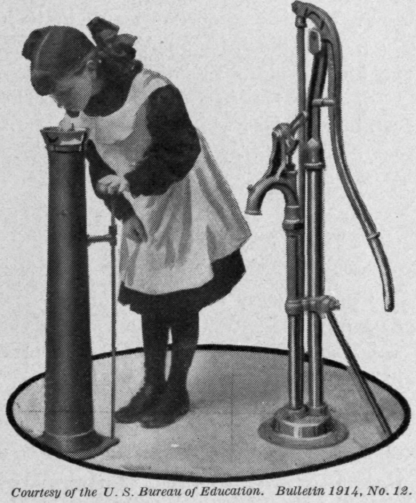
Fig. 12. - At the Pleasant Valley School a drinking fountain is attached to the pump. The water is bubbling up and the girl is drinking without a cup.
Exercises And Problems
1. Make a sketch of your water supply at home with its surroundings.
2. Make some plan for improving the water supply.
3. In what ways does water become impure?
4. Why is it important to use individual cups?
5. How much lemonade or other beverage would you prepare for fifty people? Estimate the cost.
6. What fruits growing in your locality, including wild berries, can be used for making beverages?
7. Explain why fruit juice is wholesome.
Continue to:


My Books

