


Lesson I. Proper Foods For The School Luncheon
Description
This section is from the book "Food And Health: An Elementary Textbook Of Home Making", by Helen Kinne, Anna M. Cooley. Also available from Amazon: Food And Health: An Elementary Textbook Of Home Making.
Lesson I. Proper Foods For The School Luncheon
What are some of the foods that make a proper school luncheon? Can we prepare any of them at school?
Luncheon is an interesting part of the school program, is it not? especially when it is a good one. Marjorie Allen always takes something from home in her dainty luncheon box, and she is quite likely to offer a taste to some one else. Marjorie has sandwiches made from light, sweet bread, eggs especially prepared, milk, a slice of plain cake or a few cookies, and fruit or jelly in a small glass to be spread upon the bread. The different kinds of food are wrapped separately in paper, either plain and perfectly clean, or paraffined. A paper napkin is in the box, too. Marjorie uses a paper box, which is burned afterwards with all the other papers and never thrown about to make the school yard untidy. This fall, however, Marjorie is bringing vegetables to school, and is talking about making cocoa. She is suggesting to the girls and boys in the Pleasant Valley School that they have a luncheon club and make lunch a feature of the day, instead of eating almost any thing as fast as possible in order to begin play. And what is the plan?
Planning a lunch club. There are several ways in which the club can run the luncheon. Of course the members should vote on the matter. The teacher and the mothers will be consulted; and they will surely approve the plan, if it is workable.
According to the old-fashioned way, each pupil brings a lunch in pail or box, and each has his own. The first step to make it pleasanter is the arrangement of some kind of table, which need be nothing more than boards set on boxes, either outdoors or inside. Paper napkins may be used, and a place laid for each pupil. This makes luncheon a picnic every day.
There is another method, already the fashion in some schools, which is not difficult. Each pupil supplies one kind of food material, and each takes his turn in bringing a different kind. Two or three furnish milk; others bread or fruit or vegetables or whatever is convenient, the whole scheme being planned ahead. Of course, the division must be fair to all; and there is a chance here for some practical arithmetic in finding out the cost of materials and dividing the expense evenly.
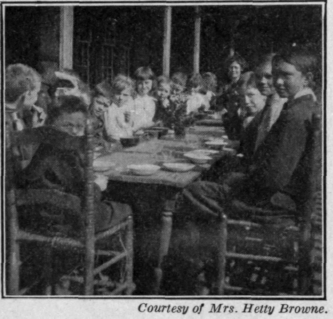
Fig. 3. - The boys and girls of Pleasant Valley have a luncheon club and make lunch a feature of the day.
When Marjorie proposes having vegetables as well as fruit, somebody says, "But we can't eat them raw." Then why should we not cook them?
Cooking at school. "What can we have to cook with at school? "
This will depend upon the yard and the size of the school. If there is plenty of room around the building, you already know one simple arrangement; for it is hardly possible that you have never roasted potatoes in the ashes of a fire out-of-doors.
A fireplace of stones or brick may be built and vegetables roasted; an old pail may be hung on a stick laid across the stones or, better still, on an iron bar or rod which may be found in some old scrap heap or at the blacksmith's. Wonders can be accomplished also with an old stove, which some one would be glad to give. John Alden is an energetic boy at Pleasant Valley School, ready to do carpenter work or to engineer the making of a stone or brick fireplace for cooking food at school.
If there is a shed in which it can stand, perhaps a friend will contribute an oil stove. In the picture (Fig. 4) you will see the equipment for cooking which may be made from packing boxes that the grocer gives away.
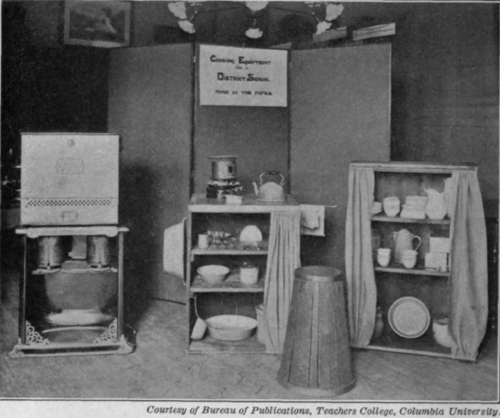
Fig. 4. - An equipment for cooking may be made from packing boxes.
The boxes may be stained or painted white. This painting is pleasant work for a rainy day: If the mothers are interested in the club, they may be willing to give a few utensils; but, if the members of the club are very independent, they can buy their own. Only a few are needed and the expense will be slight.

Fig. 5. - A neatly arranged school cupboard. 1, wide-mouthed pitcher; 2, covered saucepans; 3, double boiler; 4, wire strainer; 5, Dover egg beaters; 6, measuring cups; 7, bowls; 8, knives, forks, and spoons; 9, "utility" plate, for cooking work.
In cold weather the luncheon can be prepared in the schoolroom; and, if the heater has a flat top, cooking can be done on that. A fireless cooker to use at school is convenient and can be inexpensive. (See Lesson 26.) If you have never tried it, you will be surprised to see how many delicious luncheon dishes can be made in the schoolroom.
If your school has a well-furnished cooking room, preparing luncheon at school is an easy matter.

Fig. 6. - Serving luncheon at the Big Tree School.
At the Pleasant Valley School the work began with very simple equipments. Marjorie Allen heard of the school lunch club from a cousin who lives in New York State. Miss James, the teacher at the Pleasant Valley School, asked Marjorie if she would not write to her cousin and ask for a description of her club. This is the answer to Marjorie's letter:
The Big Tree School,1
September 5, 1915. Dear Marjorie:
Yes, indeed, our hot lunch club is a great success. This is the way we began : There is a farm bureau in Erie County, and we celebrate Corn Day. We children at the school had a bread contest to which everybody came. Our mothers and fathers were so pleased that one of the trustees put some cooking equipment into our basement, and we use an old bookcase with glass doors for our cupboard. There are twenty-four of us in our cooking class, and each family gave twenty-five cents for buying dishes. We brought our own notebooks, spoons, cups and plates, aprons, soap, and hand towels; and we met every Wednesday afternoon. Then, as we had begun to have cooking lessons, our teacher thought we might as well have a hot lunch; so we had a warm-food club. Most of us come a long way and bring luncheon, and so we began by making only one or two hot things like cocoa, soup, stew, boiled rice with raisins.
This is the way we plan for the lunches. We have a committee that meets our teacher at twelve o'clock every Friday, and plans luncheon for every day for next week. We decide which of us shall furnish food and what food each one of us shall bring. We name the helpers for preparing the food each day, also. At one o'clock the committee passes a slip to those who are to furnish food, telling what food they are to bring and on what day. Sometimes one girl or boy changes with another. We have a book and keep a list of everything, so that nobody shall do more than his share. Usually each family does not furnish food more than once a month. It does not cost so very much either, - about ten cents each time one of us brings something. Here are some of the other things that we like : potato soup, baked beans, bean soup, tomato soup. Sometimes we make the things at home when mother is willing, and bring a pan of beans or macaroni, or something else, to be warmed up. Some of us did not join the club, but any one who is not a member may buy a cup of hot food for one cent. Usually two girls are appointed to do the cooking. Sometimes it is begun before school or at recess. At 11 :45 the girls finish the luncheon; then we wash our hands, and sit down at our desks to be served. The girls, with one or two others to help, serve all of us. We take turns in washing the dishes; and it is funny that we never seem to mind it at school. We would not give up our lunch club for anything.
1 The information given in this letter was kindly furnished by Miss Jessie D. Ebert, District No. 27, Hamburg, Erie County, New York. Some of these facts were published in the East Aurora Advertiser, May 27, 1915, and others were written in a private letter.
Your affectionate cousin,
Polly.
Packing the luncheon. When food is done up in packages, it should be neatly wrapped (see page 301).
If called on to act as judges in a luncheon-box contest, we might draw up for ourselves a score card like the following:
SCORE CARD | ||
LUNCHEON-BOX CONTEST | Rating | |
1. | Neatness of box or wrapper ...................... | 5 |
2. | Appearance of the inside of the box .................. | 25 |
Neatness | ||
Daintiness | ||
3. | Quality and preparation of food ......................... | 35 |
Excellence of preparation | ||
4. | Selection of food ................................................ | 35 |
Fitness for purpose | ||
100 |
Courtesy of the New York State College of Agriculture at Cornell University.
Exercises And Problems
1. Make a list of simple utensils that would help you in preparing food at school. You can recall those used at home.
2. What plan can you make for washing dishes?
3. Can you think of some way of avoiding dishwashing, or of having as little as possible?
4. Make a list of luncheon dishes that you think you might make at school.
Continue to:


My Books

