


Cocoa
Description
This section is from the book "Food And Health: An Elementary Textbook Of Home Making", by Helen Kinne, Anna M. Cooley. Also available from Amazon: Food And Health: An Elementary Textbook Of Home Making.
Cocoa
What to use.1 Cocoa, sugar, water, milk.
How much to take. Equal parts of water and milk. 8 tea-spoonfuls of powdered cocoa to a quart of liquid. The same amount of sugar as of cocoa.
Utensils. This depends upon the amount of cocoa, does it not? You can plan this easily yourself. Remember that a large pail or kettle full needs a long spoon for stirring.
How to make. This is the one way that saves dishes : Heat the water and milk together. Mix together the cocoa and sugar, dry. When the liquid begins to bubble, throw in the dry materials, and begin to beat and stir as fast as you can. When the cocoa and sugar are all dissolved, your beverage is ready.
How to serve. Have a dipper and the cups all ready. Re-member, if you do not spill, there is nothing to clean up.
There are other ways of making cocoa. Try more than one. Some girl in the club may know another way, or your teacher may have another recipe. How shall you know which is best? It is the way that makes the smoothest cocoa, with the fewest dishes, and with the least work.
1 Hereafter, for convenience, simply What, How much, Utensils, How to make, and How to serve, will be used.
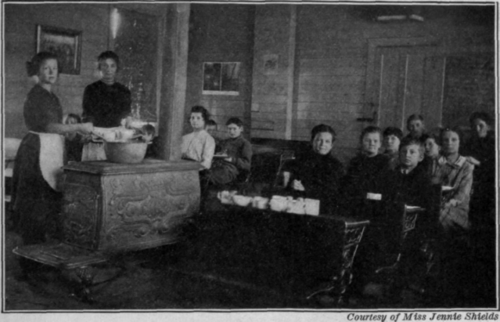
Fig. 17. - Cocoa is easy to prepare for the school luncheon.
The Dutch people, who manufacture cocoa, also make it well. They always beat it to make it smooth. If you can have a large "Dover" egg beater, a few minutes' beating, while the cocoa is still on the stove, makes it free from grains and lumps.
Exercises And Problems
1. How many liquid teaspoonfuls make a tablespoonful?
2. How many dry?
3. How can you divide a dry spoonful in halves?
4. How many tablespoonfuls are there to a quarter cup? To a whole cup?
5. Copy your cocoa recipe in your notebook.
6. Begin a table of measures, and leave space for more.
Continue to:


My Books

