


Changes In Pulse-Rate Occasioned By Short Pehiods Of Exertion. Continued
Description
This section is from the book "Human Vitality And Efficiency Under Prolonged Restricted Diet", by Francis G.BENEDICT, Walter R. Miles, Paul Roth, And H. Monmouth Smith. Also available from Amazon: Human Vitality and Efficiency Under Prolonged Restricted Diet.
Changes In Pulse-Rate Occasioned By Short Pehiods Of Exertion. Continued
In order to have an added indication for placing the moment when exertion began and ended, a key was arranged at one end of the bar and was operated by the subject's weight. When this key was closed by the weight of the subject on the bar, a signal magnet which was in circuit and placed before the slit of the camera was caused to deflect. The shadow of this signal marker was recorded on the photographic paper (see U and D in figure 24.) The switch was arranged as shown in the diagram in figure 25. One of the leads, L, in circuit with the battery and the signal magnet, connected to the metal clamp which was about the bar B; the other lead connected to the brass sleeve S. This sleeve contained a stiff spring, one end of which rested in the bottom of the sleeve and the other against the wooden bar. The spring was around the hook H, which connected the bar to the chain. When the downward pressure was placed upon the bar a contact was made at point C. It required 4.5 kg. of weight to close the circuit. Thus the signal was given very early after the subject grasped the bar and the circuit remained closed until the subject had almost relaxed in the chair. To economize time in preliminary adjustments, the bar was kept at the same height for all the subjects during the whole experiment.
The form of electrodes designed and used is shown in figure 26. A set consisted of three pads, R, L, and G, a 4-foot cable, and a plug, P. Each pad was made of 8 thicknesses of cotton gauze, a piece of German silver, 0.005 inch in thickness and 11 cm. wide by 20 cm. long, with a piece of felt for backing. The edges of the gauze were tucked in around the edge of the metal strip and all were secured to the felt at the back. A regular 4-foot telephone cable, with wires designated, which ends in the usual switchboard plug fitting into the ordinary receptacle was employed for purposes of connection. This offers very quick connection and good contact. The gauze on the face of the pad was moistened in warm saturated sodium chloride solution. Pads R and L were placed in contact with the skin on the right and left sides of the subject; G was placed between them and somewhat lower on the abdomen. Two bands of elastic tape about the subject's chest held the pads in position. This tape did not have to be uncomfortably tight. Although unnecessary in these experiments, the pads could be worn a long time without annoyance, and they made good contact with the body for an indefinite time. The many thicknesses of cotton gauze provided against any scratching of the skin. R and L connected with the two terminals of the galvanometer string. G was connected to earth as a "ground." This method was found to be more satisfactory than to earth the frame and coils of the string galvanometer. With these electrodes it was nearly always possible to get satisfactory pulse records while the subject was engaged in the vigorous activity called for by the test.1 These same elec-trodes were used in recording the pulse when the subject walked on the treadmill (see p. 129). Several sets of electrodes facilitated the experimenting.2
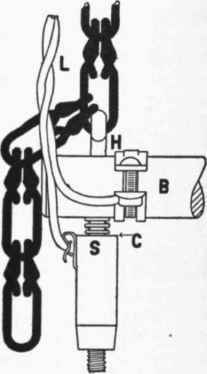
Fig. 25. - Detail of the key closed by4be subject's weight during physical exertion.
H, hook connecting to chain support; S, a sleeve for holding a stiff spring in position against the bar,B; L, leads in circuit with battery and signal magnet; C, point of contact for circuit closure when weight is supported on B.
1Miles, Carnegie Inst. Wash. Pub. No. 266, 1918, p. 95.
The electrocardiographic apparatus had been arranged in general to facilitate the taking of such records. In the nature of the case, it is most convenient to have the subject near the apparatus, but the apparatus should not be such as to annoy or distract the man. The electric motor which operated the camera was placed in an adjoining room and could run indefinitely with no disturbance. The illumination was from an automatic arc lamp. The slit in front of the camera could be opened and the photographic record started by the action of a very simple lever which was not apparent to the subject. The receptacle for exposed photographic paper (D) in figure 22, page 152), below the camera, was large enough to hold more than 100 feet of such records. The subject's chair could be easily moved to a position directly under the bar. The subject was instructed by word and illustration to take hold of the bar quickly and to bring his body up so that his chin was even with the bar, but not to support any weight by his chin. He was to lift his feet clear of the floor and to hold the position until the signal "down." When in the chair he was told to be as relaxed as possible and to act as if going to sleep. No instructions regarding breathing were given.
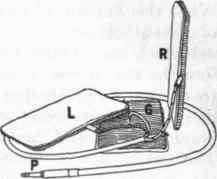
Fig. 26. - The body electrodes used in recording electrocardiograms during physical activity.
The pads were 11 cm. wide and 20 cm. long; each pad was made of 8 layers of cloth, a sheet of thin metal, and a piece of felt for backing. In use, the cloth is moistened in salt solution. R and L were applied directly to the skin on the right and left sides of the subject and connected to the string galvanometer. G was applied just above the navel and connected to ground; P, regular 3-lead telephone plug.
1 A prominent exception to this statement is found in Gul of Squad A. It could never be determined with assurance whether the action currents from muscles of limbs and trunks were in his case exceedingly strong or whether this subject carried about in his body an immense static charge. However, almost every time he was tested he put the galvanometer string out of order. Hie case was exceptional. Nothing similar was encountered in a group of 65 young men tested previous to this research. No criticism is made of him, for he followed instructions as well as any subject could.
2 These electrodes night not be the most satisfactory form for long periods of walking or other physical exertion, as they could shift into position of contact, one with the other, unless special arrangement was made to avoid this.
The experimenter commonly occupied a position which would be at the left of the picture (see fig. 22). From the large clock located on the wall back and above the subject the time interval could be accurately judged, and the signals given; the interval of exertion was usually about 6 seconds. One preliminary trial was made to insure everything being in proper relation and to relieve the subject of any excitement or embarrassment. He did not know that this was only a preliminary trial. An interval of at least 1 minute was allowed between trials. After the records had been made the subject was disconnected and the electrodes were removed. It is noteworthy that the subjects did not understand what this test involved. Several of them asked at different times, particularly at first, what it was for. The uniform answer given was: "It is a test of the involuntary nervous system." Not until January, when the same electrodes were used on the men in the treadmill experiments, did they realize that it was a test of the pulse-rate and heart action.
Continue to:


My Books

