


Steam Valves And Their Settings. Continued
Description
This section is from the "Blast Furnace Construction In America" book, by J. E. Johnson, Jr.. Also see Amazon: Blast Furnace Construction In America.
Steam Valves And Their Settings. Continued
It will be noted that in this diagram (Fig. 75) and also to a less extent in Fig. 73, the exhaust of the steam is extremely slow. The exhaust valve does not open at all until the end of the stroke is reached, and the steam consequently has little time to leave the cylinder while the engine is turning the center. The result is the sharp "toe" at the exhaust end of the diagram, which in my judgment should come down as shown in dotted lines, very materially increasing the area of the diagram without any ill effect.
Turning now to the Southwark engine cards shown in Fig. 101 we see practiced the exact opposite of that of the Tod Company in these particulars. The compression pressure rises to nearly half the receiver pressure and admission is so early that full receiver pressure is reached at the very beginning of the stroke.
On the other hand, the exhaust is early, so that full vacuum is reached almost at the very beginning of the exhaust stroke, as it should.
If combined net pressure diagrams were made of this set of air and steam cards there would be found a "spike" of pressure at the beginning of each stroke which would just about double the total pressure on all the running gear and the engine frame for a brief instant of time at which it could deliver no useful work, owing to the low angle of the crank at that position, but in which it could greatly stress all the running gear and the frame of the engine itself and produce excessive wear if not an absolute hammering down of the brasses. Cases are on record in which certain engines of the walking-beam type broke their frames or pedestal caps repeatedly as long as the steam valves were set to give lead"; that is, to give full pressure of steam at the beginning of the stroke, but which quieted down and ran without further difficulty when admission was delayed to compensate for the re-expansion in the air cylinders.
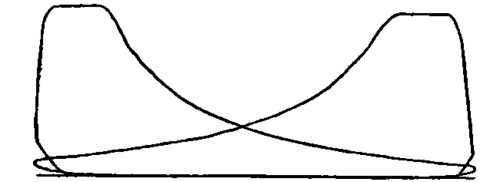
Fig. 102. Steam cards taken from Mesta long cross-head blowing engine.
It will be seen, therefore, that the practice of the William Tod Company and of the Southwark Company is at the two opposite extremes in this respect. The Tod Company uses no compression and delayed admission, the Southwark uses heavy compression and early admission.
I am able, through the kindness of the Mesta Machine Company of Pittsburgh, to present a pair of cards taken from one of their long cross-head blowing engines which seems to me to embrace the best practice in both respects. There is enough compression to reduce the total steam consumption appreciably, as can be judged by noting the percentage of the stroke still remaining to be made when compression begins; and then delays the admission sufficiently to allow full time for the re-expansion of the air in the clearance space.
In my judgment these cards are illustrative of the practice which should be followed by every blowing-engine operator in setting the valves on his blowing engine. It will be noticed that the early closing of the exhaust valve has its complement in the sufficiently early opening of these valves to prevent any loss of area by failure of the steam to exhaust promptly.
In general it may be said that the blowing engine should be indicated at intervals of a few months to prevent or correct the multifarious misadjustments which can arise from many causes, many of which lead to waste of steam and others to excessive stresses similar to those I have described and worse.
At plants where economy of steam is not a prime consideration the hideousness of the steam practice which may prevail without preventing the operation of the plant is beyond belief by those who have not seen it. There is probably no field about the plant where so small an investment of time and trouble will pay so great a return in steam economy and repair expenses avoided.
Continue to:


My Books

