


Thin-Lined Furnaces. Continued
Description
This section is from the "Blast Furnace Construction In America" book, by J. E. Johnson, Jr.. Also see Amazon: Blast Furnace Construction In America.
Thin-Lined Furnaces. Continued
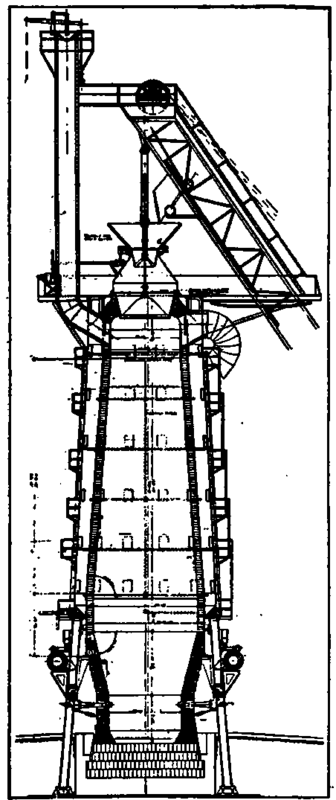
Fig. 171. Detroit Iron & Steel Company's thin-lined furnace.

Fig. 172. Section of Warwick thin-lined furnace.
The conditions in regard to thin lining for the inwall or any point above the top of the bosh are vastly different from what they are below that point, because, as already pointed out, the convergent slope of the bosh provides a natural lodgment for the slag which runs down and chills upon its cooled surface in the normal operation of the furnace, so much so, that as before stated, if a furnace were started with an externally cooled bosh jacket entirely bare of bricks this would soon cover itself with a lining as good or better than the best firebrick which could be put upon it. But above the mantle the slope is in the other direction, the shaft of the furnace is a cone divergent downward, moreover except in its extreme lower portion there is no molten material, and if there were any it could not impinge upon this outward flaring surface, and could not remain there if it did so. Therefore if the lining is once removed from this portion of the furnace it is gone for good and all, until restored by relining.
Moreover the furnace shell does not furnish much support in the vertical direction for any lining which may stand against it. It does prevent this lining from pushing out or falling backward, but it does not prevent its falling inward or sliding straight down in case of the failure of its support below. For this reason it seems to me necessary that the lining of the furnace above the bosh should consist of a sufficient thickness of brickwork to support itself and the portion of the lining above it. Systems of angle supports riveted to the inside of the shell may be used and may suffice amply to support the brickwork when it is built into the furnace, but these narrow ledges cannot in my judgment furnish the sound and substantial support which a body of brickwork two feet or more in thickness receives by resting upon a solid foundation like the mantle.
Moreover the thinness of the inwall seems to have an influence upon the work of the furnace altogether apart from its effect on the durability of the lining. Thin-lined furnaces have been found by their managers to be sensitive to the quantity and temperature of the cooling water circulated over the shell and in general to have troubles to which furnaces with linings of normal thickness are not liable, and some of the best furnace managers in the country who have tried them have told me that they had had enough and were perfectly satisfied in the future to return to the standard lining.

Fig. 173. Spiral trough on Warwick thin-lined furnace.
Some of the furnaces of the constructions here described, are still in operation and some of them are said to be successful, but as a result of several years of experimentation no standard construction appears to have been developed which all advocates of this type of furnace are willing to adopt, and while the advantages of securing permanence of the lines of the furnace as constructed, of requiring for lining purposes only a small amount of brick, and therefore small expense and loss of time in relining, are undoubted, the essentially unsubstantial character of a wall only about a foot thick, 60 ft. or 70 ft. in height, and leaning inward at the top, may well be questioned. Moreover, the thick lining has the advantage that within reasonable limits it gives the furnace some opportunity to cut itself out to the shape at which it will do the best work, so that minor errors of judgment in the original lines of the furnace may be corrected by the work of the furnace itself within the thickness of the standard lining. This is not possible with the thin one.
The lines of furnaces are not fixed like the laws of the Medes and Persians but shift with almost every campaign to meet changes of conditions or the changed views of their operators. With a lining of standard thickness and a standard shell large enough to contain it, such changes can within reason be made without affecting the shell, but with the thin-lined furnace this is not true. The shell must virtually have a shape exactly corresponding to that desired for the inside of the furnace and if it becomes necessary to change the latter this involves expensive and time-consuming changes in the shell.
For all these reasons, and for the far better one mentioned above, that in practice the thin-lined construction does not seem to have justified itself, it seems doubtful whether the development in this direction will be extensive or at least very rapid.
Continue to:


My Books

