


Disposal Of Sub-Soil Water
Description
This section is from the book "Principles And Practice Of Plumbing", by John Joseph Cosgrove. Also available from Amazon: Principles and Practice of Plumbing.
Disposal Of Sub-Soil Water
When the street sewer is provided with a sub-sewer drain, as is usually the case in localities where the ground water is high, the proper place to dispose of sub-soil water is in the sub-sewer drain. Most brick sewers, Fig. 53, are provided with a tile invert, a, the channels of which serve as a sub-sewer drain; and pipe sewers in wet districts usually have a field pipe sub-sewer drain. When, however, there is no sub-sewer drain the sub-soil water can discharge into the house sewer through a water seal and tide water trap. Some times a sub-soil drain is so far below the sewer level that sub-soil water cannot discharge into it by gravity. When such is the case, it can be gathered in a sump and discharged to the street sewer by a sewage ejectment apparatus. If, however, the volume of water is too small, and the distance it is to be raised too short to warrant installing a sewage ejectment apparatus, an automatic cellar drainer, Fig. 54, may be used. This apparatus may be operated by water, steam or air, although city water is generally used. It operates on the principle of an ejector. The drainer is placed in a pit below the level of the cellar floor, into which the sub-soil water drains. When the water reaches a certain level it raises the float a; this turns city water on to the apparatus, and as the water flows through the injector nozzle b, it entrains water from the pit which mixes with the city water in the pipe c, and together they are discharged into a water-supplied sink at some convenient point. When the water is discharged from the pit the float falls again, thus shutting off the flow of city water until the pit fills. This method, however, is too expensive to use for discharging large quantities of water and is not economically effective for a greater lift than 12 feet. The height to which water can be raised by a cellar drainer depends upon the available water pressure; with a pressure of 100 pounds, water can be raised 25 feet, but the amount of city water required to raise water that height makes the method too expensive for handling large quantities of water.

Fig. 52
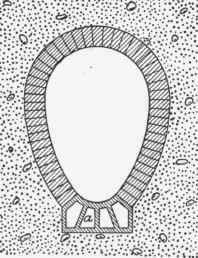
Fig. 53
Continue to:


My Books

