


Chapter VIII. Lighting And Ventilation. Becoming Lights
Description
This section is from the book "The Art Of Decoration", by H. R. Haweis. Also available from Amazon: The Art Of Decoration.
Chapter VIII. Lighting And Ventilation. Becoming Lights
UNTIL the electric light is more manageable than it now is, there are but two ways of lighting rooms - gas or lamps and candles. Gas is the cheapest and the least trouble, but it is the most destructive to furniture and pictures, the least healthy, and the least becoming. Lamps are the next best, if they can be induced not to smell; wax candles are the best of all, if they can be warranted not to bow. 'What is that candle looking down at me for?' said a suspicious child, watching one that was burning busily upside down, and shedding as much grease as it could. And it would be well if chandlers made candles a little harder, so that a warm evening would not so affect their spines.
The main light ought to be concentrated as much as possible in one spot. This is nearest to a natural effect, for the sun is never in two or three places at once, and will be found becoming to faces and the folds of dresses (when dresses have any). But lights will be required in corners where obscurity is apt to become depressing and to check conversation. People are like birds, they are silent in a dark room, and think of ghosts, but they begin to twitter as soon as they can see each other. On the whole, one big chandelier containing a great number of candles, and a few candelabra, of some fine form similar to that of the lost Jewish treasure carved roughly from memory on the Arch of Titus, or candles standing singly in pretty candlesticks, light a room best. Lamps may be similarly arranged. But it should always be remembered that faces look best (if we may venture to disagree with Queen Elizabeth) with their natural shadows, which give that 'drawing' to them always missed on the stage when the footlights glare up from below - an unbecoming light, but one which is valuable to actresses, whose faces would be left wholly in shade by lights placed high, and thus invisible to the loftier spectators.
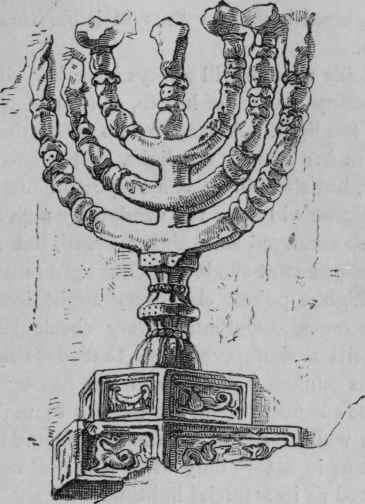
Fig. 73. - The golden candlestick, from the Arch of Titus.
A sensible woman will always have her sitting-room light, for many reasons of health, convenience, and work - but not too light. A woman who is ' getting on ' will not sit with her back to the light, that negress-effect is not pretty, but she will sit at a respectful distance from the light. She will have the window by day, the lamps by night, so arranged as to throw broad, but not heavy and not insignificant shadows. The light must not come from too high a point; else every slight inequality of surface becomes accentuated, every cheek past its first youth recalls a skull, every eye that does not require them gains sunken hollows, and the flat eyes that do need a shade beneath them are too few to make such a cost worth while. Light, as in nature, should come from above, but as in nature only when it is well diffused, not concentrated as in artificial lighting.
Without some attention to these things, your room gets the reputation of being an unbecoming room; just as some hostesses get the reputation of never having pretty guests. Nobody wants to look ten or twenty years older than he is: (at least until after eighty, when it becomes a point of pride to emulate Methuselah): and the massive chiaroscuro which is admired in an old head by Velasquez is properly unpopular in a drawing-room devoted to social pleasure. It can nowhere be better studied than at the Royal Institution; at which shrine of learning mundane and frivolous considerations are very fitly set aside, and the youngest and prettiest faces loom through a veil of stern, uncompromising philosophy, and assume pro tem. at least a decade of added years and gravity. This is caused by the colour and the lighting.
The main light then should come from above so as to ensure some shadows somewhere, but minor lights should diffuse a comfortable and becoming clearness, sufficient to cheer, but not impertinently criticise.
Continue to:


My Books

