


Italian And Other Furniture Of The Renaissance. Part 3
Description
This section is from the "Historic Ornament - Treatise On Decorative Art And Architectural Ornament" book, by James Ward. Also see Amazon: Historic Ornament - Treatise On Decorative Art And Architectural Ornament.
Italian And Other Furniture Of The Renaissance. Part 3
Towards the end of the sixteenth century, and during the earlier half of the seventeenth, the sumptuous furniture, the beds, and general furnishing of the better class of houses and palaces in France and other European countries, were characterized by the use of costly silk brocades, tissues, and embroidered coverings and hangings.
Fig. 235. Chair; Italian; Sixteenth Century, (P).
Fig. 236. Stool of Caned Wood; Italian; Sixteenth Century. (J).
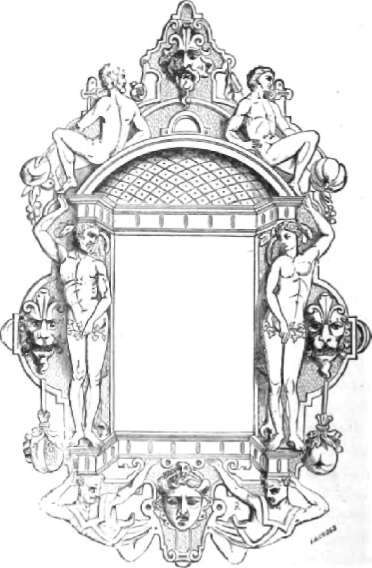
Fig. 242. Venetian Mirror Frame; Sixteenth Century. (P).
By thus seeking to give the furniture an appearance of the richest possible kind, such articles as chairs, couches, and beds lost in a corresponding degree their elegance and former constructive beauty. Under their gorgeous Italian and Oriental velvet coverings, their framed construction ceased to be visible. The above pieces of furniture still retained their sumptuous upholstery during the reign of Louis XIV., but the tables, armoires, cabinets, book-cases, pedestals, clock-stands and cases, came under the influence of the architecture of the period, when the king's chief minister, Colbert, selected the best architects and cabinet-makers of the day to design the furniture for the palaces of the Tuileries, the Louvre, and Fontainebleau. The greatest name connected with the design and manufacture of the magnificent furniture of the Louis-Quatorze period is that of Andre-Charles Boulle, whose work is known under his name as "Boulle." This celebrated furni-tute is an elaborate kind of marquetry of which the materials are rare woods, ebony, tortoiseshell, brass, mother-of-pearl, and white metal or tin. The mountings, mouldings, and other salient points are made in brass beautifully chased and finished, some of the mountings being in the forms of masks, foliage, cartouches, and animals' heads and feet as termination.
Andre-Charles Boulle
Andre-Charles Boulle was born in Paris in the year 1642. His father, Pierre,Boulle, was also a distinguished *šb*šniste, or cabinet-maker, but his more eminent son possessed the artistic gift in a much higher degree. In addition to making his special marquetry from his own designs Boulle also executed a good deal of his best works from the designs of Jean Berain (1636-1711), his chief collaborates. Berain's designs were more Italian in style, more symmetrical in the composition of the ornament, and more correct from an architectural point of view, than those attributed to Boulle himself, whose designs had much of the looseness and freedom of the prevalent Louis Quatorze.
At the death of Jean Mac*š, the king's *šb*šniste, in 1672, who had formerly lived in the royal galleries of the Louvre, the logement and office of *šb*šniste to the king had become vacant, and Boulle on the recommendation of Colbert, minister to Louis XIV., was appointed as the successor of Mac*š, and was installed in his rooms in the Louvre in the year 1673. He had previously executed some important work for the king, and was known as the ablest *šb*šniste at that time in Paris.
The origin of the Boulle marquetry can be traced to the Indian, Persian, and Damascus encrusted inlays in ivory, ebony, nacre, and metal, that found their way to Venice, Portugal, Spain, and France in the Middle Ages. These works consisted chiefly of caskets, coffers, and small pieces of furniture. In the inventories of Charles V. of France (1380) mention is made of lecterns and coffers of inlaid ivory or bone, in ebony, and similar works are mentioned in the inventories of Charles VI. (1418), and of Anne of Brittany (1498). These are the earliest notices of marquetry furniture that was made in France, and was probably an imitation of Oriental work.
In the Renaissance period Fran*¡ois I. bought some magnificent furniture of Indian workmanship, inlaid with mother-of-pearl, from Portuguese merchants, and mention is made of chairs, tables, coffers, cabinets, and mirror-frames that belonged to Queen Marie de' M*šdicis (1600), the Cardinal d'Amboise (1550), and other great persons of the French Court, all of which works were made in marquetry.
In France before the sixteenth century, tortoiseshell, brass, tin, and exotic woods were used as inlays, in addition to the ivory, ebony, and nacre of the East. From this it will be seen that Boulle did not invent the celebrated marquetry that bears his name. He, however, brought this sumptuous form of cabinet work to great perfection, and under the patronage of Louis XIV. he had every opportunity to develop his artistic abilities to the utmost.
The method of procedure in the making of the Boulle marquetry was, first, to prepare the veneers of wood, shell, tin, and brass of the same thickness, each having perfectly plain surfaces; these veneers were then glued together in pairs of opposite materials, according to the nature of the effect required in the finished work, and were held together firmly in a vice. The design was then traced on the surface of the upper leaf, and the veneers were then cut through the lines of the pattern with a burin, a sharp strong knife, or a fine saw; thus four pieces of marquetry were made at one cutting. When the plaque forming the design was composed of tin or brass, which was afterwards engraved or chased, it was technically called "boulle"; and when the design was formed by the shell or ebony it was called "counter"; the two effects are together known as "bohlle and counter," or premiÅ re et contre-partie.
A later kind of Boulle work, known as the Second Style, has the shell veneers laid on a clouded vermilion or on a gilt ground.
Boulle was an artist of great excellence as a sculptor and chaser of metals; his mountings of foliage and masks which decorated his works are spirited in design and are skilfully chased and finished (Fig. 243). He executed a great number of costly pieces of his famous marquetry for Louis XIV. and the Dauphin of France, many of which found their way to England a century later. Examples of Boulle work fetch great prices when, as on rare occasions, they make their appearance in a sale. For instance, two armoires, or large cabinets, were sold at the sale of the Duke of Hamilton's Collection in 1882 for the sum of *12,075. The armoire (Fig. 244) now in the Jones Collection at South Kensington, is perhaps the finest piece of Boulle furniture in England. It is much finer and better designed than the Hamilton cabinets, and would probably, if now sold, fetch the above sum, or more, that was paid for these cabinets. It appears likely, from the style of the ornament, that it was designed by Berain.
Continue to:


My Books

