


Ceilings And Floors. Part 3
Description
This section is from the book "The Decoration Of Houses", by Edith Wharton, Ogden Codman Jr. Also available from Amazon: The Decoration of Houses.
Ceilings And Floors. Part 3
This pressed-flower ornamentation is a direct precedent to the modern ceiling covered with wall-paper. One would think that the inappropriateness of this treatment was obvious; but since it has become popular enough to warrant the manufacture of specially designed ceiling-papers, some protest should be made. The necessity for hiding cracks in the plaster is the reason most often given for papering ceilings; but the cost of mending cracks is small and a plaster ceiling lasts much longer than is generally thought. It need never be taken down unless it is actually falling; and as well-made repairs strengthen and improve the entire surface, a much-mended ceiling is stronger than one that is just beginning to crack. If the cost of repairing must be avoided, a smooth white lining-paper should be chosen in place of one of the showy and vulgar papers which serve only to attract attention.
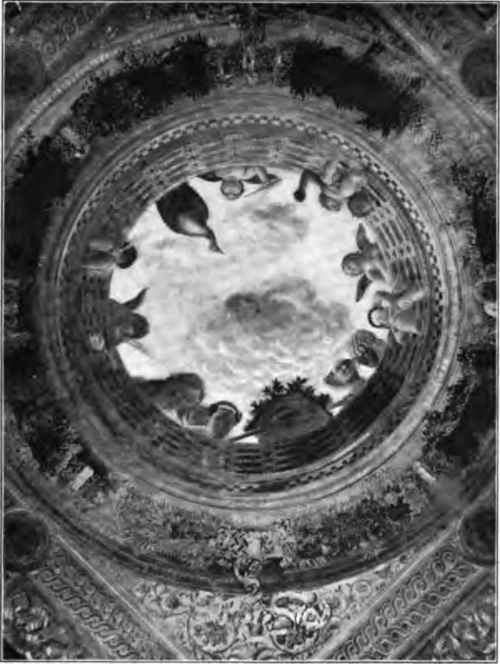
PLATE XXV. CEILING OF THE SALA DEGLI SPOS1, DUCAL PALACE, MANTUA.
BY ANDREA MANTEGNA, I474.
Of all forms of ceiling adornment painting is the most beautiful. Italy, which contains the three perfect ceilings of the world - those of Mantegna in the ducal palace of Mantua (see Plate XXV), of Perugino in the Sala del Cambio at Perugia and of Araldi in the Convent of St. Paul at Parma - is the best field for the study of this branch of art From the semi-classical vaults of the fifteenth century, with their Roman arabesques and fruit-garlands framing human figures detached as mere ornament against a background of solid color, to the massive goddesses and broad Virgilian landscapes of the Carracci and to the piled-up perspectives of Giordano's school of prestidigitators, culminating in the great Tiepolo, Italian art affords examples of every temperament applied to the solution of one of the most interesting problems in decoration.
Such ceilings as those on which Raphael and Giovanni da Udine worked together, combining painted arabesques and medallions with stucco reliefs, are admirably suited to small low-studded rooms and might well be imitated by painters incapable of higher things.
There is but one danger in adapting this decoration to modern use - that is, the temptation to sacrifice scale and general composition to the search after refinement of detail. It cannot be denied that some of the decorations of the school of Giovanni da Udine are open to this criticism. The ornamentation of the great loggia of the Villa Madama is unquestionably out of scale with the dimen* other hard wood; but even this looks inadequate in rooms of great architectural importance. In ball-rooms a hard-wood floor is generally regarded as a necessity; but in vestibule, staircase, dining-room or saloon, marble is superior to anything else. The design of the parquet floor should be simple and unobtrusive. The French, who brought this branch of floor-laying to perfection, would never have tolerated the crudely contrasted woods that make the modern parquet so aggressive. Like the walls of a room, the floor is a background: it should not furnish pattern, but set off whatever is placed upon it The perspective effects dear to the modern floor-designer are the climax of extravagance.
A floor should not only be, but appear to be, a perfectly level surface, without simulated bosses or concavities.
In choosing rugs and carpets the subject of design should be carefully studied. The Oriental carpet-designers have always surpassed their European rivals. The patterns of Eastern rugs are invariably well composed, with skilfully conventionalized figures in flat unshaded colors. Even the Oriental rug of the present day is well drawn; but the colors used by Eastern manufacturers since the introduction of aniline dyes are so discordant that these rugs are inferior to most modern European carpets.
In houses with deal floors, nailed-down carpets are usually considered a necessity, and the designing of such carpets has improved so much in the last ten or fifteen years that a sufficient choice of unobtrusive geometrical patterns may now be found. The composition of European carpets woven in one piece, like rugs, has never been satisfactory. Even the splendid tapis de Savonnerie made in France at the royal manufactory during the seventeenth and eighteenth centuries were not so true to the best principles of design as the old Oriental rugs. In Europe there was always a tendency to transfer wall or ceiling-decoration to floor-coverings. Such incongruities as architectural mouldings, highly modelled trophies and human masks appear in most of the European carpets from the time of Louis XIV to the present day; and except when copying Eastern models the European designers were subject to strange lapses from taste. There is no reason why a painter should not simulate loggia and sky on a flat plaster ceiling, since no one will try to use this sham opening as a means of exit; but the carpet-designer who puts picture-frames and human faces under foot, though he does not actually deceive, produces on the eye a momentary startling sense of obstruction.
Any trompe-l'oeil is permissible in decorative art if it gives an impression of pleasure; but the inherent sense of fitness is shocked by the act of walking upon upturned faces.
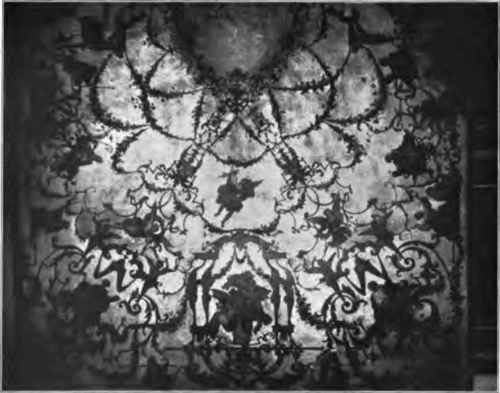
PLATE XXVI. CEILING IN THE STYLE OF BERAIN.
LOUIS XIV PERIOD.
Recent carpet-designs, though usually free from such obvious incongruities, have seldom more than a negative merit. The un-conventionalized flower still shows itself, and even when banished from the centre of the carpet lingers in the border which accompanies it. The vulgarity of these borders is the chief objection to using carpets of European manufacture as rugs, instead of nailing them to the floor. It is difficult to find a border that is not too wide, and of which the design is a simple conventional figure in flat unshaded colors. If used at all, a carpet with a border should always be in the form of a rug, laid in the middle of the room, and not cut to follow all the ins and outs of the floor, as such adaptation not only narrows the room but emphasizes any irregularity in its plan.
In houses with deal floors, where nailed-down carpets are used in all the rooms, a restful effect is produced by covering the whole of each story with the same carpet, the door-sills being removed so that the carpet may extend from one room to another. In small town houses, especially, this will be found much less fatiguing to the eye than the usual manner of covering the floor of each room with carpets differing in color and design.
Where several rooms are carpeted alike, the floor-covering chosen should be quite plain, or patterned with some small geometrical figure in a darker shade of the foundation color; and green, dark blue or red will be found most easy to combine with the different color-schemes of the rooms.
Pale tints should be avoided in the selection of carpets. It is better that the color-scale should ascend gradually from the dark tone of floor or carpet to the faint half-tints of the ceiling. The opposite combination - that of a pale carpet with a dark ceiling - lowers the stud and produces an impression of top-heaviness and gloom; indeed, in a room where the ceiling is overladen, a dark rich-toned carpet will do much to lighten it, whereas a pale floor-covering will bring it down, as it were, on the inmates' heads.
Stair-carpets should be of a strong full color and, if possible, without pattern. It is fatiguing to see a design meant for a horizontal surface constrained to follow the ins and outs of a flight of steps; and the use of pattern where not needed is always meaningless, and interferes with a decided color-effect where the latter might have been of special advantage to the general scheme of decoration.
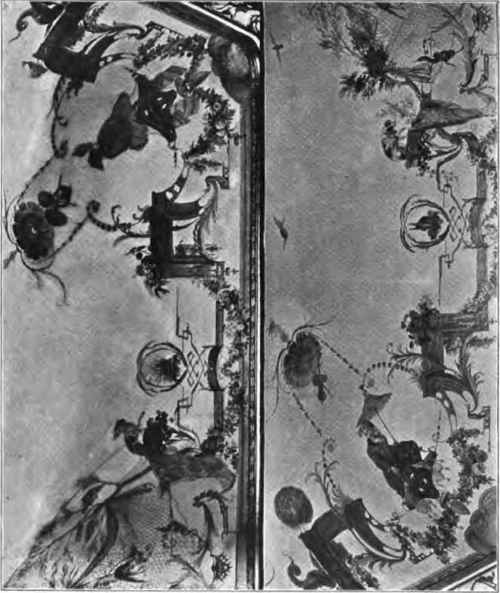
PLATE XXVII. CEILING IN THE CHATEAU OF CHANTILLY.
LOUIS XIV PERIOD. (EXAMPLE OF CHINOISERIE DECORATION).
Continue to:


My Books

