


XIII. The Dining-Room
Description
This section is from the book "The Decoration Of Houses", by Edith Wharton, Ogden Codman Jr. Also available from Amazon: The Decoration of Houses.
XIII. The Dining-Room
THE dining-room, as we know it, is a comparatively recent innovation in house -planning. In the early middle ages the noble and his retainers ate in the hall; then the grand'salle, built for ceremonial uses, began to serve as a banqueting-room, while the meals eaten in private were served in the lord's chamber. As house-planning adapted itself to the growing complexity of life, the medieval bedroom developed into a private suite of living-rooms, preceded by an antechamber; and this antechamber, or one of the small adjoining cabinets, was used as the family dining-room, the banqueting-hall being still reserved for state entertainments.
The plan of dining at haphazard in any of the family living-rooms persisted on the Continent until the beginning of the eighteenth century: even then it was comparatively rare, in France, to see a room set apart for the purpose of dining. In small botels and apartments, people continued to dine in the antechamber; where there were two antechambers, the inner was used for that purpose; and it was only in grand houses, or in the luxurious establishments of the femmes galantes, that dining-rooms were to be found. Even in such cases the room described as a salle a manger was often only a central antechamber or saloon into which the living-rooms opened; indeed, Madame du Barry's sumptuous diningroom at Luciennes was a vestibule giving directly upon the peristyle of the villa.
In England the act of dining seems to have been taken more seriously, while the rambling outgrowths of the Elizabethan residence included a greater variety of rooms than could be contained in any but the largest houses built on more symmetrical lines. Accordingly, in old English house-plans we find rooms designated as "dining-parlors"; many houses, in fact, contained two or three, each with a different exposure, so that they might be used at different seasons. These rooms can hardly be said to represent our modern dining-room, since they were not planned in connection with kitchen and offices, and were probably used as living-rooms when not needed for dining. Still, it was from the Elizabethan dining-parlor that the modern dining-room really developed; and so recently has it been specialized into a room used only for eating, that a generation ago old-fashioned people in England and America habitually used their dining-rooms to sit in. On the Continent the incongruous uses of the rooms in which people dined made it necessary that the furniture should be easily removed. In the middle ages, people dined at long tables composed of boards resting on trestles, while the seats were narrow wooden benches or stools, so constructed that they could easily be carried away when the meal was over.
With the sixteenth century, the table-a-trtteaux gave way to various folding tables with legs, and the wooden stools were later replaced by folding seats without arms, called perroquets. In the middle ages, when banquets were given in the grand'salle, the plate was displayed on movable shelves covered with a velvet slip, or on elaborately carved dressers; but on ordinary occasions little silver was set out in French dining-rooms, and the great English sideboard, with its array of urns, trays and wine-coolers, was unknown in France. In the common antechamber dining-room, whatever was needed for the table was kept in a press or cupboard with solid wooden doors; changes of service being carried on by means of serving-tables, or servantes - narrow marble-topped consoles ranged against the walls of the room.
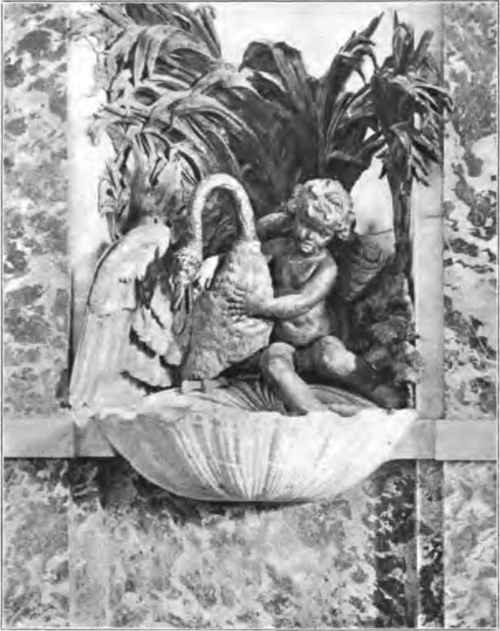
PLATE LI. DINING-ROOM FOUNTAIN, PALACE OF FONTAINEBLEAU.
LOUIS XV PERIOD.
For examples of dining-rooms, as we understand the term, one must look to the grand French houses of the eighteenth century (see Plate L) and to the same class of dwellings in England. In France such dining-rooms were usually intended for gala entertainments, the family being still served in antechamber or cabinet; but English houses of the same period generally contain a family dining-room and another intended for state.
The dining-room of Madame du Barry at Luciennes, already referred to, was a magnificent example of the great dining-saloon. The ceiling was a painted Olympus; the white marble walls were subdivided by Corinthian pilasters with plinths and capitals of gilt bronze, surmounted by a frieze of bas-reliefs framed in gold; four marble niches contained statues by Pajou, Lecomte, and Moineau; and the general brilliancy of effect was increased by crystal chandeliers, hung in the intercolumniations against a back-ground of looking-glass.
Such a room, the banqueting-hall of the official mistress, represents the courtisane's ideal of magnificence: decorations as splendid, but more sober and less theatrical, marked the dining-rooms of the aristocracy, as at Choisy, Gaillon and Rambouillet.
The state dining-rooms of the eighteenth century were often treated with an order, niches with statues being placed between the pilasters. Sometimes one of these niches contained a fountain serving as a wine-cooler - a survival of the stone or metal wall-fountains in which dishes were washed in the mediaeval dining-room. Many of these earlier fountains had been merely fixed to the wall; but those of the eighteenth century, though varying greatly in design, were almost always an organic part of the wall-decoration (see Plate LI). Sometimes, in apartments of importance, they formed the pedestal of a life-size group or statue, as in the dining-room of Madame de Pompadour; while in smaller rooms they consisted of a semicircular basin of marble projecting from the wall and surmounted by groups of cupids, dolphins or classic attributes. The banqueting-gallery of Tria-non-sous-Bois contains in one of its longitudinal walls two wide niches with long marble basins; and Mariettas edition of d'Avi-ler's Cours d' Architecture gives the elevation of a recessed buffet flanked by small niches containing fountains.
Continue to:


My Books

