


Hall And Stairs. Part 3
Description
This section is from the book "The Decoration Of Houses", by Edith Wharton, Ogden Codman Jr. Also available from Amazon: The Decoration of Houses.
Hall And Stairs. Part 3
In Italy, where wood was little employed in domestic architecture, stairs were usually of stone. Marble came into general use in the grander houses when, in the seventeenth century, the stairs, instead of being carried up between walls, were often placed in an open staircase. The balustrade was usually of stone or marble, iron being much less used than in France.
In the latter country the mediaeval stairs, especially in the houses of the middle class, were often built of wood; but this material was soon abandoned, and from the time of Louis XIV stairs of stone with wrought-iron rails are a distinctive feature of French domestic architecture. The use of wrought-iron in French decoration received a strong impulse from the genius of Jean Lamour, who, when King Stanislas of Poland remodelled the town of Nancy early in the reign of Louis XV, adorned its streets and public buildings with specimens of iron-work unmatched in any other part of the world. Since then French decorators have expended infinite talent in devising the beautiful stair-rails and balconies which are the chief ornament of innumerable houses throughout France (see Plates XXXI and XXXII).

PLATE XXXI. STAIRCASE OF THE HOTEL DE VILLE, NANCY.
LOUIS XV PERIOD. BUILT BY HERE DE CORNY; STAIR-RAIL BY JEAN LAMOUR.
Stair-rails of course followed the various modifications of taste which marked the architecture of the day. In the seventeenth and early eighteenth centuries they were noted for severe richness of design. With the development of the rocaille manner their lines grew lighter and more fanciful, while the influence of Gabriel, which, toward the end of the reign of Louis XV, brought about a return to classic models, manifested itself in a simplified mode of treatment. At this period the outline of a classic baluster formed a favorite motive for the iron rail. Toward the close of the eighteenth century the designs for these rails grew thin and poor, with a predominance of upright iron bars divided at long intervals by some meagre medallion or geometrical figure. The exuberant sprays and volutes of the rococo period and the architectural lines of the Louis XVI style were alike absent from these later designs, which are chiefly marked by the negative merit of inoffensiveness.
In the old French stair-rails steel was sometimes combined with gilded iron. The famous stair-rail of the Palais Royal, designed by Coutant d'lvry, is made of steel and iron, and the Due d'Aumale copied this combination in the stair-rail at Chantilly. There is little to recommend the substitution of steel for iron in such cases. It is impossible to keep a steel stair-rail clean and free from rust, except by painting it; and since it must be painted, iron is the more suitable material.
In France the iron rail is usually painted black, though a bethan houses, many of these were found to contain large panelled halls opening directly upon the porch or the terrace. The mellow tones of the wood-work; the bold treatment of the stairs, shut off as they were merely by a screen; the heraldic imagery of the hooded stone chimney-piece and of the carved or stuccoed ceiling, made these halls the chief feature of the house; while the rooms opening from them were so often insufficient for the requirements of modern existence, that the life of the inmates necessarily centred in the hall. Visitors to such houses saw only the picturesqueness of the arrangement - the huge logs glowing on the hearth, the books and flowers on the old carved tables, the family portraits on the walls; and, charmed with the impression received, they ordered their architects to reproduce for them a hall which, even in the original Tudor houses, was a survival of older social conditions.
One might think that the recent return to classic forms of architecture would have done away with the Tudor hall; but, except in a few instances, this has not been the case. In fact, in the greater number of large houses, and especially of country houses, built in America since the revival of Renaissance and Palladian architecture, a large many-storied hall communicating directly with the vestibule, and containing the principal stairs of the house, has been the distinctive feature. If there were any practical advantages in this overgrown hall, it might be regarded as one of those rational modifications in plan which mark the difference between an unreasoning imitation of a past style and the intelligent application of its principles; but the Tudor hall, in its composite character as vestibule, parlor and dining-room, is only another instance of the sacrifice of convenience to archaism.
The abnormal development of the modern staircase-hall cannot be defended on the plea sometimes advanced that it is a roofed-in adaptation of the great open cortile of the Genoese palace, since there is no reason for adapting a plan so useless and so unsuited to our climate and way of living. The beautiful central cortile of the Italian palace, with its monumental open stairs, was in no sense part of a "private house " in our interpretation of the term. It was rather a thoroughfare like a public street, since the various stories of the Italian palace were used as separate houses by different branches of the family.
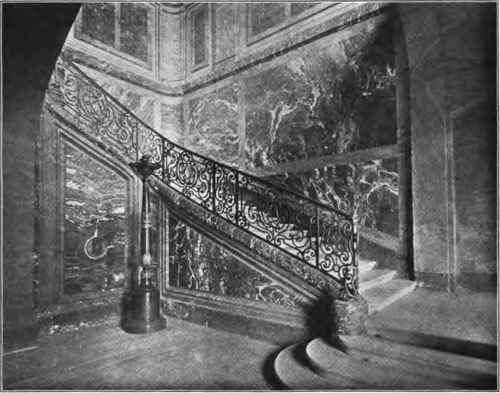
PLATE XXXII. STAIRCASE IN THE PALACE OF FONTAINEBLEAU.
LOUIS XV PERIOD.
In most modern houses the hall, in spite of its studied resemblance to a living-room, soon reverts to its original use as a passageway; and this fact should indicate the treatment best suited to it In rooms where people sit, and where they are consequently at leisure to look about them, delicacy of treatment and refinement of detail are suitable; but in an anteroom or a staircase only the first impression counts, and forcible simple lines, with a vigorous massing of light and shade, are essential. These conditions point to the use of severe strongly-marked panelling, niches for vases or statues, and a stair-rail detaching itself from the background in vigorous decisive lines.1
Continue to:


My Books

