


X. The Drawing-Room, Boudoir, And Morning-Room
Description
This section is from the book "The Decoration Of Houses", by Edith Wharton, Ogden Codman Jr. Also available from Amazon: The Decoration of Houses.
X. The Drawing-Room, Boudoir, And Morning-Room
THE "with-drawing-room" of mediaeval England, to which the lady and her maidens retired from the boisterous festivities of the hall, seems at first to have been merely a part of the bedchamber in which the lord and lady slept. In time it came to be screened off from the sleeping-room ; then, in the king's palaces, it became a separate room for the use of the queen and her damsels; and so, in due course, reached the nobleman's castle, and established itself as a permanent part of English house-planning.
In France the evolution of the salon seems to have proceeded on somewhat different lines. During the middle ages and the early Renaissance period, the more public part of the nobleman's life was enacted in the hall, or grand' salle, while the social and domestic side of existence was transferred to the bedroom. This was soon divided into two rooms, as in England. In France, however, both these rooms contained beds; the inner being the real sleeping-chamber, while in the outer room, which was used not only for administering justice and receiving visits of state, but for informal entertainments and the social side of family life, the bedstead represented the lord's lit de parade, traditionally associated with state ceremonial and feudal privileges.
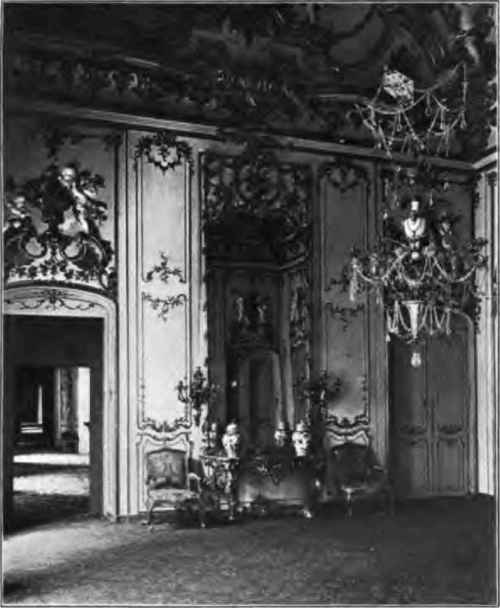
PLATE XXXIV. SALA DELLA MADDALENA, ROYAL PALACE, GENOA.
XVIII CENTURY. (ITALIAN DRAWING-ROOM IN ROCAILLE STYLE).
The custom of having a state bedroom in which no one slept (cbambre de parade, as it was called) was so firmly established that even in the engravings of Abraham Bosse, representing French life in the reign of Louis XIII, the fashionable apartments in which card-parties, suppers, and other entertainments are taking place, invariably contain a bed.
In large establishments the cbambre de parade was never used as a sleeping-chamber except by visitors of distinction ; but in small houses the lady slept in the room which served as her boudoir and drawing-room. The Renaissance, it is true, had introduced from Italy the cabinet opening off the lady's chamber, as in the palaces of Urbino and Mantua ; but these rooms were at first seen only in kings' palaces, and were, moreover, too small to serve any social purpose. The cabinet of Catherine de' Medici at Blois is a characteristic example.
Meanwhile, the gallery had relieved the grand'salle of some of its numerous uses; and these two apartments seem to have satisfied all the requirements of society during the Renaissance in France.
In the seventeenth century the introduction of the two-storied Italian saloon produced a state apartment called a salon ; and this, towards the beginning of the eighteenth century, was divided into two smaller rooms : one, the salon de compagnie, remaining a part of the gala suite used exclusively for entertaining (see Plate XXXIV), while the other - the salon de famille - became a family apartment like the English drawing-room.
The distinction between the salon de compagnie and the salon de famille had by this time also established itself in England, where the state drawing-room retained its Italian name of salone, or saloon, while the living-apartment preserved, in abbreviated form, the mediaeval designation of the lady's with-drawing-room.
Pains have been taken to trace as clearly as possible the mixed ancestry of the modern drawing-room, in order to show that it is the result of two distinct influences - that of the gala apartment and that of the family sitting-room. This twofold origin has curiously affected the development of the drawing-room. In houses of average size, where there are but two living-rooms - the master's library, or "den," and the lady's drawing-room, - it is obvious that the latter ought to be used as a salon de famille, or meeting-place for the whole family; and it is usually regarded as such in England, where common sense generally prevails in matters of material comfort and convenience, and where the drawing-room is often furnished with a simplicity which would astonish those who associate the name with white-and-gold walls and uncomfortable furniture.
In modern American houses both traditional influences are seen. Sometimes, as in England, the drawing-room is treated as a family apartment, and provided with books, lamps, easy-chairs and writing-tables. In other houses it is still considered sacred to gilding and discomfort, the best room in the house, and the convenience of all its inmates, being sacrificed to a vague feeling that no drawing-room is worthy of the name unless it is uninhabitable. This is an instance of the salon de compagnie having usurped the rightful place of the salon de famine; or rather, if the bourgeois descent of the American house be considered, it may be more truly defined as a remnant of the "best parlor" superstition.
Whatever the genealogy of the American drawing-room, it must be owned that it too often fails to fulfil its purpose as a family apartment. It is curious to note the amount of thought and money frequently spent on the one room in the house used by no one, or occupied at most for an hour after a " company " dinner.
To this drawing-room, from which the inmates of the house instinctively flee as soon as their social duties are discharged, many necessities are often sacrificed. The library, or den, where the members of the family sit, may be furnished with shabby odds and ends; but the drawing-room must have its gilt chairs covered with brocade, its vitrines full of modern Saxe, its guipure curtains and velvet carpet.
The salon de compagnie is out of place in the average house. Such a room is needed only where the dinners or other entertainments given are so large as to make it impossible to use the ordinary living-rooms of the house. In the grandest houses of Europe the gala-rooms are never thrown open except for general entertainments, or to receive guests of exalted rank, and the spectacle of a dozen people languishing after dinner in the gilded wilderness of a state saloon is practically unknown.
Continue to:


My Books

