


The Drawing-Room, Boudoir, And Morning-Room. Part 2
Description
This section is from the book "The Decoration Of Houses", by Edith Wharton, Ogden Codman Jr. Also available from Amazon: The Decoration of Houses.
The Drawing-Room, Boudoir, And Morning-Room. Part 2
The purpose for which the salon de compagnie is used necessitates its being furnished in the same formal manner as other gala apartments. Circulation must not be impeded by a multiplicity of small pieces of furniture holding lamps or other fragile objects, while at least half of the chairs should be so light and easily moved that groups may be formed and broken up at will. The walls should be brilliantly decorated, without needless elaboration of detail, since it is unlikely that the temporary occupants of such a room will have time or inclination to study its treatment closely. The chief requisite is a gay first impression. To produce this, the wall-decoration should be light in color, and the furniture should consist of a few strongly marked pieces, such as handsome cabinets and consoles, bronze or marble statues, and vases and candelabra of imposing proportions. Almost all modern furniture is too weak in design and too finikin in detail to look well in a gala drawing-room.1 (For examples of drawing-room furniture, see Plates VI, IX, XXXIV, and XXXV).
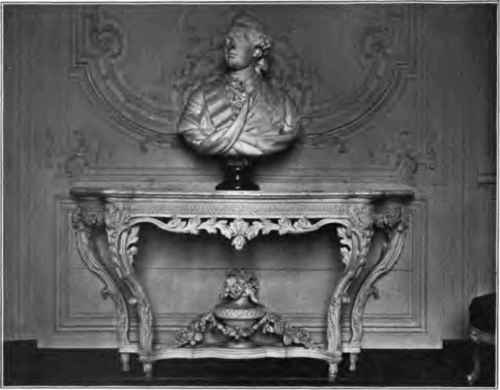
PLATE XXXV. CONSOLE IN THE PETIT TRIANON, VERSAILLES.
LATE LOUIS XV STYLE. BUST OF LOUIS XVI, BY PAJOU.
Beautiful pictures or rare prints produce little effect on the walls of a gala room, just as an accumulation of small objects of art, such as enamels, ivories and miniatures, are wasted upon its tables and cabinets. Such treasures are for rooms in which people spend their days, not for those in which they assemble for an hour's entertainment.
But the salon de compagnie, being merely a modified form of the great Italian saloon, is a part of the gala suite, and any detailed discussion of the decorative treatment most suitable to it would result in a repetition of what is said in the chapter on Gala Rooms.
The lighting of the company drawing-room - to borrow its French designation - should be evenly diffused, without the separate centres of illumination needful in a family living-room. The proper light is that of wax candles. Nothing has done more to vulgarize interior decoration than the general use of gas and of electricity in the living-rooms of modern houses. Electric light especially, with its harsh white glare, which no expedients have as yet overcome, has taken from our drawing-rooms all air of privacy and distinction. In passageways and offices, electricity is of great service; but were it not that all "modern improvements" are thought equally applicable to every condition of life, it would be difficult to account for the adoption of a mode of lighting which makes the salon look like a railway-station, the dining-room like a restaurant. That such light is not needful in a drawing-room is shown by the fact that electric bulbs are usually covered by shades of some deep color, in order that the glare may be made as inoffensive as possible.
1 Much of the old furniture which appears to us unnecessarily stiff and monumental was expressly designed to be placed against the walls in rooms used for general entertainments, where smaller and more delicately made pieces would have been easily damaged, and would, moreover, have produced no effect.
The light in a gala apartment should be neither vivid nor concentrated : the soft, evenly diffused brightness of wax candles is best fitted to bring out those subtle modellings of light and shade to which old furniture and objects of art owe half their expressiveness.
The treatment of the salon de compagnie naturally differs from that of the family drawing-room: the latter is essentially a room in which people should be made comfortable. There must be a well-appointed writing-table; the chairs must be conveniently grouped about various tables, each with its lamp; - in short, the furniture should be so disposed that people are not forced to take refuge in their bedrooms for lack of fitting arrangements in the drawing-room.
The old French cabinet-makers excelled in the designing and making of furniture for the salon de famille. The term "French furniture " suggests to the Anglo-Saxon mind the stiff appointments of the gala room - heavy gilt consoles, straight-backed arm-chairs covered with tapestry, and monumental marble-topped tables. Admirable furniture of this kind was made in France; but in the grand style the Italian cabinet-makers competed successfully with the French; whereas the latter stood alone in the production of the simpler and more comfortable furniture adapted to the family living-room. Among those who have not studied the subject there is a general impression that eighteenth-century furniture, however beautiful in design and execution, was not comfortable in the modern sense. This is owing to the fact that the popular idea of "old furniture" is based on the appointments of gala rooms in palaces: visitors to Versailles or Fontainebleau are more likely to notice the massive gilt consoles and benches in the state saloons than the simple easy-chairs and work-tables of the petits appartements.
A visit to the Garde Meuble or to the Mu-see des Arts Ddcoratifc of Paris, or the inspection of any collection of French eighteenth-century furniture, win show the versatility and common sense of the old French cabinet-makers. They produced an infinite variety of small meubles, in which beauty of design and workmanship were joined to simplicity and convenience.
The old arm-chair, or bergere, is a good example of this combination. The modern upholsterer pads and puffs his seats as though they were to form the furniture of a lunatic's cell; and then, having expanded them to such dimensions that they cannot be moved without effort, perches their dropsical bodies on four little casters. Any one who compares such an arm-chair to the eighteenth-century bergere, with its strong tapering legs, its snugly-fitting back and cushioned seat, must admit that the latter is more convenient and more beautiful (see Plates VIII and XXXVII).
Continue to:


My Books

