


Chapter XVI. Chippendale: II - The French, Gothic, And Chinese Styles
Description
This section is from the book "English Furniture", by Frederick S. Robinson. Also available from Amazon: English Furniture.
Chapter XVI. Chippendale: II - The French, Gothic, And Chinese Styles
IN Chippendale's first edition the French style may fairly be said to predominate, and it is probable that his earliest affections were centred upon the styles of Louis XIV. and Louis xv. The later manner is by far the most apparent in his work. There is very little of the massive dignity of the earlier king's style left in that of Chippendale. It is to be observed in the terminal-shaped legs of cabinets and sideboard tables, perhaps in certain clock-cases, and occasionally in alternative patterns for chair-legs. It does not amount to much. The rococo Louis xv. influence is, on the other hand, noticeable everywhere. It abounds in chairs and screens, girandoles and pier-glass frames, beds and commodes. We should remember that so far from denying that influence, Chippendale frankly describes his upholstered chairs as French chairs. Whether he meant by that to acknowledge a French inspiration is, of course, open to argument; but the complete resemblance of style to that from over the water would render a denial of foreign borrowing very difficult of acceptance. It is likely enough that he was ready to claim rather more as his own than the appearance of some of these things would warrant.
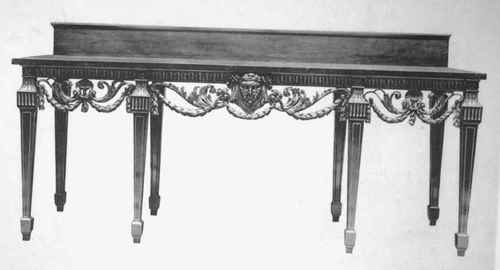
Plate CXVII. Sideboard Table, Mahogany I 780 Circa.
CXVII. Sideboard Table, mahogany, 1780 circa. Sir Samuel Montague, Bart.
When he remarks, 'in executing many of the drawings, my pencil has but faintly copied out these images that my fancy suggested,' it is charitable to suppose that he was referring chiefly to those less ornate designs, in which he shows a sobriety more essentially English.
Chippendale, in a monumental style borrowed largely from French ornament, is well illustrated by the Master's chair of the Grocers' Company (Plate xcii.i). This chair may date from about 1745, and is curiously overdone with ornament at the top, in proportion to the modesty of its legs and seat. It is interesting to compare it with the elegant mahogany china cabinet belonging to the late Mr. Henry Willett (Plate xc), which is admirable in proportion, and as graceful as the Grocers' chair is pompous. Yet the same elements of decoration are to be found in the two. The rocaille work and curves which run round the upholstered back of the chair are used in a lighter, more irregular form on the panels of the lower part of the cabinet. For some reason this beautiful piece when exhibited was said to be by Adam. It is impossible, I think, to find anything amongst the original drawings of the Adam firm preserved in the Soane Museum, which has any resemblance to this design. In Chippendale's book, on the other hand, the pediment with swan neck disguised with leafage, and with a pedestal to support a bust, is found on a 'desk and bookcase,' which has carved flower ornament in similar style to that of Mr. Willett's china case. It also appears in a large library bookcase of Gothic design.


Plate XCII
I - Arm-Chair, Mahogany, Chippendale About 1745
2 - Arm-Chair, One Of A Pair, Mahogany First Half Of 18th Century
XCII. (1) Armchair, mahogany. Chippendale. About 1745. Used by the Master of the Grocers' Company, and carrying their arms and badge. Upholstered in green morocco. The Worshipful Company of Grocers.
(2) Armchair, one of a pair, mahogany. First half of eighteenth century. V. & A. M.
Similar open lattice-work to that which fills in the swan necks and the flat bust shelf is found on the pediment of a long clock, and on a larger scale on that of a ' dressing chest and bookcase/ The outlying decorations of the canted corners are to be found on very many of Chippendale's French-influenced designs for commodes and clothes chests. All the elements of this cabinet, in fact, are such as he used, and though some may prefer to attribute it to the 'school' only of Chippendale, it certainly does not belong to that of Adam. It is an example which either might have been proud to claim.
Continue to:


My Books

