


Gibbons And Wren
Description
This section is from the book "English Furniture", by Frederick S. Robinson. Also available from Amazon: English Furniture.
Gibbons And Wren
Allowance must be made for the partiality of a man who had so much to do with the career of Gibbons, but the reference to his inventiveness must afford no doubt that Sir Christopher Wren left him a very free hand. It is permissible to point out that in some cases the very great relief and naturalism of Gibbons's work, placed for safety rather high on a wall which has somewhat plain panelling below, is apt to give a suggestion of top-heaviness to a room. This will be apparent to any one who considers the doorway leading into the Rubens Room from the State Ante-Room at Windsor. The clusters of fish and dead game project a little too insistently from the wall, the heavy and severely plain panelling of which forms a sufficiently striking contrast to the exuberant upper carving. No man, however, is always at his best, and there is no question that, whatever continental masters inspired Gibbons, there was never before in England such carving as his. In the library of Trinity College, Cambridge, designed by Wren, may be seen profuse examples of Gibbons's work. In the highest end panel of many of the projecting bookshelves are carvings one and a half feet across, enclosing the arms of the donors.
One at least of these is said to be carved entirely out of one piece of lime-wood - an instance of Oriental intricacy. The rest are pinned, as is usually the case, to keep the various parts intact. The oak shelves are reddish-brown, stained, but not polished. The lime has its natural light colour.
1 See Appendix, Note iv.
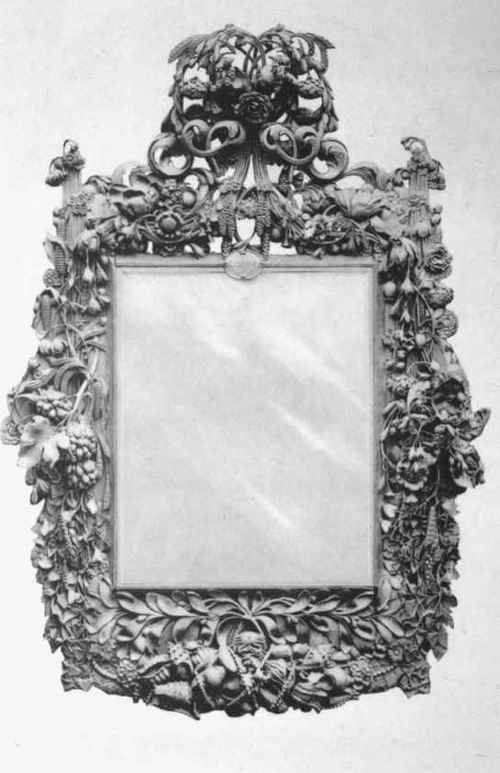
Plate LXXII. Mirror Frame, Limewood, Grinling Gibbons 1648-1721
LXXII. Mirror Frame, limewood. Grinling Gibbons, 1648-1721. V. & A. M.
Dimensions : Height 76, Breadth 57 inches.
In striking contrast to Gibbons's mirror is the straight-lined one reproduced in Plate lxxiii. i. This is probably English and of his period, or perhaps earlier. Its design has artistic merit, but the execution is not to be compared with that of Grinling Gibbons. Evelyn has a reference to a clock case which Gibbons decorated for Mr. Bohun at Lea, Kent,' whose whole house,' says the diarist,' is a cabinet of elegancies, especially Indian ; in the hall are contrivances of Japan skreens instead of wainscot, and there is an excellent pendule clock inclosed in the curious flower-work of Mr. Gibbons in the middle of the vestibule. The landskips of the skreens represent the manner of living and country of the Chinese; but above all, his lady's cabinet is adorn'd on the fret, ceiling and chimney piece with Mr. Gibbons's best carving,' July 30, 1682. This entry is interesting from various points of view. It shows us Gibbons as a furniture decorator, and it makes reference to that' Chinese craze' which was to obtain, a little later, so much support from William the Third's queen.
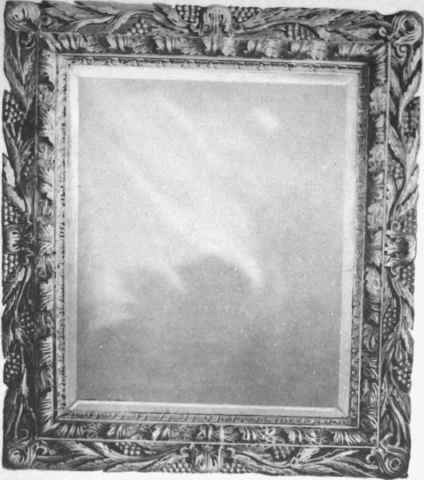

Plate LXXIII. Gilt Mirror Frames Late 17th Century
LXXIII. (1) Gilt Mirror Frame. Late seventeenth century. The property of the author.
Dimensions: Height 40½, Breadth 35⅜ inches.
(2) Gilt Mirror Frame. Late seventeenth century. Sir Charles Robinson, C.B.
Dimensions: Height 54, Width 40½ inches.
The use of Japan screens (were they of textile fabrics or lacquer ?) anticipates by two hundred years the experiments of to-day in original furnishing.
Gibbons died in 1720, just before the period of mahogany furniture is said to have commenced. That of Queen Anne was a somewhat plain and barren epoch. It would seem that the handsome and heavy panelling was considered almost sufficient in itself to furnish a room. In Gibbons's case the carving, which might have graced cabinets and chairs instead of being fixed to the wall, did much to make an apartment beautiful and stately. Comfort, however, was not to be much considered for another generation, when at length the influence of Gibbons's genius and example was to be felt in the beautiful carving of every kind of movable furniture. A nobleman's house of his own time, and probably decorated by Gibbons himself, is described by J. T. Smith {Nollekens and his Times, vol. i. p. 27, 1829). This was the Duke of Monmouth's in Soho Square, then about to be destroyed. 'Of the eight rooms on the ground floor the principal one was a dining-room, . . . the carved and gilt panels of which had contained whole-length pictures. . . . The staircase was of oak. . . . and the landing-places were tesselated with woods of light and dark colour similar to those now remaining on the staircase of Lord Russell's house . . . and in several rooms of the British Museum. As we ascended, I remember Mr. Nollekens noticing the busts of Seneca, Caracalla, Trajan, Adrian, and several others upon ornamental brackets.
The principal room on the ground floor . . . was lined with blue satin, superbly decorated with pheasants and other birds in gold. The chimneypiece was richly ornamented with fruit and foliage, similar to the carvings which surround the altar of St. James's Church, Piccadilly. .. In the centre over this chimneypiece within a wreath of oak leaves was a circular recess which evidently had been designed for the reception of a bust. The beads of the panels of the brown window-shutters, which were very lofty, were gilt; and the piers between the windows, from stains upon the silk, had probably been fitted with looking-glasses/
Continue to:


My Books

