


Chapter VI. Oaken Chairs And Stools From The Renaissance To The End Of The Seventeenth Century
Description
This section is from the book "Old Oak Furniture", by Fred Roe. Also available from Amazon: Old Oak Furniture.
Chapter VI. Oaken Chairs And Stools From The Renaissance To The End Of The Seventeenth Century
IN the last chapter I (Introductory - The Cult Of Oak-Collecting) (Introductory - The Cult Of Oak-Collecting) attempted to give an account of the different styles of chairs and stools down to the time of the Renaissance. From the absence of surviving examples the catalogue was necessarily a brief one. The reign of the first two successors to the throne after the death of Henry VIII. was so short that the interval can scarcely be termed a period, and few indeed are the articles which we can identify as actually belonging to the time. A panel in the Victoria and Albert Museum, which probably once formed part of a chair-back, however, affords us some information as to the commingling of the Gothic and classic styles which was taking place in the production of carved furniture. A profile portrait of the boy King, with which this panel is decorated, is surmounted by a semicircular arch of the new style, embellished with unmistakably Gothic spandrels. About the middle of the sixteenth century the Italian form of chair seems to have become popular in England, the seat and arms being formed by semicircular pieces of wood resting on similar pieces inverted. These chairs had no wooden back, the space between the uprights being rilled with velvet or other material, stretched across.
The whole structure was usually covered with silk or velvet, probably decorated in applique, and a thick cushion of the same material was placed upon the seat. The chair in the vestry of York Minster, which has more than once been wrongly attributed to the time of Richard II., is a good specimen of this type, although decay has wrought sad havoc with it.* The picture of Mary Tudor by Sir Antonio More also depicts the Queen seated upon a chair of this description. One of the finest of these circular-framed chairs yet remaining is in the possession of Sir Charles Lawes-Wittewronge, Bart, whose fine collection of antiquities at Rothamsted Park is referred to several times during the course of this work. The wood it is built of is chestnut, the front of the arms and legs being elaborately carved with arabesque patterns and masks. The material originally stretched across the back and seat has disappeared, being replaced by stuffed leather, the period of the alteration being indicated by the form of the back, which rises into the half-round shape associated with the junction of the seventeenth and eighteenth centuries.
Another chair of this form, additionally interesting from its being connected with the fortunes of the House of Stuart, is preserved at the Cottage Hospital, Moreton-in-the-Marsh, Gloucestershire. This relic is confidently believed to be the actual one which was used by the unhappy Charles I. during his trial at Westminster Hall. The chair in question possesses a padded back, terminating in two oval-shaped pinnacles, which, as well as the whole framework of the structure, are covered with velvet, formerly of a crimson hue. During the Stuart Exhibition, held at the New Gallery in 1889, this memento of Charles's trial was an object of special interest. Some chairs of an almost precisely similar type and date exist at Ham House.
* This type, which is probably Venetian in origin, must have been known generally on the Continent long before we had it in England. In the picture of Anne of Burgundy worshipping the Virgin and Child, in the Bedford Missal, a chair constructed in this manner is depicted most accurately. The Bedford Missal, now in our British Museum, was written and illustrated expressly for the Duke of Bedford about 1430. This form of seat is popularly known nowadays by the appellation of the 'X chair.'

CHAIR, TEMP. HENRY VIII., IN THE COLLECTION OF SIR CHARLES. LAWES-WITTEWRONGE, BART.
Elizabethan and Jacobean chairs, good, bad, and indifferent, may be found in numbers. Oak arm-chairs of this period frequently exhibit the round arch upon the panel in their backs, though the spandrels often show traces of the debased Gothic which yet lingered in parts of the country. Amongst the carvings which decorated the back panel may often be found a singular flower resembling the sunflower, the origin of which it is not easy to determine. Whatever its significance may have been, it is now lost and forgotten. What is technically termed the 'strap and jewel' moulding also made its appearance, while the single or double guilloche was also used. The backs of chairs were often inlaid with holly or other light wood representing geometrical patterns or bunches of conventional flowers, these inlaid designs being applied to the back panel, generally beneath a semicircular arch supported by classic pilasters. The round arch is a common form of decoration upon chairs of late sixteenth and seventeenth century work. In the finer examples, as with chests, the arch, pillar caps, etc., are applied, being actually built up in separate pieces upon the surface of the back panel, but in rougher specimens the arches are merely incised, exhibiting a return to more ancient and cruder methods.
Geometrical inlay was also carried round the skirting of the seat, and sometimes may even be found on the foot-rails. The actual form of oak armchairs varied but little from the commencement of Elizabeth's reign down to the close of the seventeenth century, and vast numbers of such articles are recklessly assigned to Elizabethan times which do not actually date farther back than the time of Charles II. and William III.
Fine specimens of inlaid Elizabethan chairs command very high prices nowadays, but the best examples differ vastly from those of poorer quality, both in respect of workmanship and intrinsic value. Fine Elizabethan and Jacobean arm-chairs may often be seen in the chancels and vestries of our country churches, St. Albans Abbey Church possessing several magnificent specimens. The characteristics of English chairs and stools of the later Renaissance are intensely national, and have little in common with the Continental productions of the period. It would be hardly possible for anyone at all conversant with the subject of old oak to mistake a chair or stool of this period and of Continental manufacture for an English piece, or vice versa.
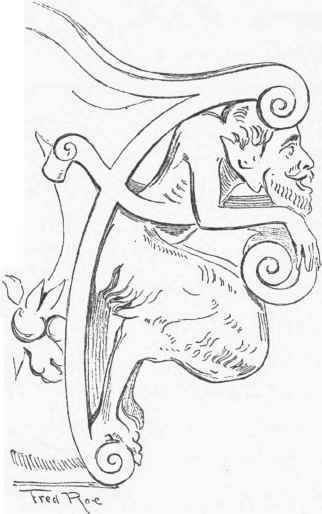
CARVED ARMS ON THE MAYOR'S CHAIR, SANDWICH.
Continue to:


My Books

