


Try-Square
Description
This section is from the "Elementary Woodwork" book, by Frank Henry Selden. Also available from Amazon: Elementary Woodwork for Use in Manual Training Classes.
Try-Square
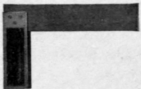
There are several forms of try-squares, some of which are shown in Figs. 198, 199, and 200. The method of using try-squares is shown in Figs. 4, 12, 19, 20, 21, 22, 23, 32, 33, 36, 42, 55, 56, 57, 59, 60, 62, and 95. All try-squares are liable to be injured by rough usage. Do not use them for hammering or prying. Be careful not to drop them upon the floor or bench. In testing edges, lift and lower the square at several points along the edge rather than slide it the entire length of the piece. Always make a variety of tests if practical. Be careful to test pieces to their extreme limits, such as the extreme ends and edges.
Fig. 198. A Good Cheap Try-Square.
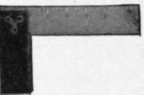
Fig. 199. A Substantial All Iron Try-Square.
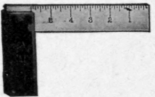
Fig. 197. Steel Carpenter's Square.
Should the square be bruised or sprung out of true it is not a difficult matter to true it by using the eight-inch file and testing it with the steel square.
Continue to:


My Books

