


Summer-Houses. Part 4
Description
This section is from the book "Rustic Carpentry", by Paul N. Hasluck. Also available from Amazon: Rustic Carpentry: Woodworking with Natural Timber.
Summer-Houses. Part 4
The front supports of the seats are let into the ground some 6 in., and rise 14 1/2 in. above the ground line. The seats should be cut from 1-in. board, and should be about 16 1/2 in. wide.
In the two window sides of the octagon (see Figs. 177 and 172), the space below the windows is filled with whole poles, their bottoms resting on a sill let in level with the ground, and their tops nailed into through a cross-piece of half-sturi (k, Fig. 177). The mullions and transoms of the windows - mere sticks - are of small straight larch stuff, but the ornamental filling in above is of crooked branches - oak bangles by preference, though apple-wood would do very well. It often happens that an old apple-tree is cut down, and at once condemned as firewood; yet its stem may have grotesque knots, and its branches picturesque contortions which would make it valuable for rustic work. Whenever rustic building is contemplated, it is well that such wood should be laid by; a single tree would supply all the small quantity of crooked stuff that is required in the present instance. Even the interlaced stems of ivy, when an old growth has covered a wall, have sometimes been utilised to excellent effect.
It may he observed, that any chinks between the pieces beneath the windows, as well as in the walls generally, are most readily and appropriately rendered wind-proof by neatly stuffing with moss. Fig. 177 gives a full front elevation of one of the window sides (they being only seen obliquely in Fig. 172), and it is on the 1/2-in. scale. Four stout crooked pieces are used as struts to support the table (drawn to 1 in. scale in Figs.
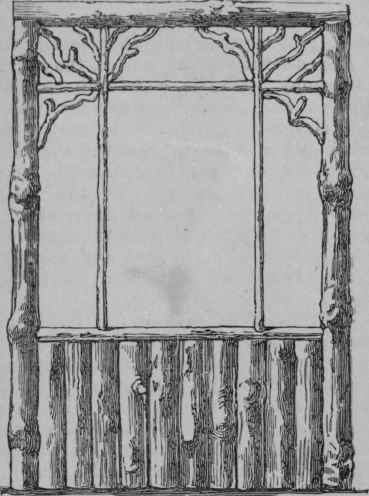
Fig. 177. - Window Side of Octagonal Summer-house.
178 and 179); 3/4-in. board will suffice for the top of this table, and it will probably be cut from two widths. To give proper strength to the ornamental border (seen in Fig. 179), a second thickness of the board is attached below each corner, extending 3 or 4 in. to each side, so as to allow each of the longer bits of split rod to be fixed, as shown, with two brads.
A really satisfactory material in which to finish the top of a rustic table is not easily found; it must give a level surface, and at the same time be in harmony with its surroundings. Board, planed or painted, oilcloth, or any manufactured material, is felt to be out of place; marble or slate looks cold and hard. Nothing that is absolutely level satisfies the requirements; the best alternative is rustic mosaic. By this is meant split rods of wood so bradded down as to form patterns. For the present purpose, however, the mosaic must be kept more neat and smooth than usual. Fig. 178 shows the top of the table thus treated.
The rods most in favour for rustic mosaic are those of the hazel. They are to be bought cheaply and abundantly when the undergrowth of woods is cut. They have a smooth and pretty bark, and the useful size is from | in. to l 1/2 in. Sticks of other kinds of the same size can also be used : birch and wild cherry may be named among those with smooth bark, and wych elm and maple among those with rough; willow or withy, again, is of most common growth, and exceedingly useful. In river-side neighbourhoods it is often the cheapest and most plentiful of all woods. For mosaic work, it is always peeled, for its bark is unattractive, and its light colour when stripped makes it tell well in contrast to the dark bark of other woods. If used, as it often is, for outdoor purposes in garden carpentry, it should always be peeled. Country carpenters have a saying that withy lasts twice as long without its bark as with it; and in this there is much truth, for the loose bark holds the wet to the wood and causes it to rot. To make it peel freely, it should be cut just as the young leaves make their appearance. The like holds good with other woods; but if it is desired that the bark should hold firmly, the wood should be cut down in dead of winter, when all the sap is down.
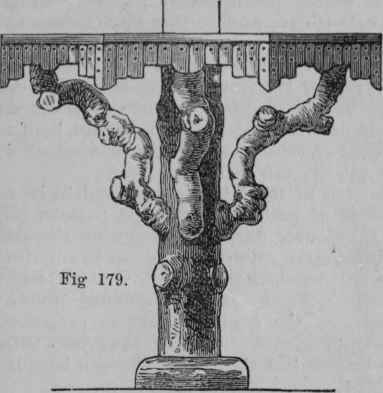

Figs. 178 and 179. - Plan and Elevation of Table for Octagonal Summer-house. J.
The top of the table is supposed to be mainly composed of peeled withy. The pattern contains only the double dark line bounding the star and the single strip round the edge in hazel. So much white will not look amiss in this place, and withy is easily worked. Hazel and most woods twist so much in the grain that it is rarely safe to split them except with the saw, but withy - in short lengths like these, at least - can be split with a hatchet.
In rough carpentry there is no more pretty or interesting work than these mosaics. The backs of the seats (Fig. 180), and the seats themselves (Fig. 181), are decorated in this way. On the seats themselves, as on the table top, hazel and withy are contrasted, and form a design in alternate triangles; the separating bands, it may be noticed, have a light strip against the dark, and a dark strip against the light, triangle. Along the edge of the seats one or two strips merely are nailed lengthwise. In such a situation an ornamental edging like that round the table would be too liable to be broken. It is recommended that the back of the seats should be in dark bark-covered woods only, for the mosaic in that position will look better without any mixture of the light-coloured withy.
The upper compartments of the sides with which the backs of those sitting down will not come in contact may be more quickly and yet pleasingly covered with sheets of bark. Elm bark is good for the purpose. It may be peeled in large sheets from the trunks of trees felled in spring, when the sap is rising; and whilst it is drying should have bricks or stones laid on it to press it flat. When dried, it is nailed to the walls, and any cracks which appear can be neatly filled with moss. The space beneath the seats is also shown as roughly covered with bark.
Continue to:


My Books

