


Summer-Houses. Part 3
Description
This section is from the book "Rustic Carpentry", by Paul N. Hasluck. Also available from Amazon: Rustic Carpentry: Woodworking with Natural Timber.
Summer-Houses. Part 3
The cushions are retained in place by straps passing through slots and fastening over suitable studs on the under side; see Fig. 171. This method provides a means of easily removing and quickly replacing the cushions when required for use. A space of 3 in., or a distance equal to the thickness of the cushions, must be left at the sloping back, to allow the seat to open properly.
The nature of the locker is partly concealed by the rustic work of split twigs that is nailed to the front.
Next fix the lattice work between the finials and under the front plate. The short struts on the front posts are more for effect than for any real support.
The roof is boarded on the inside, the work being carried on the rafters as far as the collar ties, and continued flat on these. Moulding is fixed in the angles formed between the rafters and ties, and a cornice is fixed at the plates. The heels of the rafters and plates are also boarded around, as shown in Fig. 169.
The roof may be covered with thatch of wheat, straw, reeds, broom, or heather, and the whole of the woodwork visible should be varnished.
The summer-house illustrated by Fig. 172 is suited to a garden of moderate size, one in which space is not so restricted as to necessitate crowding the building close against a wall. This octagonal summer-house has a continuous seat some 15 ft. long. From side to side each way it measures 10 ft. Fig. 172 is an elevation of the front of the house.
Its framework and the main part of it are of larch poles; other woods are, however, used for minor purposes. The roof is of thatch. In the arrangement of this building there is a certain resemblance to a tent. It has a central pillar, a, not unlike a tent pole, which sustains much of the weight of the roof. Being of first importance, this pillar is somewhat larger than any of the other timbers - say 6 in. in diameter near its bottom, and tapering as little as may be. A rod of iron or wood rises from its top to form the centre of the straw pinnacle seen crowning the roof in Fig. 172. This pillar shows a height of 11 ft. 2 in. above ground, and it should be let 3 ft. or more into the soil; for it will need to be firmly fixed, or it may be forced out of the perpendicular during the erection of the roof; when the roof timbers are once fixed in place, it will have little further chance of moving. The diagram Fig. 173 is a ground plan, and Fig. 174 is a section showing the timbers from the interior; both are drawn on a scale of 1/4 in. to the foot.

Fig. 173. - Ground Plan of Octagonal Summer house. Fig 174. - Section of Octagonal Summer-house at YZ (Fig. 173), showing Framework.
The eight collar-posts (b, Figs. 173 and 174) at the corners of the octagon are of somewhat smaller stuff - say 4 in. They show 6 ft. above ground, and should have 2 ft. below. It will be well to gas-tar all the underground work.
The ground plan of a building in this shape is readily laid out. The space being levelled, a string is taken which has a loop at each end, and is 5 ft. 2 in. long. With a stake driven through the loop at one end as a centre, and with a stick passed through the loop at the other to serve as the travelling leg of the compasses, a circle is struck 10 ft. 4 in. in diameter, and into this pegs are driven at equal intervals (4 ft. apart) to mark the centres of the eight collar-posts. Whilst digging the holes for the posts, these points are kept by drawing two straight lines on the ground which intersect at the peg.
The cross-pieces which rest on the collar-posts, and which serve as wall-plates, are a trifle smaller stuff than the posts - say 3 in. Fig. 175 shows how they are cut to fit the tops of the posts, and nailed there. In this building there are no mortise and tenon joints. On these ends above the posts rest the lower ends of the eight main rafters, d, the upper ends of which rest against and are nailed to the central pillar. The eight intermediate rafters, e, rest at the bottom on the middles of the side plates, and at top are cut to fit upon and between the tops of the main rafters.
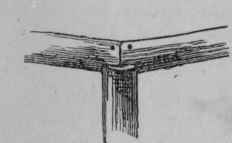
Fig. 175. - Collar Posts and Ends of Wall Plates.
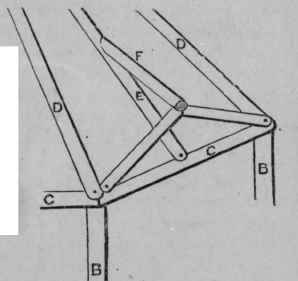
Fig. 176 - Timbers over Entrance of Octagonal Summer-house.
The laths used are in this case in no way particular - any sticks will do; they will not be seen, and under thatch there is no necessity that a level surface should be formed by them, as for slates or tiles. They are nailed 6 in. or 8 in. apart.
The gable over the entrance is arranged as in Fig. 176. The laths, when nailed on, will have to run over the little ridge formed by F, instead of keeping the level, as on the other sides. This will cause no special difficulties in the thatching.
The walls are of larch poles sawm in half. To split a number of heavy poles with the hand saw is tedious work, and it is better to get them run through by the nearest steam saw. The quantity of half-stuff required may be easily calculated ; one of these sides will take about five and a half 6-ft. lengths of 4-in. stuff. The tops of these wall-pieces are sawn obliquely to fit against the round wall-plates to which they are nailed. In their lower parts they are nailed to the lower cross-pieces, G, G, G, Fig. 174.
These latter will best be made of rather large stuff quartered, since their upper sides on which the seat-boards rest should be level, as well as their backs, which go against the wall-pieces. The middle cross-pieces are of smaller half-stuff, and should be nailed to the wall-pieces rather than that the wall-pieces should be nailed to them; for they are in a conspicuous place, and nails driven through them and clenched would be unsightly.
Continue to:


My Books

