


A Roller Jack
Description
This section is from the book "Handy Man's Workshop And Laboratory", by A. Russell Bond. Also available from Amazon: Handy Man's Workshop And Laboratory.
A Roller Jack
For moving heavy timber and other uses, a roller jack will be found very handy. It is easily constructed, any amateur being able to do the blacksmithing required. The framework should be made of oak or heavy tough wood; the roller of pepperidge or sour gum, a wood which will not easily split. The bottom face of the framework is in the same plane, in other words lies, flat on the ground at all points.
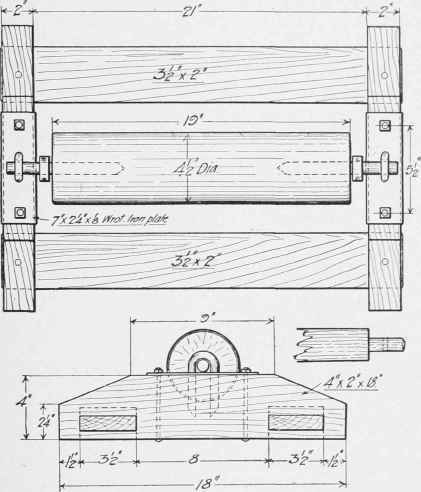
Fig. 66 - Plan and end views of the roller jack.
The general dimensions are given in Fig. 66. The 3 1/2 by 2-inch braces should be connected to the side pieces with mortise and tenon joints, and secured in place with wooden drift pins.
Wrought-iron plates are bolted to the upper face of the sides, for the roller axles to wear on. These plates should project over the sides a little as shown, to take the wear of the washers on the axles. These washers are made from staples bent around the axles, which are three-quarters of an inch diameter, round iron. The axles are round at one end and square at the other; the square end being' driven into the roller with a driving fit. The bearing ends of the axles are 3/4 inch in diameter.
Continue to:


My Books

