


A Strong Home-Made Turnbuckle
Description
This section is from the book "Handy Man's Workshop And Laboratory", by A. Russell Bond. Also available from Amazon: Handy Man's Workshop And Laboratory.
A Strong Home-Made Turnbuckle
Requiring some small turnbuckles which would stand a sudden strain, the writer hunted through the hardware stores of New York without success. None small enough could be obtained having the left and right hand bolts cast in one piece to the ring--at their ends. A buckle with bolts made of wire threaded at one end and bent into a ring at the other opened the moment a load was applied. Those with a swivel at one end were not better, for in every case the riveted neck of the swivel pulled out.
Finally the buckles were made at home. As small left-hand taps and dies were only to be obtained, and not promptly, from the factory, the following method was pursued: A dozen turn-buckles were required, and so two feet of 3/8-inch Shelby steel tubing, No. 13 gage, and one foot of 1/2-inch No. 11 gage was bought, also one dozen 1/4-inch bolts and nuts, and one dozen 1/4-inch nails with heads 1/8 inch thick. The material cost seventy-five cents.
The material was cut into required lengths and each piece B was counterbored with a 3/8-inch drill to slip over the end of ./. The head of the nail C was filed to fit the counterbore, and after inserting it in B, its end was flattened and a hole drilled as shown. B was then riveted to A at D, using a 5/32-inch wire nail. The other end of A.was tapped for the right-hand bolt F, the end of which was flattened and drilled like the nail C. A 5/32-inch hole E was drilled for a pin or nail for tightening the buckle.
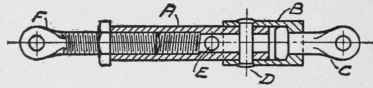
Fig. 89 - A strong home-made turnbuckle.
The whole twelve were made, entirely by hand, in nine hours, or forty-five minutes each.
Continue to:


My Books

