


Electrostatic Illuminations: Interesting Experiments For The Induction Machine
Description
This section is from the book "Handy Man's Workshop And Laboratory", by A. Russell Bond. Also available from Amazon: Handy Man's Workshop And Laboratory.
Electrostatic Illuminations: Interesting Experiments For The Induction Machine
Among the multitude of attractive experimental possibilities suggested by high-tension electricity, there is no class of phenomena susceptible of more interesting treatment, or in whose development lies fairer promise of gratifying result from simple apparatus, than the beautiful luminous effects of the static discharge over interrupted conductors. A certain few pleasing experiments of this character have long formed a familiar subject of illustration in most of the older works on physics; however, very little recent effort toward any amplification of these beautiful effects has been made.
Ordinarily, in such experiments the conductor remains at rest, its cut spaces illumined by the electric discharge, the value of the result as a spectacle depending upon the necessarily limited disposition that can be made of the luminous conductor; but by arranging the latter to be kept in rapid motion, so as to call into play the phenomenon of persistence of vision, this form of experiment becomes at once susceptible of some exceedingly fine adaptations.
To those having at hand a good static machine the illumination of such objects as wine glasses, vases, lamp chimneys or any symmetrical glass objects of this sort, becomes easy, and constitutes one of the most beautiful of all the varied line of possible visual effects. Fig. 200 suggests the method of arranging such articles for illumination. In the example illustrated a large goblet of thin glass is held by three small screws upon a revolving platform having upon its under side a small grooved pulley which is belted for moderately rapid rotation to a suitable hand wheel. A single narrow strip of tinfoil, 1/16 of an inch wide, is cemented over the glass with thick shellac varnish as follows: Starting under the goblet at the spindle of the whirling table, with which it makes contact, the strip proceeds to the edge of the foot of the glass, which it follows for perhaps an inch; thence in a curved line across the base to the stem, which it ascends in a straight path; then, over the howl of the goblet in a somewhat sinuous course to the upper rim. after following which for about one-third its circumference it descends upon the inside, and terminates in the center at the bottom. All that portion of the tinfoil on the outside and along the upper rim is divided every eighth of an inch with a knife point, those parts within and under the goblet being left intact. The divisions should be carefully gone over and examined to see that they are all perfect and of sufficient width to insure a good bright spark at each break when the current from a Wimshurst machine is passed through the foil. Current is led into the strip through binding posts attached respectively to the supporting spindle of the whirling table, and to the foot of a vertical conducting standard formed of brass tubing, rising from the base of the apparatus at some distance from the goblet. The curved upper part of the standard, formed of thick wire, is made removable to allow of changing the object to be exhibited, one end fitting into the brass tube, the other terminating in a fine, straight, stiff wire that extends down inside of the goblet, nearly touching the end of the tinfoil strip. A piece of glass tubing covers the lower part of the standard for purposes of insulation. When the glass is whirled rapidly with the static discharge passing over it in a darkened room, the effect is one of exceeding beauty. Surrounding objects and even the substance of the goblet itself are invisible. Nothing is seen but the brilliantly luminous strip, multiplied many times by persistence of vision, and seeming to cover the whole glass at once, studding it most beautifully all over with innumerable jewels of sparkling light. Some idea of the general aspect of the experiment may be gained from Fig. 201. The ornamental irregularity seen around the periphery of the foot of the goblet is obtained by cutting out of that portion of the tinfoil following the edge a section about 3/8 of an inch long, producing at this point a spark longer and brighter than the others. The same might be done with the upper rim if desired. Should it be desirable to produce these results on a larger scale, such objects as fish globes, show domes, large bottles, etc., may be used, the style of decoration being capable of considerable variation through the disposal of the luminous strip.
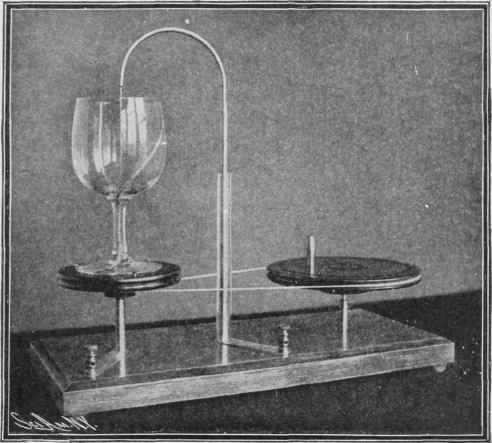
Fig. 200 - Goblet mounted for illumination.

Fig. 201 - Luminous goblet.
One of the finest of luminous optical effects with which persistence of vision has to do is that known as "Gaissot's wheel." produced by the rotation of a single Geissler tube. Owing, however, to the fragility and expensiveness of Geissler tubes and the difficulty of mounting them safely for rotation, the spectacle is rarely exhibited. A beautiful modification of this experiment.
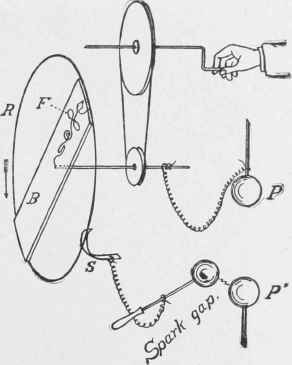
Fig. 202 - Diagram showing apparatus employed.
Utilizing The interrupted conductor, and having the advantage of simplicity and suhstantialness. will be understood from Fig. 202. A thin, smooth, well-shellacked board, B, 24 inches long, is mounted at its middle on a metallic shaft so as to be capable of rapid rotation edgewise. On the back of the board at each end are screwed two small plates of sheet brass to which is soldered in such a manner as to be concentric with the shaft, a ring, R, of -tiff wire, about equal in diameter to the length of the board. A narrow tinfoil conductor, F, divided at 1/4-inch intervals, is laid on one-half the board in some fanciful shape, insulating with thick, transparent mica wherever the foil crosses or returns upon itself. The ends of the strip make contact with the shaft and ring respectively. From the opposite poles, P and P', of an influence machine wires are run, one direct to the shaft and the other through an adjustable spark gap to a stationary spring, S, of thin leaf copper, or a small tinsel brush, bearing lightly against R. When the board is whirled in the dark with the static discharge in action, there appears a magnificent, brilliant, many-armed star of generous size. The original of the photograph, Fig. 203. produced in this manner with a large generator, was over three feet across. Exquisite color effects may be secured by placing over different portions of the luminous conductor pieces of mica stained thickly with transparent water colors, such as are used for coloring lantern slides, photographs, etc. The speed of rotation for the above experiments should approximate 450 turns per minute to insure good persistence effects.
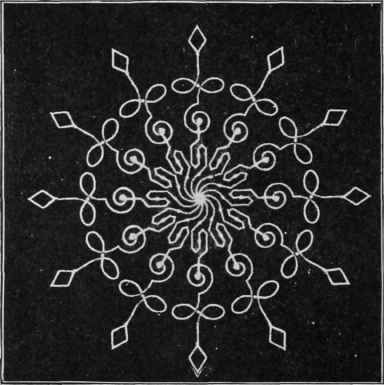
Fig. 203 - Colored electric star produced with interrupted conductor.
The spark fulfills an important function in all interrupted conductor experiments, especially those in which the conductor is to be rotated. Evidently, in the latter class, the spark discharge from the influence machine must occur at regular time intervals, or the elements of the luminous figure will not appear evenly spaced. The gap operates to effect the necessary steadiness of discharge, besides adding greatly to its brilliancy. It also increases materially the power of the generator to overcome a given resistance. Through its use, in conjunction with the two small Leyden jars of a medium-sized Wimshurst" machine, the writer has been able to send with ease an apparently continuous discharge entirely around a room fifteen feet square over a tinfoil conductor divided every two inches, the same being shellacked directly on to the wall paper near the ceiling, the latter also carrying as a center-piece a large circle, similarly made, over four feet in diameter. To an observer seeing it for the first time, this effect is novel and surprising. The whole atmosphere seems aglow with a subdued, mist-like radiance - pale, shimmering, and weird. The gap should be arranged between two large, rounded surfaces, such as smooth metal or foil-covered.wooden balls, 2 1/2 inches or more in diameter, one of them on a sliding rod for adjustment.
Continue to:


My Books

