


Home-Made Chemical Perfume
Description
This section is from the book "Handy Man's Workshop And Laboratory", by A. Russell Bond. Also available from Amazon: Handy Man's Workshop And Laboratory.
Home-Made Chemical Perfume
Early in the nineteenth century, chemists generally thought it impossible to make organic compounds out of the elements found in them. Synthesis they believed, to be practicable only in the case of minerals. Woehler, with his remarkable synthesis of urea, shook that belief at least as much as the Curies recently shook the common belief of chemists in the integrity of the atom. Other organic syntheses followed that of urea, and some of them, as that of the alizarin dye, were made in conditions so favorable that it became unprofitable to grow the plants from which the chemical had hitherto been extracted. Thousands of acres have thus been so far given back to the cultivation of food stuffs, and one may confidently expect a time in which most, if not all, of our drugs, dyes, and even food will be made through synthesis. Agriculture then will be a thing of the past. Factories will make for us sugar, starch, fats, proteids, that is to say, bread, eggs, milk, fruits, besides some new foods which may prove as superior to the old ones as antipyrin and pyramidon have proved superior to the natural alkaloids formerly used in similar circumstances. The most recent and greatest advance in the organic synthesis of industrial products can be observed to-day probably in the perfume industry. The fragrance of heliotrope, hyacinth, pink, rose, violet, hawthorn, lilac, musk. wintergreen, vanilla, cinnamon, hitter almonds, and that of many fruits, are now produced with chemicals which frequently have but a repugnant smell or no smell at all. Most of these syntheses require complicated apparatus as well as considerable chemical skill, but in one case at least, that of terpinol, an essence now sold sometimes under the name of lilac sometimes under that of lily of the valley, the operations are simple enough, and the synthesis is hut an enjoyable experiment easily performed at home or in the class room.
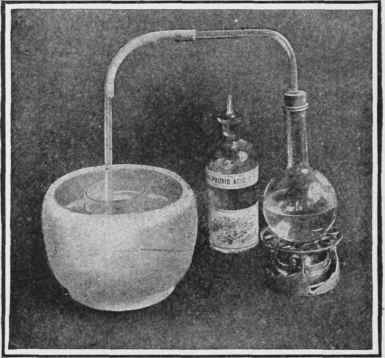
Fig. 187 - Apparatus for making synthetic lilac.
Besides the vessels found in every kitchen, the only needed apparatus are a round-bottom flask (capacity about one pint), a rubber stopper with one hole, and two glass tubes united together with a piece of rubber tubing. The preparation may be divided into two operations, i. e.. the transformation of common oil of turpentine into terpin and the transformation of terpin into ter-pinol. The first operation requires much time and no care whatever. The second operation is made in less than a quarter of an hour.
One-half of a quart bottle is filled with oil of turpentine. Three-fourths of a pint of alcohol at about 80 per cent is mixed with it, and one-fourth of a pint of nitric acid is added to the mixture, which is left to itself for several days, until crystals are formed. These are collected, and dried with some blotting paper. They are pure terpin. To get the full amount formed in such circumstances, one should wait over three months; but, for experimental purposes, such a delay is, of course, unnecessary. Moreover, should the experimenter wish to prepare the perfume at once, he may get the ready-made terpin at the drug store, as it is prescribed by physicians for a kind of lung trouble.
To transform odorless terpin into fragrant terpinol, terpin must be heated with water containing a small amount of sulphuric acid. The round-bottom flask is half filled with water. Two or three large spoonfuls of terpin are thrown into it. and about as much sulphuric acid is slowly poured into the flask. There is no danger in pouring sulphuric acid into water, but water should never be poured into sulphuric acid, as the heat thus suddenly generated may cause some of the caustic liquid to be thrown out of the bottle.
An alcohol lamp is now lighted directly under the flask. If a gas stove be used, a piece of wire gauze should be interposed between flame and flask. As soon as the liquid in the flask begins to boil, the glass tube is plunged into the water in a tumbler.
There the steam and the terpinol carried along with it noisily condense. A delightful scent fills the room. To keep the tumbler cool, place it in a bowl of water. The operation is over when the liquid in the tumbler has become nearly hot in spite of the water in which the glass is immersed. A layer of liquid terpinol will then be found to float over the water. The fragrance, which is extremely strong while the essence is warm, becomes much more agreeable after it has cooled. Some odoriferous plants, such as marjoram, contain terpinol, in their leaves, but the extraction of the essence from such sources is always much more expensive than its synthesis with oil of turpentine.
Continue to:


My Books

