


How To Scrap Carbon From The Piston Heads
Description
This section is from the book "Handy Man's Workshop And Laboratory", by A. Russell Bond. Also available from Amazon: Handy Man's Workshop And Laboratory.
How To Scrap Carbon From The Piston Heads
Carbon is deposited in the combustion chambers of all automobile engines by imperfect combustion of the cylinder oil and gaso-line. Dust from the road, drawn into the engine, adheres to the oily surfaces, and adds to the accumulation. On the piston heads, and sometimes elsewhere as well, this deposit in time becomes so thick as to be raised to incandescence, so that it causes premature ignition of the charge. It may usually be removed from the piston head by the use of long scrapers, as illustrated. These scrapers are made of 1/4-inch or 5/16-inch soft steel, with the ends flattened in die forge and bent hoe-shaped. By suitably bonding the shanks and by turning the crank to bring the piston into an accessible position, it is usually possible to detach all the carbon on the latter. Kerosene is used to soften the carbon, and a small battery lamp connected to a length of cord, aided by a flat dentist's mirror, enables the whole interior of the combustion chamber to be explored with ease. The material detached is scooped out clean with the piston at its highest point.
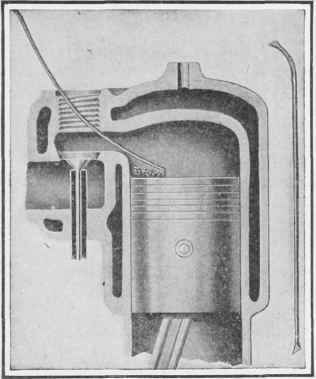
Fig. 325 - How the carbon is scraped from the piston head.
Continue to:


My Books

