


Business Letter Practice. Part 5
Description
This section is from the book "Haven's Complete Manual Of Practical Phonography", by Curtis Haven.
Business Letter Practice. Part 5
Messrs Z. I. Gypson & Co., Box S, Melbourne, Australia.
Gentlemen: - We have your letter dated November 19th acknowledging our remittance of $32.87 in settlement of bill of September 2d, signed " Z. I. Gypson & Co., per Snyder," and in Snyder's hand-writing the following:
"Gentlemen: - You took off more discount than we allow for extra dating. After this please take off at the rate of 6 per cent, per annum."
The terms of payment endorsed upon the above bill are as follows: "7 off 10 after Nov. 1st." This made the bill due Nov. nth. You had the money in your hands on the 23d of September.
Deduct Sept. 23 from Nov. 11 leaves 49 days. The face of the invoice is $35.63. Seven per cent, discount from $35.63 leaves $33.13 1/2. The interest on $33.13 1/2 for 49 days at 6 per cent, per annum is a fraction over 25 cents. We remitted you $32.87. Respectfully.
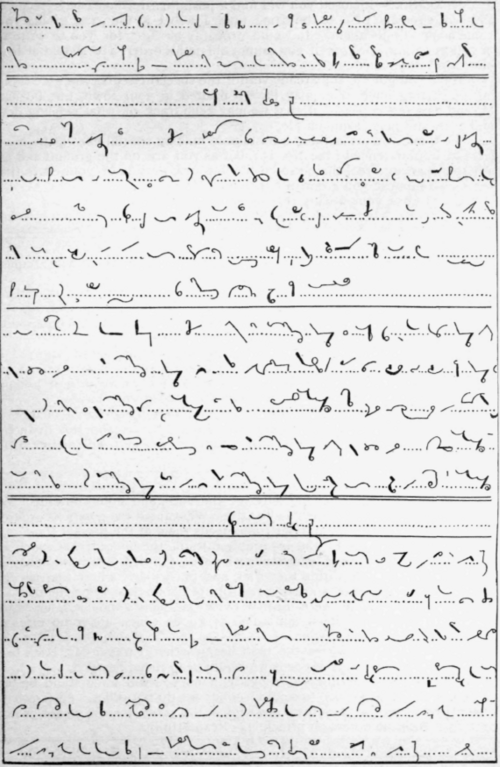
Rev. D. E. Yorick, El Paso, Texas.
Dear Sir: - Inclosed you will find a postal-card which I have received and sent circulars to. At the same time I wrote to the party giving your name as my Texas agent. It would probably be best for you to write to, or call upon him and see if you cannot obtain his order. He should at least have a set of your circulars.
Have you got the copy ready yet for the special circular you were thinking of getting out? You may have it printed in your town, but be sure to send us a few copies of it, that we may keep track of what is being done in Texas, and place same on file.
We think you are making a mistake in making special use of the No. o circular in preference to the No. 453, but as you are on the ground and get a better chance to feel the pulse of the business portion of your State than we do, we suppose you are in a position to know best.
Let us have your weekly reports promptly, and oblige.
(17th day.) Friday, December 30th, 1886.
Misses K. & L. Armour, Marion C. H., S. C.
Mesdames: - We have the inclosed statement in which you request us to "kindly note terms on invoice."
You will observe by the duplicate invoice which we inclose that these goods were bought 2 off 10, as of Oct. 15, making the bill due Oct. 25. We remitted for the goods Sept. 23, deducting the 2 per cent commission, and a 1/2 of 1 per cent, for interest for the thirty days.
Would it not be a better plan for you to note on the page of your ledger on which our account is inscribed the terms upon which you sell us our respective bills, and thereby save us the trouble and annoyance of looking up these matters, only to find that they are settled correctly ?
In looking up this bill, however, we find that there was a charge of $1.80 for packing-cases which was overlooked by us and not deducted from the bill. This amount we charge back to you and will deduct from the next purchase. Respectfully yours.
G. U. Kline, Esq., Ml. Holly, N. J.
Dear Sir: - We have your letter of the 29th, and note contents. We regret the occurrence as much as you do. We wanted the goods as ordered because they were cheap, and our trade needs them at the present time.
It is, however, one of the invariable rules of the house, from which we never depart under any circumstance whatever, to reject every shipment of goods that is not fairly within the order, and particularly where there is any attempt to force upon us a greater quantity of goods than we ordered.
In this case there were nearly twice as many goods sent us as we ordered from your Mr. Bach, and a line of goods which under no circumstances do we want.
We do not know where the fault lies, whether it was in Mr. Bach presuming that if you sent the goods we would keep them, or not.
Next time you have any dealings with us you will understand better, and know that it is no use to send us goods we do not order. In fact it is worse than useless, as it defeats the sale of the goods we did order, which we return with the others on principle. Respectfully.
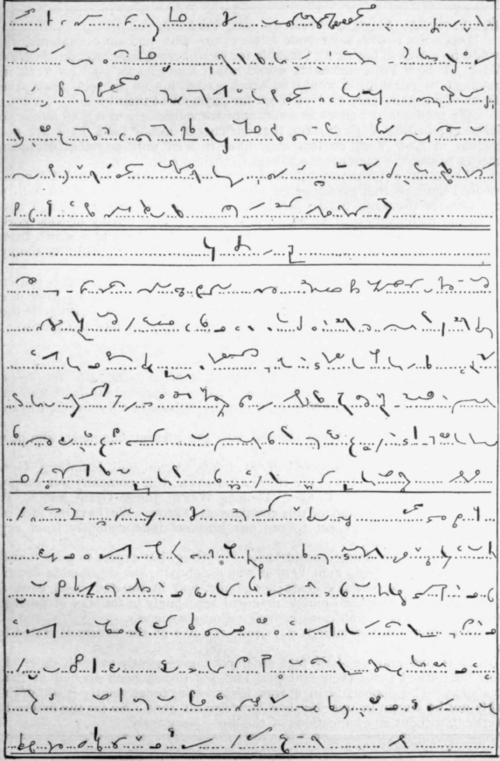
(18th day.) Saturday, December 31st, 1890.
Mr. Y. Otterly, Jr., 9314 Broadway New York City.
Dear Sir: - We have your letter of the 28th and note contents. It would be a useless bother and trouble for us to keep a bank account in New York. If New York mercnants would rather have checks on New York in payment of our bills, it would be much easier for us to send them the drafts of our bank here on New York for payment of their bills.
We send our own check as a matter of convenience, and it is all nonsense for people in New York to claim that our checks on our bank here are not current in New York, or that they have to wait until payment of those checks before the amounts are passed to their credit.
There has not been an hour since the firm of Jones, Doyle & Co. commenced business that exchange on New York has not been from ten to fifty cents on the thousand dollars discount at our banks here in Chicago, and when the merchants with whom we deal tell you that a bank in New York will refuse to take a check from Chicago on deposit, which is worth from one-tenth to one-half per cent. premium in New York funds, it is simply absurd.
When you take into consideration that every bill of this firm is settled every Monday morning, averaging less than four days from the time the goods are received, it ought to be a satisfactory method of dealing to the merchants in New York, and if not, we can manage to buy in Chicago.
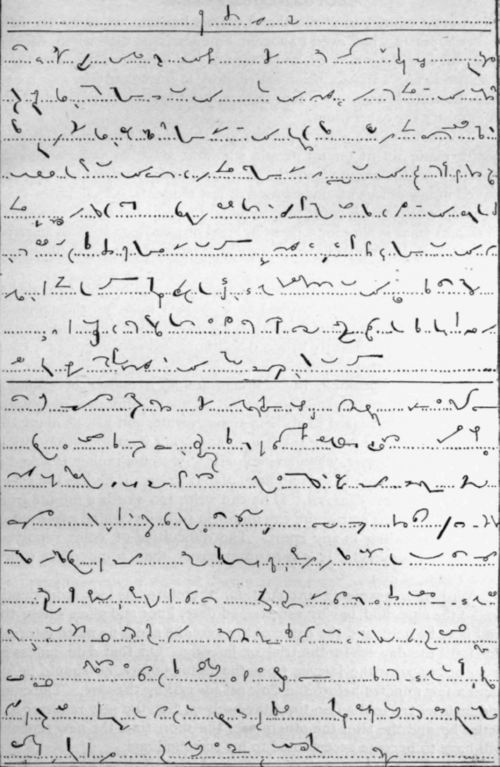
Mr. S. Quarter/nan, Montpelier, Vt.
Dear Sir: - Your favor of the 26th instant at hand; also the newspaper. The article is partially correct. This company has increased its capital stock to $725,000, and bought out the Salt Lake City and San Francisco owners of the mine.
The writer's interest was merged into the present company, who now own and control the mine.
The company is composed of St. Louis, Akron and Hamburg, Germany, stockholders. Up to the time of purchase, this company was simply the selling agent. Col. Conger, Thomas Welch, Judge Grant, and C. P. Cobbs are of the members of this company at Akron. We have no idea of forming a trust, but expect to run our business independently from any other similar concern.
We have been doing considerable exporting, but expect to push it still more. Egyptian Asphaltum, here as well as abroad, has declined in consequence to six and one-half cents per pound, and in isolated cases, even a trifle lower. We have also made practical tests lately in the way of paving, which have, so far, in all cases proved a glorious success.
The price of the mine is $111,000; the size of the fissure as stated is substantially correct.
It is five and one-half feet wide, but tapers gently at both ends. It can be worked for eleven thousand feet, for it has been opened at that distance. The deposit is in a true fissure-vein, consequently it will probably not be known in our life-time how deep it runs. So far the fissure is vertical, without any indications of the dip. Very truly.
Continue to:


My Books

