


Charge Of The Court
Description
This section is from the book "Haven's Complete Manual Of Practical Phonography", by Curtis Haven.
Charge Of The Court
Gentlemen of the Jury - This is an action of Assumpsit, brought by George Binder. the plaintiff, against Henry T. Nagle, the defendant. The plaintiff seeks in this action to recover from the defendant a sum of money which, the plaintiff claims, is due him and owing him from the defendant for merchandise delivered by the plaintiff to the defendant on the defendant's order. The principal contention between the parties in the present suit is as to the amount actually due by the defendant to the plaintiff, for the order and delivery are admitted by each.
The only witnesses in this case, with the exception of James Wilson, whose testimony is unimportant, are the parties, the plaintiff and the defendint, themselves. So far as this evidence shows, there have been no other witnesses brought forward corroborative of their testimony. The law makes the parties to the suit competent witnesses. You are the judges of their credibility, and where they differ in their statements, you may determine which of them is correct.
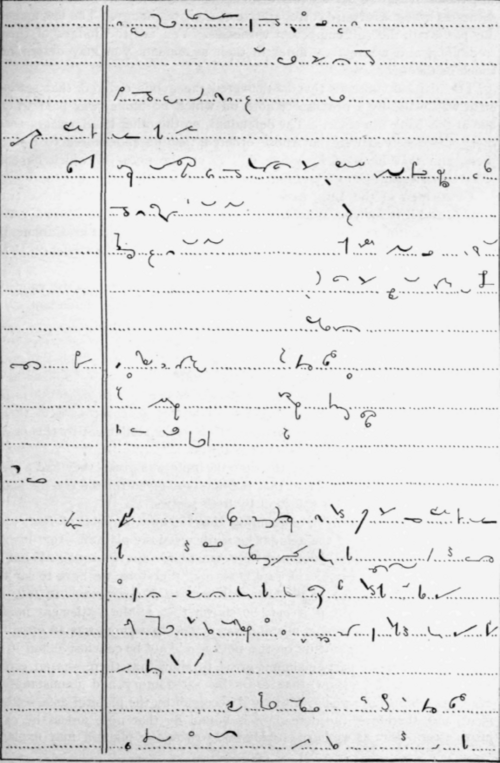
The plaintiff contends that he delivered the goods ordered, that settlement was made by a promissory note on which no money was paid when due at the bank nor since. The defendant, on the other hand, swears that the goods received were not those ordered, that he endeavored to return them, and that he paid forty-five dollars on the note, for which he has received no credit.
Gentlemen of the Jury, here you have these statements of these two parties, and it is for you to determine which is correct. The burden rests upon the plaintiff to show you, by the weight of evidence, that his statements are true in every particular, and he must satisfy you, by the evidence, that they are so before he can recover the amount claimed.
The dispute, therefore, of the plaintiff's claims, is limited to the validity of the order and the possibility of the payments which the defendant says he made the plaintiff.
The defendant claims that he settled with the plaintiff by means of this "promissory note before he had examined all the goods for which the note was given in settlement, and that he afterward paid twenty dollars and twenty-five dollars, respectively, on account of that note. In relation to this note, we have to say that, in the absence of any evidence - that is, if there was no other evidence in this case - relating to the settlement by this note, then it would be conclusive upon this plaintiff.
The presumption is, that at the time the note was given they had a just settlement of their matters, and that the note was given for the true balance known to be due on such settlement by both parties.
The defendant, however, contending that the note, in point of fact, was not in true settlement of the amount he really owed the plaintiff - that it was made before the goods concerned were examined - the said plaintiff has a right to dispute the amount of said note, and, therefore, we have to say to you, as a matter of law, that while such a note, like a receipt in full, is generally conclusive, yet, if it may be shown that, at the settlement made When such note was given, a mistake was made - that there was an error in the account - then the amount on the note would not be conclusive, but it is incumbent upon the party claiming error, to show that there was an error and mistake and to show that error by satisfactory and unmistakable evidence. This note was given to and accepted by the plaintiff as a settlement, and, therefore, the defendant is bound by that note unless he can prove error. But, as we have already said to you, the plaintiff may explain the note, and, if he, by clear and satisfactory evidence, has satisfied you that there was a mistake made at the time, or that he made it under a misapprehension, then this paper does not bind him.

Gentlemen of the Jury, I do not know that it is necessary for me to say anything further in my general charge. The only items of dispute between these parties are the two alleged payments, on account of the note given, and the value of the goods which, it is claimed by the defendant, he never ordered, tried to return, and has no use for, facts for your judgments alone to decide.
Now, Gentlemen of the Jury, something has been said during the trial of this case, in relation to the pecuniary ability of the plaintiff and the defendant. I simply have to say, that whatever may be their standing and their pecuniary ability, it can not effect the rights of the one or the other in this case.
You will take this case, Gentlemen of the Jury, apply to the evidence the rules of the law, as I have stated them, and render such a verdict, under your oaths, according to the evidence of the case, as your consciences will approve.
Author's Note. - The above concludes our exercises in Court Reporting, and if the student has practiced each of the cases contained in the entire series in accordance with the rules for such practice, given elsewhere in these pages, he or she, as the case may be, will have gained a certain amount of facility in writing not possessed before, and, in addition, will have learned more respecting the natural plan of phrasing, which best comes with practicing such exercises as these Court Cases and the Business Letters. At first the student may find it more difficult to phrase than to write words separately, and may think, because the same words are round phrased on some occasions, and not in others, that there is no set rule or necessity. The explanation of the variation in phrasing is, that words should be phrased as they are sounded, that is, when words are run together by the voice, write them together, providing the simple rules for phrasing, given in our lessons, are not violated; and, where there is hesitation between uttered words, then do not phrase, as it is advisable, if possible, that phonography represent what is known as voice punctuation, on which is really based type punctuation, both of which often furnish the exact meaning of written words.


Continue to:


My Books

