


Double Length "Ing" And "Mb
Description
This section is from the book "The Science And Art Of Phrase-Making", by David Wolfe Brown. Also available from Amazon: The science and art of phrase-making.
Double Length "Ing" And "Mb
405. In word-writing the double-lengthing of ing has the peculiar and exceptional effect of adding kr or gr, as in the words rancor

and languor

and the doubling of mb adds r, as in chamber

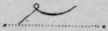
But in phrases, the double-lengthing of ing and mb has the effect, as with all other curved consonants, of adding there or they are. Illustrations: may be there

raising their
Exercise
406. In the following phrases, there or their is to be expressed by making mb double-length:
he may be there I may be there I may be their friend it may be there
they may be there you may be there you may be their representative
which may be there which may be their reason which may be their representation
we may be there we may be there also what may be their what may be their reasons
Exercise
407. In the following phrases, their is to be expressed by making ing double length:
choosing their buei
commencing their work exposing their purpose effacing their names hastening their decay noticing their business (vocalize business) opposing their desires passing their time (tm) purchasing their goods
raising their voices reducing their expenses refusing their admission registering their decrees resigning their positions signing their bills singing their songs supposing there has been surpassing their expectation
"there" as a syllable.
408. The doubling principle is used to express there, not only when it is a complete word, but when it is merely a syllable of such words as thereupon, thereby, therefore, etc. This principle is especially useful in writing the word therefore in phrases. Illustrations: you will therefore

, you will thereby

you will thereupon

when therefore

I know therefore

*Ing-there and ing-their can also be expressed in the Graham system by the there or their tick, disjoined, written in the place of the ing dot. (See Paragraphs 344 and 345.)
Exercise
409. In the following exercise, there as part of the word therefore, etc., is to be expressed by doubling:
he may therefore he will therefore I may therefore I shall thereby I shall therefore I shall thereupon I will therefore I wish therefore
they are therefore you will thereby you will therefore you will thereupon was therefore we have therefore we may therefore you may therefore
Continue to:


My Books

