


In Case Of Accident
Description
This section is from the book "Time Out for Living", by Ernest DeAlton Partridge and Catherine Mooney. Also available from Amazon: Time Out for Living.
In Case Of Accident
Most of us will at sometime during our lives be near or actually involved in an auto accident. Statistics show that nearly 1,200,000 persons are either killed or injured in automobile accidents in an average year. It is therefore quite important to know what should be done in case of accident.
Obviously, the first thing to do is to care for the injured, if there are any. Every car should carry a small first-aid kit for this very purpose. If there is serious injury, a doctor should be called without delay. It is always a safe precaution to call a doctor because it is not easy at times to see whether a person is seriously injured or not. Well-meaning but ignorant people can sometimes cause a serious injury to be a fatal one, if they treat it in the wrong way. Even moving an injured person slightly may be just the wrong thing to do.
Another good rule is to stop the car whenever something has happened which is out of the ordinary. The most inhuman thing a driver can do is to injure someone and then leave the scene of the accident. These people are usually referred to as "hit-and-run" drivers. Most of the states in the Union quite rightly have severe penalties for such people. In most cases these drivers are caught sooner or later, and the law deals with them drastically.
If the accident involves another car, it is always wise to exchange names and addresses as well as registration numbers with the other driver. If the damage is serious, it is well to report the accident to an officer, so that it can be officially recorded. Most states have their own laws about reporting accidents, and you should be acquainted with those in your own state.
Just in case a lawsuit may arise out of the accident, it is always a good plan to find out if there were any eye witnesses to the event. If there were, secure their names and addresses. If you carry insurance on your car (and you should, by all means), your insurance company asks you to secure such information for them and report the accident on the forms they provide. Make your report promptly.
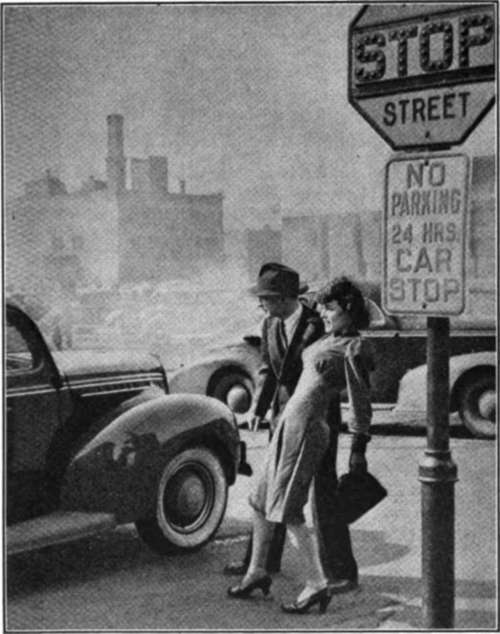
There is a good reason for every traffic rule. When someone breaks a rule he is endangering his own life and the lives of others.
It amuses some people to see two drivers whose cars have met too hastily get out of their cars and begin a scene of name calling. This may be amusing, but it is also pathetic. There is absolutely nothing to be gained by quarreling and it simply complicates matters. The best thing to do is to exchange information, find out whether you can be helpful, and then depart. Courtesy in cases of accident is always appreciated and may help considerably in the final settlement.
Some Interesting Things To Do
1. If your family does not have a car, make believe you have one and plan a day's trip to a near-by place of interest. When would you start, what would you take along, who would go, which route would you take, what would you see?
2. Can you change a tire? Describe to the class how you would go about it. "Demonstrate" on an imaginary car. (You could make an interesting game of this demonstration. It has possibilities !)
3. List the services you can render the family car, such as dusting it and checking water, oil, gas.
4. How about those questions on page 574? Do you know all the answers? What are they?
5. Give each other a "driver's test." Use class chairs for the automobile. Test skills, such as starting, turning a corner, stopping for a red light, etc. Who's your best driver?
6. Why can't a driver lend a license? Jot down your answer and then discuss it with your classmates.
7. Write up your reactions while riding with a poor driver, and read it to your class. If you have never had one of these experiences, invent it.
8. Write some "epitaphs" for the careless driver, as,
"Here forever Joe must park. He changed a tire in the dark."
"Shed a tear for Sybil White, Who forgot a bulb in the taillight, Stood on the road to change a flat, And that is all there is to that."
Illustrate these with stick figures.
9. Appoint yourself as a "Secret Agent" for the Department of Safety. Check a few drivers, as suggested on pages 574-575. You can check them by watching cars from the sidewalk near some intersection. Check how many do the correct thing. Report your findings to the class.
10. Assign two or more members of the class to check the good manners of drivers at certain intersections for a stated time. Make a chart showing the types of courtesy that need to be called to drivers' minds. Ask the editor of your local paper to print your "write-up."
11. Give your police department a build-up! Compose a few stories, such as Policemen Are People. Stress the value of policemen on the highways, and have the stories printed in your school paper.
12. What safety devices have you noticed on the road? How long a list can you make in five minutes?
13. Perhaps you have witnessed an accident, the story of which is worth repeating for the entertainment of the class. Whether you make them laugh or cry, do a good job of it!
Helpful References
Douglas, R. A., Common Sense in Driving Marble and Wilson, Automobile Safety.
Tour Car. Rosman, A. G., The Back Seat Driver.
Huxley, A., Along the Road. Stoeckcl, and others, Sense and Safety Lent, H. B., Wide Road Ahead! on the Road.
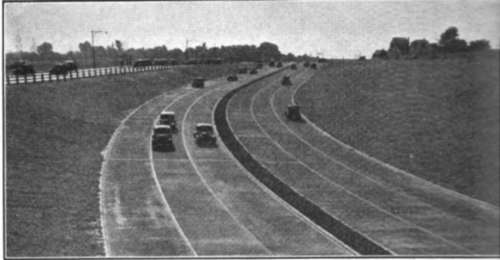
Rolling Along to Adventure on a Fine Modern Highway.
Continue to:


My Books

