


Part 6. The Song Of Leather. Chapter Eleven. Feeling The Romance Of Leather
Description
This section is from the book "Time Out for Living", by Ernest DeAlton Partridge and Catherine Mooney. Also available from Amazon: Time Out for Living.
Part 6. The Song Of Leather. Chapter Eleven. Feeling The Romance Of Leather
Take in your hands a piece of heavy leather, such as a belt or the sole of a shoe. Twist it back and forth slowly and listen to it sing. Close your eyes as you continue to twist the leather. You are hearing the song that came to the ears of the crusader as he rode his horse long weary miles toward the Holy Land. You are listening to the creak of the harness that pulled the plow during the Middle Ages. The leather is speaking to you as the leather harnesses spoke to your great-grandparents when they conquered the American wilderness. The cowboy as he rides along behind the herds of cattle sings to the accompaniment of the same music - the song of leather.
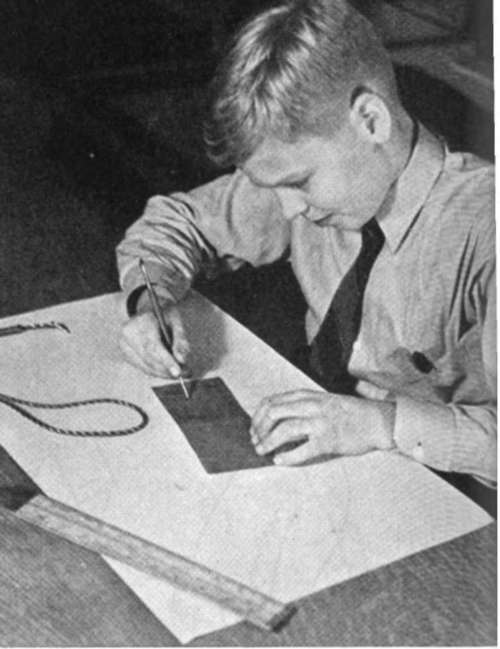
A Budding Leather Craftsman.
Down through the ages leather has been an important aid to man. It has protected his feet from stones, has held his clothes in place, and has harnessed his animals since long before the time of Christ. Leather sandals have been found in Egyptian tombs. The early warriors made shields of leather. The decoration of leather is one of the oldest arts. For centuries all important writings were made on leather parchment in beautiful manuscript. This type of art reached its height before the invention of the printing press, about 1450, in thousands upon thousands of handmade volumes. During the Middle Ages, the monks supplied most of the manuscript books used in religious services, and many of these manuscripts are now exhibited in the national libraries. Sometimes the margins of the manuscripts were decorated with beautiful paintings and illuminated initial letters. The Spanish Moors were very skillful leather craftsmen in the art of binding and decorating books.
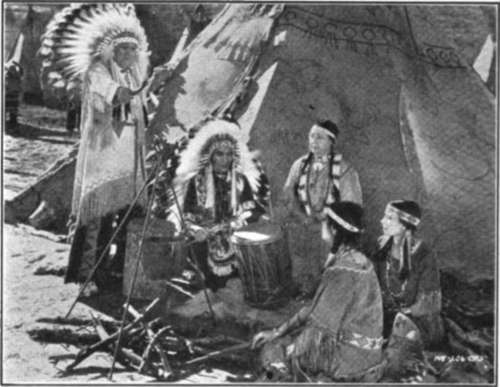
The American Indian had many uses for leather. It sheltered him from the weather; it clothed him; and it covered his drum and carried his food.
Indians had their own way of tanning leather.
During the Middle Ages leather was a favorite material for craftsmen. Leather workers formed one of the first craft guilds and were very powerful at one time. Since their art reached into so many phases of life, they were highly respected for their skill.
The American Indians had a process of their own for curing leather and decorating it. This leather is usually called "rawhide." Indian leather was soft and waterproof. The decorations were made with colorful beads, porcupine quills, and dyes made from earth, berries, nuts, or the bark of trees. The edges of leather garments were often fringed. Leather was an essential product of the Indian. He made it for clothing, shelter from the weather, food bags, and even boats.
Leather is important in modern life, too. Not only does it cover our feet and our backs, and carry our clothes, but it is also the basis of some of the most beautiful arts and crafts. Leather-work is fascinating because there are so many different kinds of crafts that are based on it. Nearly everyone can find some project in leather that will interest him.
Leathercraft is useful, too. So varied are the articles which can be made that old and young, rich and poor, tall and short can find some article to make which will be useful as well as ornamental.
Craftsmen tell us there is satisfaction in working with leather. A well-made leather article will last for years and grow in beauty as it ages. There is something about the feel of leather, too, that gives one genuine pleasure, whether one is braiding, stamping, or tooling an article. After a little practice and instruction, one can make many useful articles for his own personal pleasure as well as for presents to his friends, especially equipment to use in the outdoors. There are any number of articles that can be assembled to help the hiker and camper.
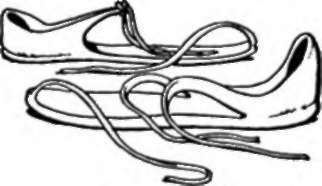
Egyptian Sandals. The ancient Egyptians made many useful articles from leather.
Continue to:


My Books

