


Chat 32. Other Activities
Description
This section is from the book "Handbook For Scoutmasters. Volume 1 & 2", by Boy Scouts of America. Also available from Amazon: Handbook For Scoutmasters.
Chat 32. Other Activities
THROUGHOUT this Handbook for Scoutmasters we have been talking mostly in terms of activities to be used by the Scoutmaster in his own Troop or Tribe or Neighborhood Patrol. But there are many other Scouting activities on a local, a regional, or even a national and world-wide scale. And the boys whose Scoutmasters make them realize that they are a part of the larger whole will be the boys who get the most from Scouting.
Local Council Activities
Just as the good Troop plans its yearly program ahead, the good Local Council plans its program for the year in advance. And just as the good Troop aims for a program which will stimulate and advance its Patrols, the good Council has for its goal a program which will vitalize its Troops and Tribes and Neighborhood Patrols, and aid the Scoutmasters in strengthening and motivating their work.
The activities program of the Council grows out of the interest of the Troop leaders in it. The ideal is the program which is desired, planned, promoted and executed by the volunteers under the guidance of the Scout Executive.
Values Of Council Activities
The values of these activities, some of which may be run on a Council-wide and some on a District-wide basis, are many and far reaching:
The most important, possibly, is the contact with other Troops and the inspiration gained of Scouting as a great Brotherhood.
But besides, friendships will be established between Scouts, Scouters, Patrols and Troops, which may carry over in a desire to see more of each other at inter-Troop and inter-Tribe get-togethers, meetings, hikes and camps.
The wide-awake Scoutmaster and his Patrol Leaders will be able to pick up numerous ideas from other Troops that will help them in their work.
And further, the Council activities will make it possible for the Troop Leaders to make comparisons between their own Troops and others. And it is by comparing what you are doing with what other people do that you are able to decide what result you have reached and what is further needed. The weak Troop will find out what is possible of accomplishment and will be inspired to forge ahead, while the strong Troop will get added confidence in itself and will do its utmost to uphold the standards it has reached.
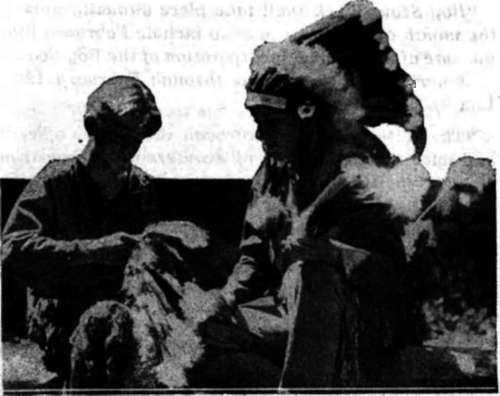
Scoutcraft projects lead boys into new large-scale activities. Handicraft, for example, leads to ceremonies, shows and circuses.
Whether your Scouts will gain these values or not depends upon one single thing: The whole-hearted-ness with which you and your Scouts participate in the activities. If you are enthusiastic about taking part, your Scouts will catch your enthusiasm and will greatly benefit by their participation.
Boy Scout Week
The high spot of these activities of the Scouting year is Boy Scout Week, which is celebrated by all Scouts and Scouters in every corner of our country.
The fundamental purpose of Boy Scout Week may be variously stated. It is best explained in the words of the By-Laws (Art. XVI, Sect. 6):
"Boy Scout Week shall take place annually during the month of February so as to include February 8th, the date of the original incorporation of the Boy Scouts of America, and to continue through February 12th, Lincoln's Birthday.
"The National Council through its various officers and with the cooperation of Scouters throughout the country shall arrange for a nation-wide celebration during Boy Scout Week, for the purpose of bringing more definitely to the attention of each community the value of Scouting as a Program for work with boys for the development of character and training for citizenship.
"The program for Boy Scout Week shall include a plan whereby every registered Scout in good standing shall be given an opportunity to assemble on the evening of Anniversary Day, that is February 8th, and promptly at 8:15 recommit himself to the Scout Oath and Law.
"On this occasion it shall be the duty of the Scoutmaster and other leaders to bring to the attention of the Scouts the extent of the Scout Brotherhood in our own country and throughout the world, and impress upon their minds the fact that every Boy Scout the world over is committed to the same obligation and does a 'Good Turn Daily.'"
Although Boy Scout Week is celebrated intensively for seven days, it is a mistake to regard Boy Scout Week as a special seven-day event. If properly planned, there are at least three months of motivating activities connected with the preparation for and celebration of the week. These activities may be made the very heart of the regular Troop program for that period.
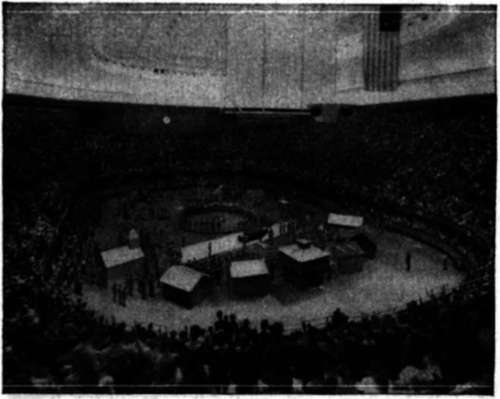
Like magic the pioneer village springs up at this Scout Circus. Team work, boy leadership and inventiveness are learned in Scouting.
In a rural community, Boy Scout Week becomes an occasion for the Scouts of Troop, Tribe or Neighborhood Patrol to step out in public. In a large community, it consists of a series of Troop activities and a number of Local Council doings carried out on a great and worth while scale.
We shall not here attempt to cover the various features possible in connection with Boy Scout Week, for the reason that the program emphasis is changed from year to year to provide novelty, and for the further reason that complete suggestions for celebrating Anniversary Day and other days surrounding it are given every year in SCOUTING, the official magazine for Scouters.
Suffice it here to suggest the following points:
1. Begin to plan and prepare for the Boy Scout Week celebration of your Scouts as soon as the announcements start to appear in SCOUTING, usually in its November issue.
2. Participate vigorously in your local Council-planned activities that will make Boy Scout Week a period of real interest to the public. Show people during that week what Scouts really do; why our Movement is worth supporting; why boys should be Scouts.
3. Make it a good time for your Scouts, and also a time when they may feel as perhaps they may not feel to such a degree at any other time, that it is distinctly worth while to be a Scout.
Merit Badge Shows
A big annual event in many Local Councils is the Merit Badge Show or Scout Exhibit. About this it may be truly said: "The bigger the better," although communities with just a few Troops have put on excellent performances in a town hall or municipal auditorium, at the fair grounds or even on the main street.
The idea behind the Merit Badge Show is to present to the public the activities of Scouting, to create new friends—and, sometimes, incidentally to secure funds with which to undertake other activities. In addition to demonstrating the subject matter of various Merit Badges, the show acquaints the public with the fact that a Scout who earns the Eagle Rank, for example, meets twenty-one fine men as counselors who are experts in their subjects.
Usually all arrangements for such a Show are planned by a special Local Council Committee of volunteer Scouters. Here plans are formulated, and the different Troops accept the responsibility for preparing and special training in Indian dancing, signaling, fire by friction, or whatever the Troop's activity happens to be.
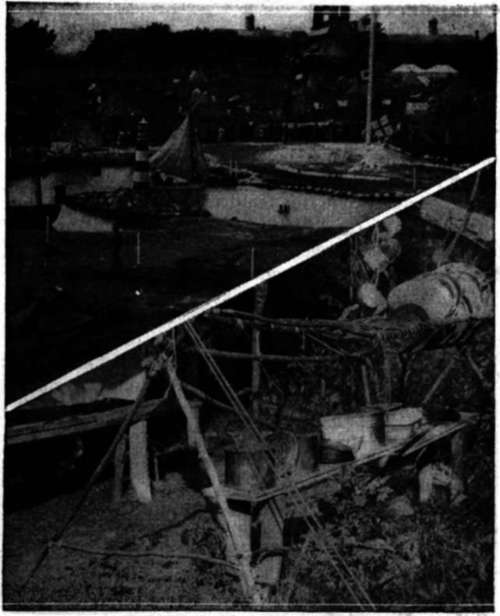
(Top) Note the scale of this Sea Scout exhibit at a Camporee. (Bottom) Scouts made all these gadgets. They show Scout skill.
Participation in a real Scout Circus is an experience which your boys are not apt to forget quickly.
Camporees
Still another Council activity which is gaining in favor, is the Camporee.
A Camporee is an overnight camping affair staged by the Council or a District within it, for which the Troops enter natural Patrols bringing their own equipment, under their own boy leadership, to put up Patrol camp and show their mastery of Patrol camping and other related Scoutcraft features.
Usually the Council establishes a certain standard of excellence that each Patrol strives to reach so that it may call itself a Standard Camporee Patrol. It is desirable that Camporees be kept as natural camping experiences and that the Scouts be made to feel that neither the "inspection and awarding of points" nor the "public demonstration" is important, but rather that this is their great chance to do first-class camping for their own satisfaction.
The important thing about the Camporee is the preparation which is encouraged in Troops using the Camporee as an incentive. The Camporee is a great aid to the Scoutmaster in promoting the functioning of the Patrol method within the Troop. It creates knowledge of camping essentials by dramatizing camping as a game.
Other Events*
Besides the activities mentioned, the Local Council may plan other events, depending upon its locality and the desire of its Scouters. The following events have been successful in various Councils, but, of course, any one Council will only use a couple of them with which to round out the year's program:
* Based upon Lome W. Barclay: A Program of Activities.
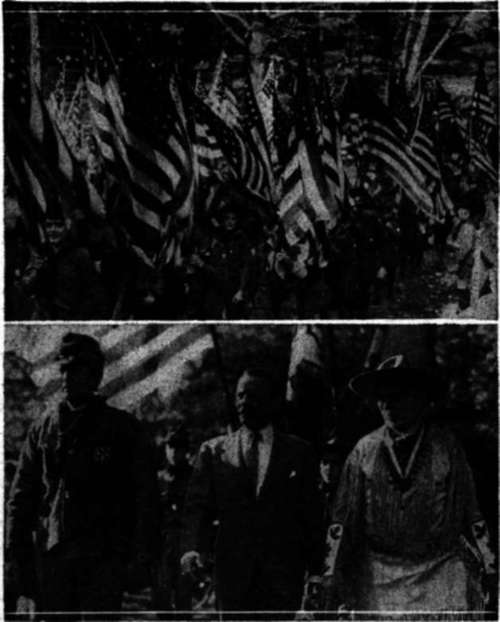
The Roosevelt Pilgrimage. President Head and Col. Roosevelt walk with Uncle Dan, to the grave of the former Chief Scout Citizen.
Participation in State, County and Community Fairs, Inter-State Fairs and Expositions. These give an opportunity not only for Camporee and exhibit features, but also for a valuable service program to the public attending the fair. It is also possible to give demonstrations and dramatizations before the grandstand. The State, County and Community fairs are particularly important because of their importance to the boys of the rural areas.
Local Mobilization. This can be made into an exciting event for the boys and a demonstration to the public of the preparedness of Scouts. A mobilization may be combined with a local civic service project as discussed in Chat 21.
Pilgrimages to Historic Shrines and to the Homes or Birthplaces or Graves of Distinguished Personages. This may involve the discovering of the historic spot itself and developing it into a shrine.
Winter Show and Ice Carnival (Winter Wahihi). This activity applies to all places where there is snow and ice.
Autumn Potlatch. This is built around the idea of a barbecue, fish fry or clam bake, and has for its purpose a Council welcoming occasion for new Scouts and new Scouters.
Water Carnival. This activity includes swimming meets, life saving demonstrations, water pageantry, etc.
Council Camp Fires. These are for the purpose of rallying the parents and citizens with the Scouts for an evening's entertainment.
Community Parades. Scout participation in Memorial Day or Armistice Day parades and other similar activities is welcomed, and provides an opportunity to impress good citizenship on the boys.
Regional, National And International Activities
Looking even farther afield, there are Scouting events each year at which Scouts from different localities, different states, yes, different nations gather.
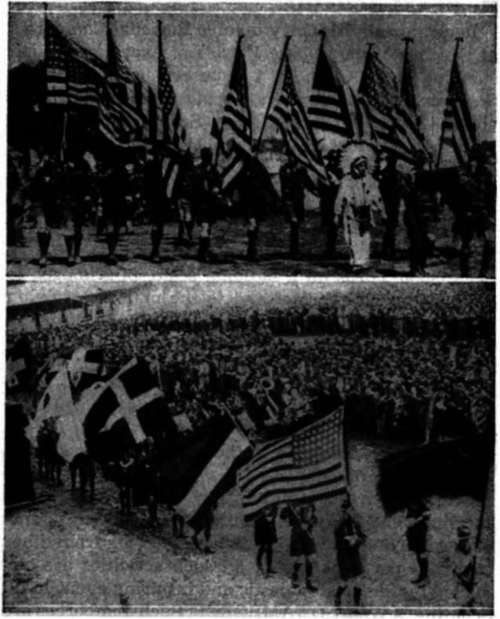
World Jamborees are colorful demonstration! of Scoutcraft as it is practiced on every continent.
While it is seldom possible for complete Troops to participate in these activities, in striving to be represented- by a Scout or a Patrol, the Troop makes these special events a definite part of its life and of great inspiration to its members.
Regional Activities
Regional activities may involve Regional Camporals at which will participate Patrols of exceptional high standing in the Councils' Camporees, participation in State and Inter-State fairs, Scoutcraft displays at Regional Annual Meetings, Eagle Scout Trail Building within the Region, and Regional civic service projects.
National Activities
By participating in the Local Council celebration of Boy Scout Week, the Troop takes part in the greatest national activity of the year. But besides, there have been Good Turns on a national scale, pilgrimages to national historic shrines and to the national training center of the Boy Scouts of America, the Mortimer L. Schiff Scout Reservation. Not to forget such great events as a National Jamboree for which Scouts gather from every State of our Union.
International Activities
And finally, we come to the activities of our great World Brotherhood.
Scouts from one country pay visits to others on International Good Will Tours, when National Jamborees are held in various countries Scouts from other countries participate—but all such activities are climaxed by the most majestic and inspiring event in all Scouting, a WORLD JAMBOREE. Such Jamborees are held every four years, and Scouts from practically every country of the globe participate in them. At previous World Jamborees, the first of which was held in 1920, as many as fifty thousand Scouts from seventy-two nations have taken part in a tremendous brotherhood gathering which has shown to the world the magnitude of our Movement and its force for friendly understanding among all nations.
Continue to:


My Books

