


Part X. Program Building. Chat 26. Planning A Balanced Program
Description
This section is from the book "Handbook For Scoutmasters. Volume 1 & 2", by Boy Scouts of America. Also available from Amazon: Handbook For Scoutmasters.
Part X. Program Building. Chat 26. Planning A Balanced Program
The Troop stands or falls with the Scoutmaster's ability and willingness to provide for a boy-planned and boy-executed program.
TWO business acquaintances met each other on the street one day.
"Did you hear," started the first, "that the Continental Merchandising Company has gone into the hands of the receivers? Amazing, isn't it?"
"Nothing amazing about it!" said the other. "I have been expecting it to happen for a long time—because they didn't plan far enough ahead. They survived only on a week-to-week or sale-to-sale existence with no special thought of where they were going. As a result they're so deep in the hole it's about hopeless for them to try to climb out."
Success in business depends largely upon the executive's ability to plan. Success in Scouting depends upon the Scoutmaster's ability to look ahead, to plan and prepare for the life of the Troop or Tribe or Neighborhood Patrol in such a way that all phases of Scouting are covered and nothing is being overlooked.
The failure of a Troop because of lack of proper leadership is sad—yet might be excused, since we all have the frailties of ordinary humans. But the failure of a Troop for lack of a proper program is inexcusable because Scouting is so rich in program material. Open the Handbook for Boys at any ten consecutive or scattered pages, and you have sufficient program-material to occupy at least a month.
And yet the amazing thing is that so many Scoutmasters are satisfied to announce to their boys, "Well, we are on our way!"—and if asked "Where are we going?" have no better answer to give than "Don't know. But we're on our way!"
"Plan your work and work your plan" became a slogan in Scouting some years ago. If rightly applied by every Scoutmaster, it should be an important factor for the success of the whole Movement.
But naturally, any program won't do. It must be a very special kind of a program, built upon an understanding of boy nature and employing genuine Scouting activities—definitely aimed toward our objectives of character-building and citizenship-training.
Fundamental Considerations
Obviously, then, in the development of our program we must consider these two viewpoints:
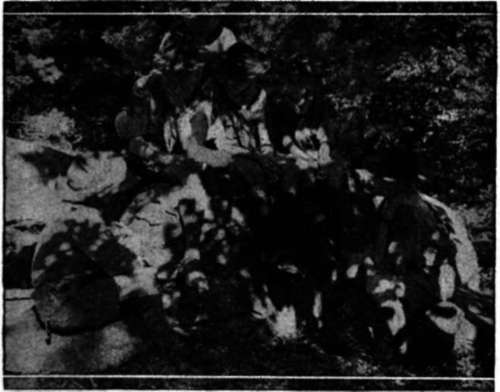
From the boys to you comes program energy. You direct and follow through, but lot your programs be full of what boys want to do.
1. What the boy wants to do.
2. What we want to do with the boy.
What does the boy want? He wants action—plenty of it, all the time. He wants to do things, not just watch others do them or listen to how things might be done. But also, he wants different things to do—not just one thing all the time, but many things. He wants variety.
Do we want him to do things? Most emphatically. That's our main object. Only we want him to do certain things which we believe will make him acquire useful knowledge, good habits and attitudes, and prepare him for life. In other words, our aim in planning is to make the activities purposeful. Which altogether means that the main considerations should be to make the program one of
Action Variety Purpose
But not only that. In order to be a good program, it must be a full program and a balanced program. We often hear of giving boys balanced menus of the right amounts of the right kinds of food for their physical growth. Similarly we must give them a balanced program of the right amounts of the right kinds of activities for their growth in Scouting.
What Constitutes A Full Program?
What then are the earmarks of such a full and balanced program?
First of all, it recognizes Scouting as a game. It builds on fun, on play with a purpose. It fosters boy tenure by sustaining boy interest — each gathering sending the boy home feeling unconsciously (or consciously for that matter) that—
He has had a good time among good friends. He has advanced in Scoutcraf t. He has more good times ahead.
It promotes and stimulates each Patrol into actual Patrol living.
It motivates the activities of each boy, not only in his Patrol and Troop life, but in his every-day common activities, so that the boy is a Scout twenty-four hours a day and three hundred and sixty-five days a year, not just on the night when he comes to the Troop meeting for an hour and a half. In other words it develops in him the spirit of Scouting, the Scout Oath and Law.
And furthermore, it affords the boy an opportunity to identify himself with the life of the community through service, through meeting other Troops, through Council activities.

Your own magazine, SCOUTING, carries a full year's program. Workable programs sent by Scoutmasters are there to help you.
A tall order? It is! Making it doubly necessary for us to consider thoroughly the multitudinous activities of a Scout and to build from them a program, painstakingly mapped out and deliberately planned.
The Activities Of A Troop
What are the activities that make up the life of a Troop? If we turn to a study of a successful Troop we shall probably find that its year includes a goodly number of the following items.
Year-Round Activities
Weekly or fortnightly Troop meetings. Monthly Troop hikes or overnight camps. Weekly Patrol meetings. Monthly Patrol hikes or overnight camps. Monthly full-meeting of Troop Leaders' Council. Monthly Patrol Leaders* Training Meeting of the Green Bar Patrol.
Quarterly inter-Patrol rallies. Steady advancement program.
Troop Court of Honor—and participation in Council Court of Honor.
Drive for 100% uniforming. Troop and Patrol Good Turns and Civic Service. Special Instruction in Scout Requirements. Investiture nights.
Handicraft Patrol projects—including making of camp equipment. Improvement of Troop meeting room. Visits to or hikes with other Troops.
Seasonal Activities
Summer camp (one or more weeks). Winter camp (three or four days). Boy Scout Week celebration. Troop Anniversary party. Parents' Night.
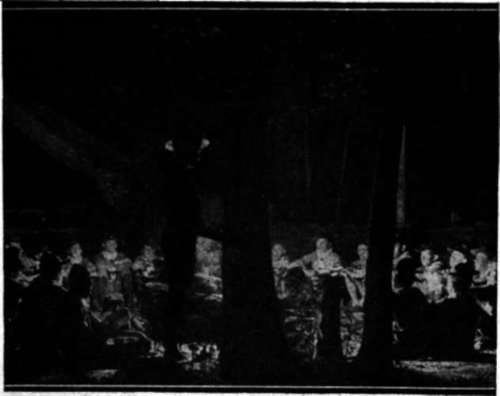
Ideas flash from the fertile minds of Scouts. Many a fine program has been developed from an inspiration kindled at a camp fire.
Father and Son dinner or hike. Reunion of old Scouts. Entertainment for Troop funds. Memorial Day activities.
Special Thanksgiving and Christmas Good Turns. Participation in Council Rally or Camporee. Participation in Council Merit Badge Exposition. Participation in Council Roll Call. Participation in Council Circus.
To make these activities succeed they must be planned by the right kind of leadership in the right Scouting spirit, using the Patrol Method, with proper institutional backing and cooperation with the Local Council.
Continue to:


My Books

