


Chapter XVII. Mineral Veins And Ore Deposits
Description
This section is from the book "An Introduction To Geology", by William B. Scott. Also available from Amazon: An Introduction to Geology.
Chapter XVII. Mineral Veins And Ore Deposits
Mineral veins and ore deposits are of the greatest economic importance and have therefore received a great deal of attention, and a very extensive literature has grown up concerning them. Obviously, but a meagre outline of the subject can be attempted in this place, and the treatment of the much-disputed questions of the modes of formation cannot be given adequately or at length.
I. Mineral Veins
The crevices, fissures, and faults which traverse hard rocks generally remain open for a time and are then frequently filled up by the deposition of material which is quite different from the country rock of the walls. Fissures thus filled by crystalline deposits are mineral veins, and these vary greatly in dimensions, from a few inches to many miles in length. The minute veins are filled with material derived from the walls by solution and redeposited in the crevices, such as the veins of crystallized calcite in limestone. Great fissure veins, on the other hand, which may run unchanged for many miles and penetrate to depths beyond the reach of mining, are " characterized by regular, straight walls, by a fairly constant width, and by a definite direction of both strike and dip." (Spurr.) Such veins are usually very distinctly marked off from the wall of country rock, and may be either simple or banded, with the bands in general parallelism with the walls of the fissure. In a simple vein the mineral contents are deposited irregularly without any definite arrangement, or in a solid, homogeneous mass, while the banded structure is produced in several different ways.
One of the commonest of these ways is by the deposition of minerals on the walls of an open fissure, for the more perfect ends of the crystals project from the walls toward the middle of the vein, and the bands are arranged usually in symmetrical pairs from the walls inward. In many instances the symmetrical arrangement is departed from, because a fissure once filled with crystalline minerals may be again opened by renewed diastrophic movements and a renewed deposition take place, the older vein forming the walls of the newer one. The parallel bands may be of the same mineral, or each pair may be of a different mineral. Banded structure may also be brought about by movements of the rock subsequent to the filling of the vein, and frequently both factors cooperate to produce the result in the same vein.
As we have already seen (p. 341), a fault zone is often a mass of shattered and sheared rock, consequently it is not surprising that many mineral veins should be highly complex, branching and anastomosing around the broken pieces of country rock. In such cases it is evident that the deposition of the minerals has taken place in a broader or narrower zone of fault rock. The nature of the country rock itself often determines whether a vein shall be simple or complex, and the same vein may be simple in one part of its course and complex in another, as the country rock changes from point to point, either vertically or horizontally. Before the deposition of the mineral contents, the fissure was open in part of its course, where the rocks yielded easily to tension, while in other parts the crack was represented by a mass of shattered rock, yet with abundant narrow openings, through which water could circulate.
A third class of mineral veins is composed of the veins of replacement, in which the circulating waters have not merely deposited minerals in an open fissure, but have gradually substituted one substance for another, by dissolving out the latter and replacing it with the former, it may be molecule by molecule, so. that the replacing minerals are pseudomorphs after the older series (see p. 11) retaining the crystal form, sometimes the cleavage of the latter.
In this way fossils may be produced in newer minerals, even metals. A replacement vein represents a water channel of some kind, and so it has a more or less definite direction, but it seldom has sharply defined walls, for the new deposits impregnate the country rock and fade away into it. Sometimes, however, the replacement has been so complete that a vein results which is at first sight hardly distinguishable from a true fissure vein, and even a banded structure may occur in such veins, due to a previous banding in the rock which is replaced. This banding of the rock may be occasioned by a succession of shear-planes, along which the first deposition takes place, followed by the replacement of the rock included between the shear-planes, or by the occurrence of bands of more and less soluble material, replaced in the order of solubility.
Replacement veins are most commonly found in limestones, since those are the most readily soluble rocks, but they also occur in rocks which are relatively very insoluble, such as sandstones, and in igneous rocks like granite. The processes of molecular substitution, which are carried on very slowly, may take place where there is a very small amount of soluble material present.
Mineral veins are especially characteristic of disturbed, fractured, and dislocated rocks, and are practically absent from regions of undisturbed strata. This association is what we should expect to find, for deep fissures are to be found only among rocks which have been more or less violently shifted by diastrophism or by igneous intrusions. Such intrusions are very favourable to the formation of mineral veins, and many veins may be traced directly into plutonic bodies, and others are clearly results of contact metamorphism.
The substances which are found in mineral veins vary widely, in accordance with the mode of formation, and in the same vein may differ greatly from point to point. Sometimes, though not always, the character of the country rock exercises a controlling influence upon the contents of the vein, which change as the rock traversed changes. Among the commonest and most widely disseminated of vein minerals are quartz, calcite, and barite (heavy spar, BaS04). Frequently the ores of the commercially valuable metals are found in mineral veins, which then are called metalliferous veins. The minerals which fill up most of the vein, such as quartz, calcite, etc., form what is called the vein stuff, or gangue, and in the latter the ores may be disseminated in fine particles, or gathered in threads, pockets, or nuggets, sometimes in the native, or uncompounded state, but much more frequently as sulphides, oxides, carbonates, and other combinations. Mineral veins may thus be regarded as a special case of ore deposits, and the mode of their formation can most conveniently be discussed in connection with the latter.
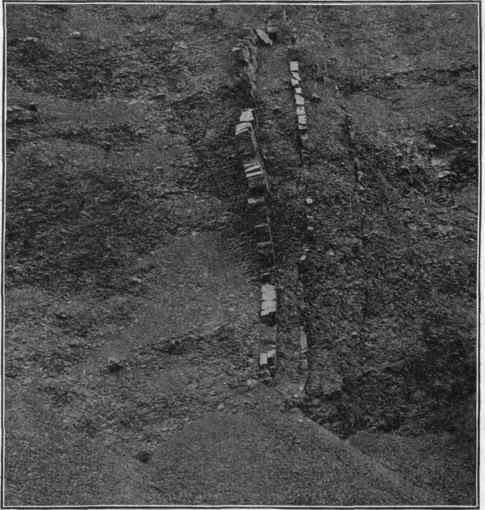
Fig. 228. - Dykes of sandstone in shales, Northern California. (U. S. G. S).
Sediment-filled Veins, though belonging in an entirely different category from true mineral veins, may be briefly mentioned here.
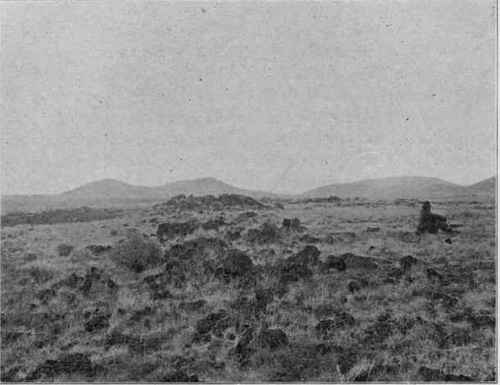
Fig. 229. - Volcanic topography, northern Arizona. (U. S. G. S).
Vertical fissures are sometimes filled up by sediment washed in from above, but more remarkable are the instances where the fissure was evidently filled from below with sediment different from the walls. In Fig. 229 is seen an example from northern California: the fissures which traverse the shale have been filled with sand, which has consolidated into firm sandstones and, as they resist weathering better than the enclosing soft shales, they stand out in relief. These are called sandstone dykes, though they are not true dykes, which are always of igneous rocks. The explanation of these curious structures is given by many modern earthquakes, notably the great-Indian quake of 1897 (see P. 42). It will be remembered that on that great disturbance the ground opened in innumerable fissures, through which "astounding quantities" of sand and water were discharged. Not all the fissures communicate with the surface, and if the superficial rocks rest upon unconsolidated beds of sand, the sand will be forced upward into any cracks that may be formed, as bore-holes are sometimes clogged at considerable depths with clay squeezed into them by the pressure of the overlying rock.
Continue to:


My Books

