


Folds
Description
This section is from the book "An Introduction To Geology", by William B. Scott. Also available from Amazon: An Introduction to Geology.
Folds
Folds present themselves to observation under many different aspects, all of which may be regarded as modifications of three principal types.

Fig. 153. - Symmetrical folds; anticline on left, and syncline on right.
(U. S. G. S).
(1) The Anticline
The Anticline is an upward fold or arch of strata, from the summit of which the beds dip downward on both sides. The curve of the arch may be broad and gentle, or sharp and angular, or anything between the two. The line along which the fold is prolonged is called the anticlinal axis and may be scores of miles in length, or only a few feet. This may be illustrated by an ordinary roof, which represents the two sides or limbs of the anticline, while the ridge-pole will represent the anticlinal axis.
Whether long or short, the fold eventually dies away, and thus the summit of the arch is not perfectly level, but more or less steeply inclined, and this inclination is called the pitch of the fold. In accordance with the length of the axis and the steepness of the pitch the uneroded anticline is either short and dome-like, or elongate and cigar-shaped.
(2) The Syncline
The Syncline is the complement of the anticline, and in this the beds are bent into a downward fold or trough, dipping from both sides toward the bottom of the trough, which forms the longitudinal synclinal axis. As in the anticline, the axis may be long or short, with gentle or steep pitch, forming long, narrow, "canoe-shaped" valleys, or oval, even round, basins. In section the syncline may be shallow and widely open, or with steep sides and angular bottom.

Fig. 155. - Model of syncline. (Willis).
Domes and Basins are special cases of anticlines and synclines. The dome is an anticlinal fold in which the axis is reduced to zero, the dip of the beds being downward in all directions from the summit of the dome. As the dip changes, the strike changes, describing an oval or circle. Similarly, the basin is a syncline with axis reduced to zero, the beds dipping downward from all sides to the bottom of the basin, and the strike forming the edge of the basin. The term basin is used in different senses, and it is necessary to distinguish carefully between a basin of folding and one which has been excavated by erosion.
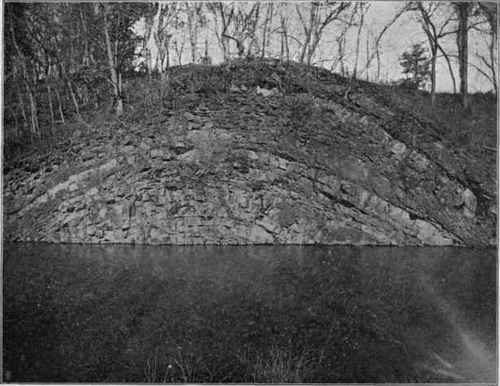
Fig. 156. - Anticline near Hancock, Md. (U. S. G. S).
It is rare to find a single anticline or syncline occurring by itself; very much more frequently they are found in more or less parallel series, each pair of anticlines connected by a syncline. At one end of the system we may find several axes converging and uniting into a single fold, and they all die away sooner or later, the pitch of the folds coinciding with the dip of the beds.
Continue to:


My Books

