


Forms In Plutonic Rocks
Description
This section is from the book "An Introduction To Geology", by William B. Scott. Also available from Amazon: An Introduction to Geology.
Forms In Plutonic Rocks
It is exceptional that topographica\ features can be definitely referred to the constructive or tectonic effect of intrusive plutonic bodies, for the obvious reason that the presence of a plutonic mass at a given point can rarely be determined until the covering of overlying strata has been removed. An exception to this is given by many laccolithic hills and mountains, in which the covering of strata is more or less completely retained. In Little Sun-Dance Hill (Fig. 219) we have a dome-like hill, the strata of which are almost intact and the presence of the plutonic body is only inferred, not absolutely certain. A second stage of denudation is found in Bear Butte (Fig. 220) of the same region, the covering of strata being removed, except where they are upturned around the base of the butte, and finally, in Mato Tepee, we have only the central core of the laccolith preserved (Fig. 221). The Henry Mountains of southern Utah and several of the Colorado ranges display laccoliths in all stages of dissection.
The plutonic bodies are exposed by denudation, and since they are, as a rule, more resistant than the invaded rocks, they generally form prominences corresponding to the form of the intrusive mass. Sometimes, however, the intrusive body is less resistant than the enclosing rocks and then is marked by a depression. Dykes, when exposed by denudation, stand out in relief as long walls, the height of which is determined largely by the thickness of the dyke and by its resistance to destruction. In certain cases, as in North Carolina, the dyke-rock disintegrates more rapidly than the enclosing rock, and hence long trenches indicate the position of the dykes. Sills, so far as their effect upon topography is concerned, may be regarded simply as hard strata, but some sills are much thicker than strata often are.
Stocks, which increase in diameter downward, project as small hills when first exposed, but when they are slowly denuded and the country-rock is rapidly worn away, they become larger and relatively higher, as the surrounding area is lowered by denudation. If the region where the stock is found is sufficiently above base-level, a very high hill and even a mountain may thus be formed.
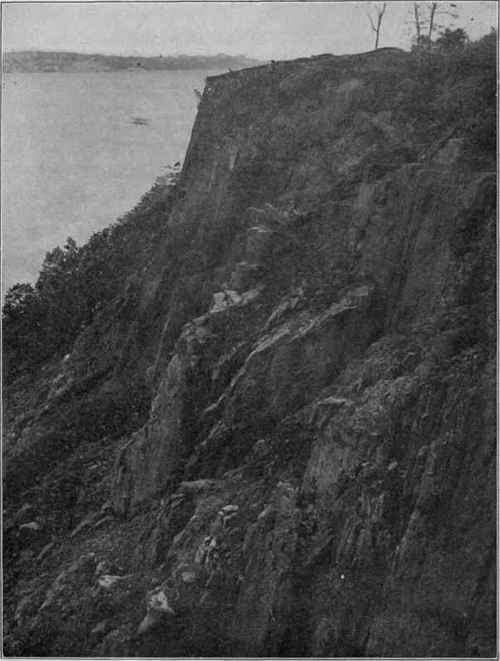
Fig. 237. - Palisade-sill, Fort Lee, N.J. (Photograph by van Ingen).
Batholiths, like stocks, increase in size downward, lying upon no floor of country-rock. Hence, they give rise to great ridges, or irregular masses, often of enormous size, when laid bare by erosion. Many mountain ranges are composed of granite batholiths, from which the covering of strata has been stripped away and which are themselves deeply dissected into peaks and crags. On the other hand, such batholiths are no exception to the rule that plutonic bodies may sometimes wear away more rapidly than the rocks which enclose them. When this occurs, the batholith will be found as a plain, or depression, with the more resistant rocks rising above it.
In brief, the controlling factor in a region of mature topography is the arrangement of the rock masses, prominences being due to the more resistant rocks, whatever their nature.
Continue to:


My Books

