


Glacial Deposits
Description
This section is from the book "An Introduction To Geology", by William B. Scott. Also available from Amazon: An Introduction to Geology.
Glacial Deposits
We have already learned that glaciers carry with them great masses of debris, either in the form of lateral and medial moraines upon their upper surfaces, or frozen in the interior of the ice, or pushed along beneath it. When the ice reaches the end of the glacier, where the rates of motion and melting balance each other, all the burden which it is transporting is deposited in a great mound or ridge, the terminal moraine. The terminal moraine is composed of material which was carried upon and within the ice and that which was pushed along beneath the glacier. It is gradually built up around the end of the glacier and extends up along its sides so far as the conformation of the ground will permit the material to gather, and is thus more or less crescentic, with concave side directed upward. Moving ice does not sort the material which it carries, as flowing water does, because in a glacier there is no such definite relation between velocity and transporting power. Hence, the terminal moraine is unstratified and is composed of materials of all sizes, from dust and sand up to great boulders weighing hundreds of tons, all mingled together in confusion.
In the case of a glacier which carries the principal part of its burden upon its upper surface, the terminal moraine is chiefly made up of angular blocks that have undergone little or no abrasion, together with earth, sand, gravel, and whatever kind of material the overhanging cliffs may have delivered to the moving ice. Mingled with these materials, however, will be found more or fewer of the characteristically worn and grooved glacial pebbles and boulders, which have been dragged along under the ice, and scored and polished by the rocky bed. There will also be found some, at least, of the sand and fine rock flour which the glacier's own movement produces and which have escaped the washing of the sub-glacial stream.

Fig. 108. - Fluted ground moraine; Columbia Glacier, Alaska. (U. S. G. S).
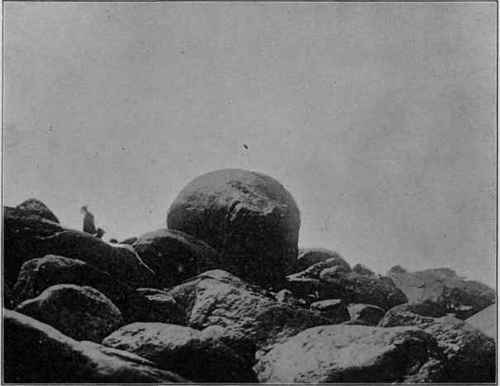
Fig. 109. - Glacial moraine, Montauk Point, L.I. (Photograph by B. N. Mitchill).
When a glacier is retreating, it may build up a new terminal moraine at each point of arrested withdrawal, or if the retreat is gradual and steady, the ground in front of the ice will be covered with moraine material, spread out in a sheet, not heaped up in a moraine or mound. The retreat of the glacier may leave behind it isolated masses of ice deeply buried in the debris of the terminal moraine; when such masses melt, they form depressions in the mound and give rise to the " kettle moraines." A shrinking glacier will contract laterally and in depth, as well as longitudinally, and in this way the blocks of the lateral moraine will be left stranded at intervals over the former glacial bed. Such blocks and boulders are known as erratics, or perched blocks, and when their parent ledge can be discovered, it is easy to determine the distance to which they have been carried. Sometimes a great boulder is lowered so gradually and gently by the retreating ice, that it is exactly balanced, and may be moved backward and forward by the hand.
This is a "rocking-stone," though it must not be supposed that all rocking-stones are glacial (see p. 122).

Fig. 110. - Glacial pebble. (U. S. G. S).
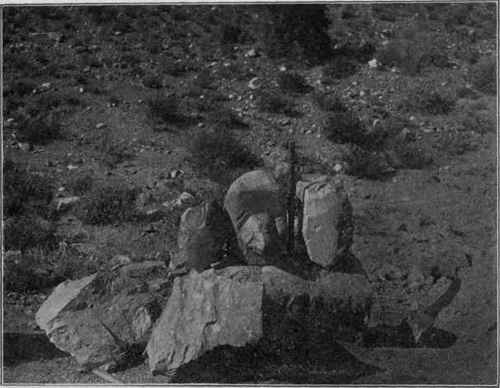
Fig. 111. - Striated glacial boulders from Permian of South Africa.
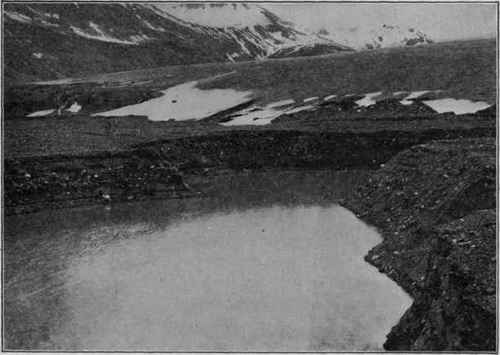
Fig. 112. - Kettle moraine, Alaska. (U. S. G. S).
The ground moraine consists of the debris which is deposited underneath moving ice and that which is left from the bottom of a retreating glacier. Deposition beneath moving ice is much less in amount than erosion, but may occur in areas sheltered from ice pressure, or where the ice thins rapidly from melting. The ground moraine is not stratified, or but imperfectly so when deposited partly from water, and is of very different thickness in different places; it consists of fine material containing boulders and pebbles, many of which show the characteristic facetting and striae, and is called till, or boulder clay. The general term for a sheet of glacial deposits is drift.
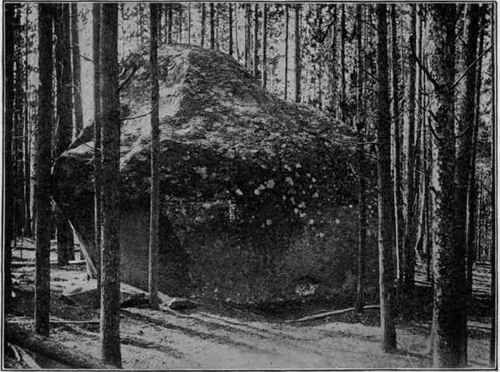
Fig. 113. - Perched block near the Yellowstone Canon, National Park. (U. S. G. S).

Fig. 114. - Glacial drift, Bangor, Pa. (U. S. G. S).

Fig. 115. - Glacial drift in Permian of South Africa. (Photograph by Rogers).
The water deposits which are made in the neighbourhood of and in association with a glacier, are also characteristic and should be noticed in this connection. The streams which flow beneath and from the foot of the glacier are loaded to their utmost capacity with debris, and Usually build up their beds by rapid deposition of the coarser sediment. From an alpine glacier this deposit, which is stratified, forms a valley train, but when the glacier ends, as do some of those in Iceland, upon a more or less flat surface, a broad overwash plain is the result. These accumulations may usually be distinguished from ordinary river and flood plain deposits by their upward extension into moraines and by the evidently glacial origin of their materials.

Fig. 116. - Glacio-fluvial deposits, Yahtse River, Alaska. (U. S. G. S).
Eskers (or Asar) are long, winding ridges of gravel, which often ramify like the branches of a stream and were formed by streams which flowed in channels upon or in tunnels beneath the ice. Karnes are hillocks, or short ridges of stratified gravel and sand heaped up by subglacial streams, as they escape from the margin of the ice, and drumlins are elliptical mounds of ground moraine, sometimes with some stratification, formed near the margin of the ice.
Very instructive examples of this combined action may be observed about the great Malaspina Glacier in Alaska. This is an immense ice-sheet, with an area of 1500 square miles, which is formed at the foot of the St. Elias Alps by the confluence of several great glaciers. All the outer borders of the glacier are covered with sheets of moraine matter, and upon the stagnant portion of this is a luxuriant growth of bushes, beneath which is a thickness of not less than 1000 feet of ice. About the margin of the ice-sheet, small lakes.are formed, the water being held in place by the ice barrier, but these lakes are subject to great fluctuations, and often their waters escape through tunnels in the ice. In some of these lakes stratified deposits are made by the inflowing streams. Innumerable streams, some of them quite large, rise from under the glacier, and many others flowing from the north pass under the free margin of the ice by means of long tunnels. All of these streams are loaded to their utmost capacity with sediment, gravel, and boulders; by blocking up their own openings from the ice, they likewise cause the deposition of sand, gravel, and boulders within their tunnels, which, when the glacier retreats, will be left standing as eskers, while conical mounds, or kames, are built up where the streams burst from under the ice, and sometimes, owing to the great pressure, rise like fountains.
This kind of deposition is characteristic of retreating ice-sheets, such as the Malaspina; in advancing glaciers denudation will prevail over deposition, or, if the advance be not so great as to sweep away all the previous accumulations, purely glacial deposits may be laid down upon the stratified fluvio-glacial material.
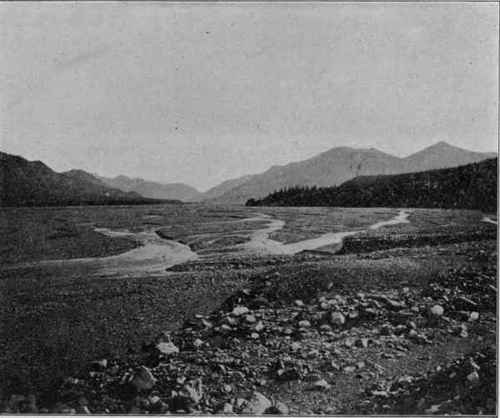
Fig. 117. - Gravel flood plain of glacial stream, Alaska. (U. S. G. S).
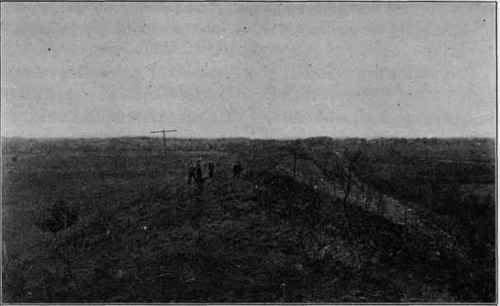
Fig. 118. - Esker, central New York. (Photograph by Fairchild).
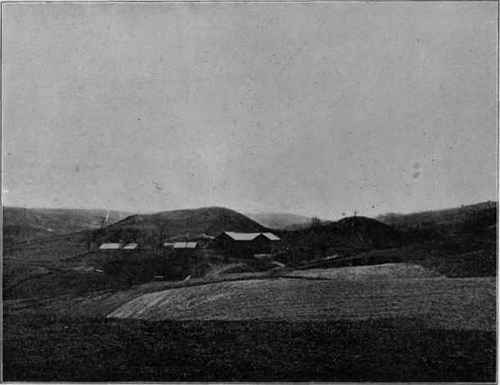
Fig. 119. - Kame moraine, central New York. (U. S. G. S).
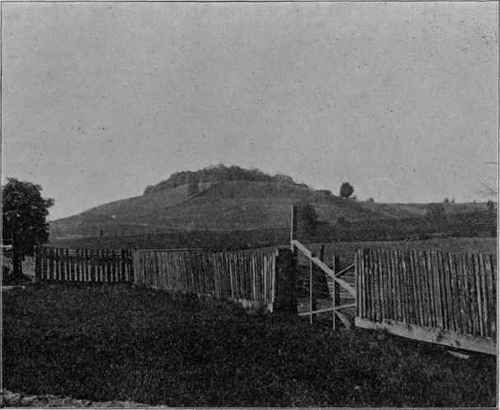
Fig. 120. - Drumlin near Newark, N.Y. (U. S. G. S).
Continue to:


My Books

