


I. Littoral Deposits
Description
This section is from the book "An Introduction To Geology", by William B. Scott. Also available from Amazon: An Introduction to Geology.
I. Littoral Deposits
Littoral Deposits are laid down between low and high-water marks, and by heavy storms and exceptional tides, somewhat above the former. Thus, the accumulations of this class grade into continental deposits on one side and into those of the shallow sea, on the other, and are themselves alternately covered with water and exposed to the sun and wind. The material of the littoral beds varies much on different coasts; on rocky shores boulders, coarse shingle and gravel form the beach, but gravel and more particularly sand are the most widely distributed. Boulders and shingle may be composed of any kind of hard rock, but as the process of attrition continues, the greater hardness of quartz has its effect, so that gravel and sand generally consist of that mineral, the softer minerals being ground into fine particles and swept out into deeper water. Locally, sand of other composition occurs, as, for example, around the Bay of Naples sands of olivine, felspar and other volcanic minerals, are found.
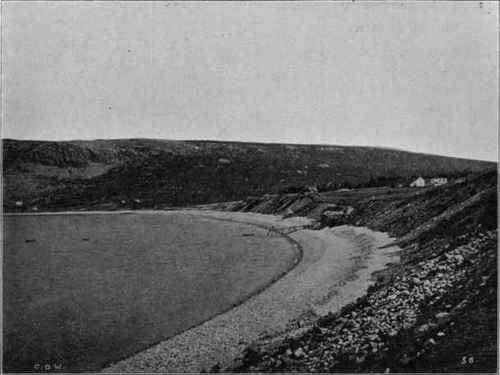
Fig. 125. - Gravel beach and wall, Conception Bay, Newfoundland. (U. S. G. S).
The waves cast material upon the beach, throwing the coarsest parts up in storms as a beach wall or embankment, above their ordinary reach, while the undertow carries back the finer particles, thus washing the sands and gravels clean of other minerals. Even in the littoral belt, fine sand and mud may gather in sheltered spots, but the material is preponderatingly coarse. At any given time the littoral is a narrow belt, measuring at present about 62,000 square miles, but its breadth at a particular place depends upon the amount of tidal rise and fall, and the slope of the bottom. On a stationary coast, or one where accumulation is more rapid than sinking, littoral deposits may form a broad area by building out the land at the expense of the sea. When sinking and building are about equal, great thicknesses of littoral beds may be formed.
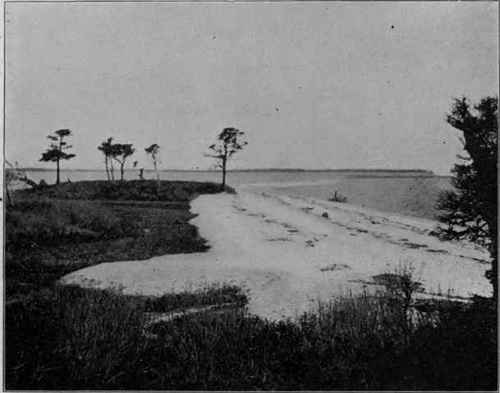
Fig. 126. - Gravel beach, Long Island, N.Y. (U. S. G. S).
Aside from the coarseness of the material, littoral deposits are apt to retain certain characteristic marks of their exceptional mode of formation. Ripple Marks are formed by the wind, or by the rippling movement of water, and may be seen on any sandy beach; they occur especially in sands, in shoal-water deposits, as well as in those made on flood plains and in lakes and on sand dunes. They are found in rocks of all geological periods, and though most frequent in sandstones, occur in other kinds of rocks. Wave Marks are formed by waves washing up on the beach after they have broken, and are preserved by the deposition of thin layers of sand on the edges of the waves; they are confined to the littoral zone. Rill Marks also are peculiar to littoral deposits and are made by the excavating action of rills of water trickling over the sand or mud, as the tide ebbs. Sun Cracks (also called mud cracks and shrinkage cracks) are formed where flats of fine mud or silt exposed to the drying action of the sun, harden and crack in more or less regular patterns. As we have already learned, such cracks form over vast areas of flood-plain and playa deposits, and the littoral are the only truly marine deposits which display them, though on a limited scale.
They do not form in the clean sands and gravels which make up the greater part of littoral sediment, but only in fine silt, and in pluvial climates probably only in such areas as are not reached by the ordinary tides. In very hot and dry climates, as on parts of the Red Sea coast, cracks may develop in the course of a few hours.

Fig. 127. - Ripple-marked sands, low tide; Mont St. Michel, France.
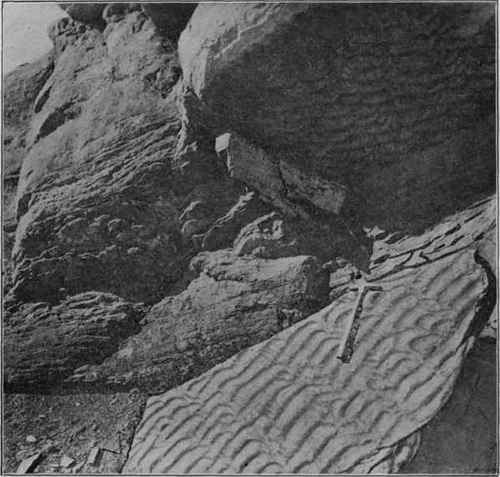
Fig. 128. - Ripple-marked sandstone. (U. S. G. S).

Fig. 129. - Steeply inclined beds of ripple-marked shale; near Altoona, Pa.
(U. S. G. S).
Rain Prints are little pit-like marks made by light showers; the prints are circular where the raindrops fall vertically, or oval and with edge raised on one side where the rain falls obliquely before the wind. Tracks of Land Animals are made by the animals walking upon the soft sediment, which is yet fine enough to retain the footprints and is afterwards hardened by exposure to the sun and air. Rain prints and footprints are not so common in littoral deposits as in those of flood plains and playas, but where they do occur in rocks which contain marine fossils, they prove the littoral origin of those rocks, for only in the littoral zone can such marks be made.

Fig. 130. - Wave mark and rain prints, modern sandy beach. (U. S. G. S).
It might seem incredible that such slight marks could be preserved for ages in the solid rocks, were it not for the fact that we actually find them so often. The explanation is that surfaces which are capable of preserving these marks are those of accumulation and that each layer with its marks is hardened by the sun and wind before the next layer is deposited upon it.
Climatic differences are not well marked in the littoral zone, the character of which is chiefly determined by the elevation and topography of the adjoining land. Only in the polar regions is a special character given to the littoral by the activity of frost and coast ice, so that block and boulder beaches are more common, and sandy beaches less frequent than elsewhere.

Fig. 131. - Rill marks on modern sandy beach. (U. S. G. S).
Continue to:


My Books

