


2. Shoal-Water Deposits
Description
This section is from the book "An Introduction To Geology", by William B. Scott. Also available from Amazon: An Introduction to Geology.
2. Shoal-Water Deposits
The material of the littoral zone is continued out beyond low-water mark to distances which vary according to several circumstances. Where, for long distances, no large rivers enter the sea and the material is all derived from the wear of the coast, the arrangement of coarse and fine deposits is quite regular, and gravel beds may extend as far as ten miles from land. Waves and currents sweep sediment not only toward the shore, but parallel with it, and tend to simplify the coast-line by building barriers and spits across the mouths of bays, which the waves may pile up above high tide, as is seen all along the eastern coast of the United States. Behind these barriers streams bring in sediments, filling up the bays and converting them into salt marshes and eventually into land.
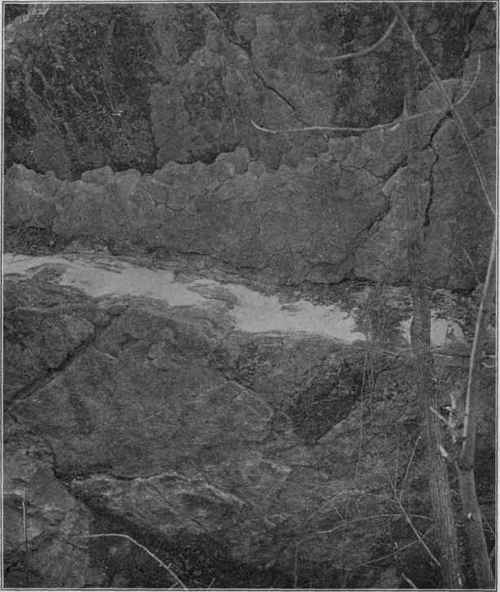
Fig. 132. - Sun cracks in limestone, Rondout, N.Y. (Photograph by van Ingen).
While gravel and, in sheltered or deeper spots, mud are found in the shallow sea, the most abundant and characteristic material of this zone is quartz sand. If the bottom shelves very gradually and the continental margin is far from land, the sand will extend Ioo to 150 miles out, growing finer and finer with the increasing depth of water. Further, the sand travels along the shore for long distances from its place of origin, as on the Atlantic coast of Florida, where there is a belt of siliceous sand that cannot have been derived from the peninsula.
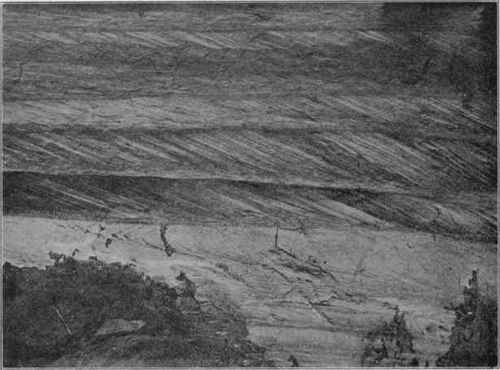
Fig. 133. - Cross-bedded sands, Bennett, Nebraska. (U. S. G. S).
Throughout the whole of the shoal-water zone wave action is exerted upon the bottom, though to a very insignificant extent in the deeper parts. Very near shore currents produce irregularities of stratification, especially the structure known as cross bedding (also called current or false bedding) in which the separate layers are inclined at a considerable angle to the horizontal. (See Figs. 133-4 and Frontispiece.) This structure is due to the heaping up of bars and ridges on the sheltered side of which sand or gravel is dropped in inclined layers. Frequently we find horizontal strata built up of inclined layers, the latter all truncated by a horizontal bedding plane. Cross bedding occurs in shoal water of all kinds, the sea, lakes, and rivers, wherever the bottom is frequently stirred up by currents, and the foreset beds of deltas are a typical example of it. In the rocks it is most frequently observed in consolidated sands and gravels, which are called respectively sandstones and conglomerates. Ripple marks are also extremely common in deposits of the shoal-water zone and tracks of marine animals; tracks of land animals and sun cracks are of course wanting.

The Navajo Church, New Mexico; wind sculpture of cross-bedded sandstone.
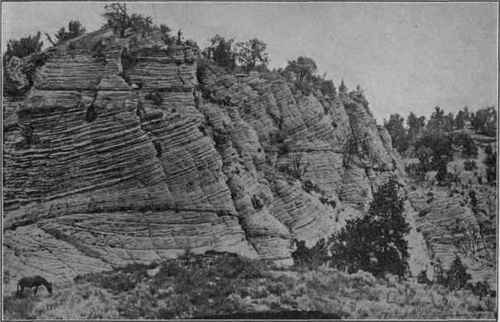
Fig. 134. - Cross-bedded sandstones, Arizona. (U. S. G. S).
Much less widespread than sand or gravel on the bottom of the shallow sea is mud or clay. When these occur, their presence may be due either to holes and depressions, where the bottom water is less disturbed and therefore deposits finer material, or to a large supply from the neighbouring land. For example, a large triangular patch of clay invades the sand area south of Block Island, and mud-holes are found along the New Jersey coast near the entrance to New York Bay.
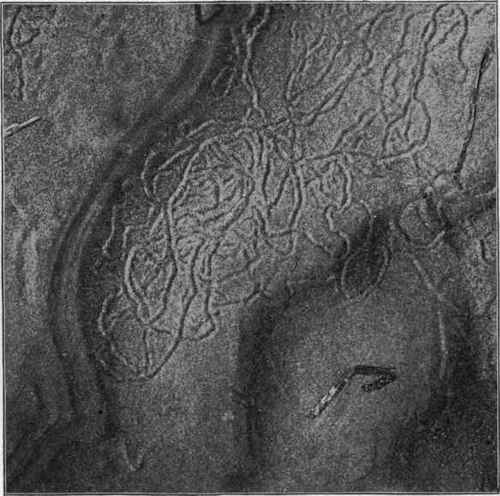
Fig. 135. - Markings by marine worms, modern.
It is manifest that a great thickness of shoal-water deposits can be formed only upon a sinking sea-bottom, for otherwise the water would be filled up and the coast-line pushed out to sea. If the subsidence be very slow, deposition may shoal the water and thus extend the coarse materials seaward; if it be rapid, deepening the water, fine sediment will be thrown down upon coarse, while, if the rate of deposition and subsidence be nearly equal, the coarser material will form long, narrow bands, running parallel with the coast. Thus, in the same vertical line.may be accumulated many different kinds of sediment, corresponding to the different depths of water at the same spot. When traced laterally, beds of any given kind of material will eventually give way to those of another kind, either by gradual transition, or by thinning to an edge and dovetailing with the thin edges of the other beds. The dovetailed structure is caused by shifting conditions, a succession of heavy storms sweeping coarser material out to unusual depths, and long periods of calm occasioning the deposition of fine sediment unusually near shore.
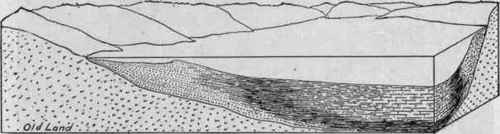
Fig. 136. - Diagram showing dove-tailed deposition on the sea-floor.
Organic deposits are much less common in shallow water than are the terrigenous, and yet under favourable conditions they are developed on a very extensive scale. The most important of such conditions is an abundant supply of food. Even in the far North limestone accumulations are formed, but this work is most extensively done in the warm waters of tropical and subtropical seas. The sea is constantly receiving from the land materials in solution, of which the most important are the carbonate and sulphate of lime. Many classes of marine animals extract the CaC03 from the sea-water and form it into hard parts, either as external shells and tests, or as internal skeletons. There is also good reason to believe that some, at least, of these organisms are able to convert the sulphate into the carbonate.
The classes of marine organisms which at present or in times past have played the most important part in the accumulation of calcareous material are: the Foraminifera, Corals, Echinoderms, and Molluscs; but other groups, such as Bryozoa, worms and calcareous seaweeds, contribute extensively to the same result. The Foraminifera do not accumulate with sufficient rapidity to add largely to the calcareous deposits of shallow water, and will therefore be considered in connection with the deep-sea formations.
Mollusca
The ordinary shell-fish (Mollusca) supply a very large amount of calcareous material for the formation of shallowwater limestones, especially in the neighbourhood of the coasts, and are found in warm, temperate, and even in Arctic seas. The shells accumulate in great banks, frequently, though not always, mingled with more or less sand and mud, and when gathered below the limit of violent wave action, they are entire, embedded in finer material, which may be calcareous or not. More commonly the shells are ground by the waves into fragments, making shell sand and mud, which is then cemented into a more or less compact mass. The coquina rock of Florida is an example of a recently made shell limestone (though it is forming no longer), and among the rocks of the earth's crust are many immense limestones which were accumulated in this way. In the formation of shell-banks carnivorous Crustacea and fishes play an important part, for they grind up even quite thick shells and produce an angular calcareous sand, which may be deposited by itself, or constitutes the finer material in which the entire shells are embedded.
The shell-banks thus form lens-shaped limestone masses of greater or less extent and thickness, which are intercalated in areas of terrigenous sediment, more particularly of sand.

Fig. 137. - Modern shell limestone (coquina), Florida.
Echinodermata
This group of marine animals, which includes the starfishes, sea-urchins, crinoids or sea-lilies, etc., is made up of forms which all secrete skeletons of calcareous plates, and which contribute largely to the formation of marine limestones. At the present day, however, they seldom build up any extensive masses unassisted, but in former ages of the world's history they did so on a great scale. This is particularly true of the crinoids (sea-lilies or feather-stars), which have now become comparatively rare, but many ancient limestones are composed almost entirely of their remains, and especially of their hard and heavy stems.
Continue to:


My Books

