


Limestone Banks
Description
This section is from the book "An Introduction To Geology", by William B. Scott. Also available from Amazon: An Introduction to Geology.
Limestone Banks
In favourable situations immense submarine plateaus or banks are built up in shallow waters by the accumulated remains of all sorts of lime-secreting animals, corals, echinoderms, molluscs, worms, and Foraminifera. These are well exemplified in the Gulf of Mexico and the Caribbean Sea by the great banks along the west coast of Florida, the Yucatan Bank, and the plateau which extends from the coast of Nicaragua almost to Jamaica. On these banks the luxuriance and fulness of life are astonishing, myriads of animals flourishing in the warm waters, and abundantly supplied with food by the great ocean currents which sweep over the banks. Innumerable molluscs, echinoderms, and calcareous worms are continually dying and adding their hard parts to the sea-floor; the waves and tides sweep calcareous sand and mud from the coral reefs over the flats, and all of these masses are rapidly consolidated into rock.
An example of a limestone bank in moderately deep water is the Pourtales Plateau, which extends southward from the Florida Keys, and is covered by 90 to 300 fathoms of water. " The bottom is rocky, rather rough, and consists of a recent limestone, continually, though slowly increasing from the accumulation of the calcareous de'bris of the numerous small corals, echinoderms, and molluscs, living on its surface. These debris are consolidated by tubes of serpulae; the interstices are filled up by Foraminifera and further smoothed over by nullipores. - The region of this recent limestone ceases at a depth varying from 250 to 350 fathoms, and beyond it comes the trough of the straits." (A. Agassiz).
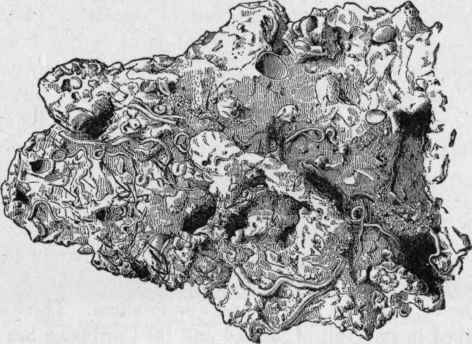
Fig. 138. - Rock from the Pourtales Plateau. (A. Agassiz).
It is not known how thick these modern limestone banks are, but some indication of their thickness is given by the raised terrace of modern limestone in northern Yucatan, composed of the same species of animals as still abound in the adjoining seas. In this rock are caverns more than 400 feet deep, which do not reach the bottom of the mass.
Continue to:


My Books

