


The Arid Cycle
Description
This section is from the book "An Introduction To Geology", by William B. Scott. Also available from Amazon: An Introduction to Geology.
The Arid Cycle
"The essential features of the arid climate . . . are: so small a rainfall that plant growth is scanty, that no basins of initial deformation are filled to overflowing, that no large trunk rivers are formed, and hence that the drainage does not reach the sea." (Davis).
The peculiarities of erosion in arid climates have already been described; it remains to point out the characteristic features of the geographical cycle under arid conditions, as these are defined in the preceding paragraph. The successive steps of the cycle are much affected by the topography at the beginning, but it would lead us too far to take into consideration all the various cases, and only a general outline can be attempted. We need only assume the elevation of a large area, with more or less of deformation. The drainage will be consequent on the newly formed slopes, and the lowest part of each basin will form the local base-level, for the streams of each basin of deformation are confined to that basin and die away in the floor without uniting into a permanent trunk stream. Occasionally or periodically a playa lake may form, into which all the streams may flow, but as a rule they are disconnected fragments of a drainage system.
In the youth of the cycle the highlands are slowly eroded, and deposition takes place on the slopes and floor of each basin, diminishing the relief and raising the local base-level, a strong contrast to the corresponding stage of the normal cycle, in which relief is increased by the excavation of stream valleys. Even in arid regions, however, valleys are cut on the highland slopes, while the basin floor is made nearly level by deposition. This stage is exemplified by the Great Basin and its mountains. Water is the chief agent of erosion and deposition during the period of youth, but the wind is also important in eroding the bare rocks and in distributing the finer waste, part of which it carries outside of the arid region altogether. Extremely slow as this process of complete removal of the finer debris by the wind undoubtedly is, yet it is the only agency which actually lowers the average altitude of the region, for no water flows out of the area we are considering.
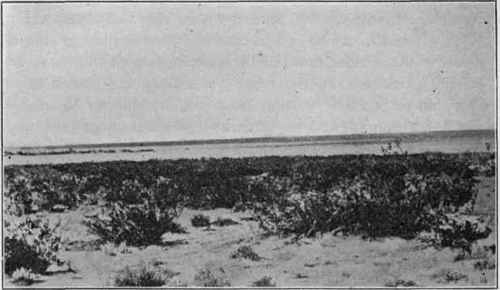
Fig. 232. - The Mohave Desert, California. (Photograph by H. W. Fairbanks).
Maturity of development is attained by the connection of the separate initial basins into a continuous whole. Erosion of the highlands and deposition on the basin floors may result in the formation of a continous slope from a higher basin to a lower one, so that, even in the absence of any permanent stream connecting the two, the rain will wash material to the lower basin and a new and lower base-level will be established for the higher one, while the lower basin floor will be built up by the transfer to it of the waste accumulated in that which lies at the higher level. " As the coalescence of basins and the integration of stream systems progress, the changes of local base-levels will be fewer and slower, and the obliteration of the uplands, the development of graded piedmont slopes and the aggradation of the chief basins will be more and more extensive." (Davis.) In maturity the relative efficiency of the eroding agents is not the same as in the earlier stages. Large areas at the foot of the mountains and highlands have already been graded to an even slope by the torrents formed by the rare but violent rains.
When vertical trenching can be carried no farther, lateral erosion removes the divides between the streams, which thus have no definite channels, and the water flows down the graded slope in a thin sheet. The wasting away of the highlands diminishes the scanty rainfall, and the quantity and efficiency of the water decrease with the diminution of relief, but the activity of the wind is not affected, and hence its relative importance is increased.
The continuance through vast periods of time of the slow processes above outlined will result in the destruction of the original relief, its place being taken by large plains of bare rock, sloping to plains of accumulation. If the strata have been disturbed by folding or tilting, the plain surface cuts across their structure to an even slope. The work is done without reference to the sea as a base-level and the altitude of the plain is determined by the loss of material through transportation by the wind.
The period of old age begins with the breaking up of the unified drainage system through the excavation of wind-made hollows in the softer rocks, a process unlike anything which we have found in pluvial climates, where a drainage system once established is not disintegrated during the progress of a normal cycle. If the desert were strictly rainless and erosion carried on by the wind alone, there would apparently be no limit to the excavation of such hollows, but no such instance is known, and the occasional heavy rains suffice to counteract it by filling up the hollows, but the drainage system is effectively disintegrated, and the waste, which in the stage of maturity gathered on the lower parts of the region, is washed about irregularly. The surface worn down by the wind may have no slope in any particular direction, for the wind has no base-level and is not affected by the inclination of the ground, but this surface may be reduced to an essentially plain-like character. Harder masses of rock, which have successfully resisted wear, may rise above the plain as residual moun: tains, just as they sometimes do in the peneplain of the normal cycle.
The deserts of North America have not reached the condition of old age, but it is realized in South Africa, where the desert plains have lately been studied by Dr. Passarge, whose conclusions are thus summarized by Professor Davis: "Passarge states that these desert plains are not undulating with low hills, but true plains of great extent, from which the isolated residual mountains rise like islands from the sea. The residuals may be low mounds, only a few metres high, or lofty mountain masses, rising several thousand metres above the plains. The plain surrounds the steep slope of the mountains with a table-like evenness; there is no transitional belt of piedmont hills, and no intermediate slope. The mountains consist of resistant rocks, such as granite, diorite, gabbro, quartzite, etc., granite being the most frequent; the plains are of more easily eroded rocks, such as gneiss, schists, slates, sandstones, and limestones. The bedding of the rocks is not flat, but disturbed; the plain therefore truncates the rock structures. . . . The products of weathering are usually spread as a thin veneer on the plain; the waste does not lie in place, on the rocks from which it was weathered, but has been drifted about by wind and flood and has gathered in slight depressions. . . . These rock-floored plains are not uplifted peneplains, but are the product of desert erosion unrelated to normal base-level, in which occasional water-action has cooperated with persistent wind-action".
We have definite evidence that the earth has undergone many climatic changes and that among these changes the alternation of arid and pluvial conditions in the same region have not infrequently occurred. Hence, in deciphering the history of any high-level plain the distinction between the normal and the arid cycle must always be borne in mind, and, if possible, evidence obtained which will enable the observer to determine whether the plateau is a reelevated peneplain, or the product of an arid climate.
Continue to:


My Books

