


Chapter V. The Balance Of The Body
Description
This section is from the book "The Golf Swing, The Ernest Jones Method", by Daryn Hammond. Also available from Amazon: The golf swing, the Ernest Jones method.
Chapter V. The Balance Of The Body
In the composition of the golfer the two elements, balance of body and balance of mind are intimately correlated, and from observation one would conclude that neither is easy to maintain. To some extent each may be either a cause or an effect of the other, and whilst it is possible for the one to exist without the other, the two are usually found together - either present or absent.
It is for the reader himself (or herself) to determine whether, and, if so, to what extent, his (or her) faulty balance of body is the cause or the effect of his (or her) faulty balance of mind, and whether treatment should be applied to the one element or to the other, or to both elements.
The writer will not treat specifically of the balance of the mind; for on this point he is ready to receive rather than to give advice; but he will treat specifically of the balance of the body, and it will be agreed that any improvement in the balance of the golfer's body is likely to yield an improvement in the balance of his mind, as a natural consequence.
The type of golfer who regards golf as a game that can be played by anybody, anyhow, finds satisfaction in pointing to differences in the method and style of first-class players. It is not, however, the differences, but the samenesses, that are of real significance. Broadly speaking, indeed, all first-class golfers swing alike. The differences are differences of detail - tricks of personality; the samenesses are fundamental.
Not the least important of the samenesses is the perfection of body balance, the quality of the even keel. And, conversely, not the least important of the samenesses in the action of bad golfers is the absence of that quality.
The average golfer does not appear to realize the close relationship which exists between the general method of swinging the club and the balance of the body. He thinks of the swinging of the club as one thing, and of the balancing of the body as another thing, and he aims at securing balance by setting his feet wide apart and grimly trying to keep them flat on the turf throughout the swing. This, on the face of it, may not seem to be a wholly bad method. If the player keeps flat on both feet, it would appear to follow that he cannot get on to his toes, that he cannot jump, that he cannot fall away from the ball. But the reasoning is false. Anything and everything may happen to the golfer who tries to root himself to earth in this manner - anything and everything but good golf. For balance is not to be achieved by any short cut; and the effort to do anything with the body or the legs or the feet, beyond allowing them to respond to the movement set up by the hands and fingers, is foredoomed to failure.
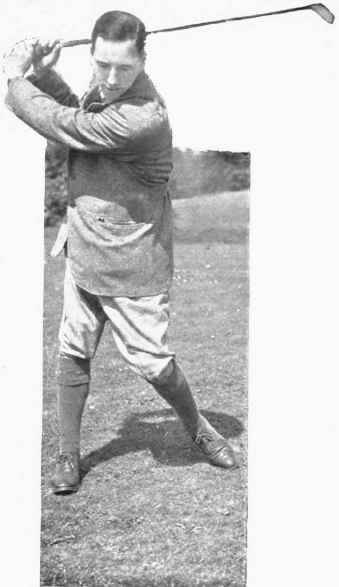
Fig. 48. - An ideally balanced position at the top of the upswing.
There may, of course, be some first-class golfer, unknown to the writer, whose feet throughout the swing remain flat on the ground; but if there is, he proves nothing except that genius, or perseverance, or both, can accomplish most things. Subject to this reservation.
all first-class golfers allow the left knee and foot to give in the up-swing, and the right knee and foot to give in the follow-through, and all first-class golfers preserve an even keel. It is true that Sandy Herd and Edward Ray both sway appreciably in making their shots; but a certain amount of sway is not incompatible with a sustained balance of the body. Both Herd and Ray visualize a certain path for the club-head which the club-head could not follow unless the body were allowed to move outward to the right; but in both cases this movement of the body is just as much a response to the movement set up by the hand and fingers as is the movement of the body in the case of the most perfect corkscrew twister. There is no golfer who conveys more emphatically than Ray the idea that the mastery of the club remains in the player's hands and fingers. At the same time, the writer does not agree with Ray when he says that his sway is the crowning ornament of a finished golfer's style. Fine golfer as Ray is, the writer always feels that he would have been a stroke or two a round still better had he not made his golf a slightly more difficult, a slightly more uncertain, game than even golf need be.
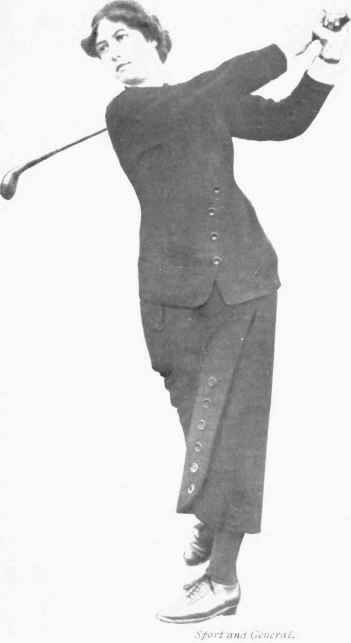
Fig. 49. - An ideally balanced position at the finish of the shot.
In the orthodox swing the hands and fingers initiate the action of winding the club-head round the body. When the club-head has been got under way a certain tension is felt in the body and legs, and unless this tension is relieved by the giving of the left knee and the left foot, the fingers will cease to control the club-head, the stiffness of the knee-joint will set up an obstacle to their proper functioning, and the balance of the body will be lost. Similarly, if the left knee gives before it receives impetus from the movement set up by the fingers, the mechanism will be put out of joint, and the balance of the body will again be lost.
In the orthodox up-swing, the hips and shoulders must turn so that the left shoulder comes underneath the chin. How can anyone who is not an elastic man or a music-hall artist get into that position unless he allows a certain amount of pivoting to take place? Could this turning movement possibly be made more difficult than by resolutely endeavouring to keep the left foot flat and firm? It is quite clear that something must go - either the ribs or the spinal column, or the balance. Fortunately from the point of view of the death-roll, unfortunately from the point of view of golf, it is the balance that goes in most cases.
The writer had a dear friend whose golfing life had been one long effort to acquire what it pleased him to call a firm stance; but he could be guaranteed to lose his balance every time he essayed anything beyond a quarter-swing. Just before the war broke out he announced confidentially that he had discovered that the secret of a good balance was to plant the right foot firmly on the ground and then to stiffen the right leg so as to form a buttress which should support the whole body. He made an effort to put this great idea into practice, the buttress proved unequal to the strain, and the result was that there was one more cripple in this country and one less soldier than there would otherwise have been. (The number of golfers was not, however, affected.)
It is true that in most treatises on golf the golfer is admonished to stand firm on his heels when he is addressing the ball; but in the writer's opinion that advice, having regard to the interpretation normally placed upon it, is bad. In the address the golfer should stand firm, not on his heels, but on his feet. It is with the ball of the foot and the big-toe, as well as the heel, that the good golfer feels himself gripping the turf. Any tendency to get the weight chiefly on to the toes must, of course, be checked; but it should not be checked by going to the opposite extreme of keeping as much weight as possible on the heels. The pedagogy of golf is full of the pernicious plan of endeavouring to get rid of one fault by substituting another fault for it, and the golfer should ever be on his guard against it. To give the feet and legs liberty to move at the dictation of the fingers, is not to invite them to dance a tango or to pirouette in airy independence of the action of fingers, hands, and arms. There is a via media between an uncompromising rigidity and a fatuous freedom A certain type of golfer habitually keeps an even keel till somewhere about the moment of impact of club-head and ball. At that moment he appears to explode, and the onlooker is surprised that a straight ball of good length is often the result. The explanation of this phenomenon of the links appears to be this: the player regards his duty as done when the ball has been hit - his conception of the golf swing does not take him beyond that point - and he ceases to apply power with the hands and fingers. The result is that the body, which is still under considerable momentum, continues its mad career without the sustained guidance and impetus of its natural leaders, and the swing ends in a sharp sequence of contortions instead of a statuesque repose.
A perfect sense of balance, whether at the top of the up-swing or the finish of the downswing, is only to be acquired by the free action of body, legs, and feet moving in response to the assertive action of hands and fingers. It is to be noted, however, that the specific object of continuous action of hands and fingers after the ball has been hit is not to secure a balanced finish, but to get the last fraction of speed out of the club-head; for the player who aims at continuously developing speed in the club-head after the ball has gone will find it easier to move the club-head at its maximum speed at the moment of impact than he who has no thought of applying power after the ball has gone. The elements in the question are not only mechanical, but psychological.
To resume. The balance of the body is an effect rather than a cause of good swinging; if there is any fault of balance the cause is likely to be found in some fault of swinging (at some point or points in the swing, either the hands and fingers have been lazy, or the legs and body have interfered and not co-operated with them), and the cure is to be found in perfecting the swing.
It may usefully be borne in mind that Ernest Jones, on coming out of a military hospital with one leg, played a round of golf, and found himself still on the one leg after every shot he played. One leg, then, is sufficient for balancing purpose if the swing is sound, yet one knows long handicap men who find two legs wholly inadequate for the purpose, and who must surely envy the centipede.
The sure guide to the feet is the fingers.
Continue to:


My Books

