


Vienna. Part 18
Description
This section is from the book "Vienna - John L. Stoddard's Lectures", by John L. Stoddard. Also available from Amazon: John L. Stoddard's Lectures 13 Volume Set.
Vienna. Part 18
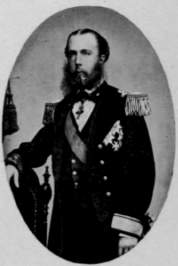
Maximilian.
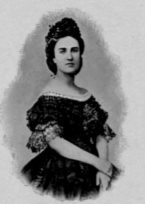
Carlotta.
Who does not recall the story of Blondel, the English monarch's favorite minstrel, who, having vainly sought him for many months, came here at last, and sang beneath these towers the verses of a song, composed partly by himself and partly by Richard ? It was a test of the presence of his master which he had often made with beating heart, but hitherto without success. Imagine then his joy, when, pausing in the refrain, he heard it taken up and finished by the royal captive. Learning thereby the place of his imprisonment, his faithful follower proclaimed it to the world, and soon the "lion-hearted" Richard was set free. Whatever truth we may, or may not, attach to this pretty legend, of Richard's imprisonment here for more than a year there is no question. Hence, when Napoleon, in the early part of the century, was riding along the Danube at this point, he looked upon the towers of Durrenstein, and, reining in his horse, exclaimed: "Those were barbarous times. How different they are now! You have beheld kings and emperors in my power, but I exacted from them neither ransom nor sacrifice of liberty. The world has seen how I have treated those whom I might have imprisoned." Who could have then imagined that the successful warrior who uttered these words was to experience at the hands of the English, on the rock of St. Helena, a captivity longer and far more desolate than that of their own sovereign in this Austrian fortress ?
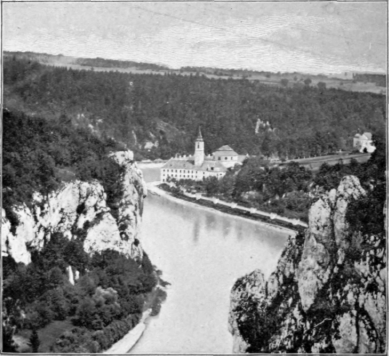
A View On The Danube.

Weitsneck On The Danube.
Few people, save those who have sailed upon the Danube, realize that it is one of the noblest, as well as one of the most important, rivers in the world. The poet Ovid, exiled to its shores, declared that the Danube did not yield in grandeur even to the Nile. From its cradle in the Black Forest, to its grave in the Black Sea, it sweeps along in majesty for sixteen hundred miles; and, like a passing sovereign, receives en route the homage and support of sixty tributaries. It is not strange, therefore, that from the time when it was the northeastern frontier of the Roman Empire, down to the present day, its banks have been the scene of desperate conflicts; and its wooded shores have echoed in succession to a score of different languages, as conquerors of various nationalities have tried to make these lands their own.
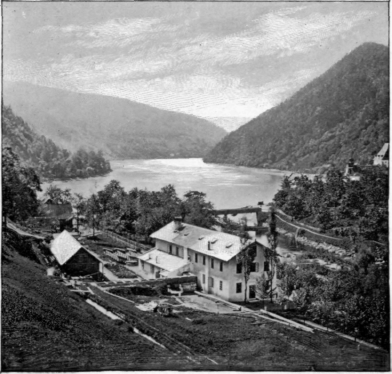
Danubian Scenery.
Continue to:


My Books

