


Vienna. Part 7
Description
This section is from the book "Vienna - John L. Stoddard's Lectures", by John L. Stoddard. Also available from Amazon: John L. Stoddard's Lectures 13 Volume Set.
Vienna. Part 7
The Strausses were born in Vienna, and the Austrian capital, therefore, proudly claims them as her own. Their works, although popular the world over, are specially enjoyed in Vienna; and if the waltz is, as it is sometimes called, the poetry of motion, all the Viennese are gifted poets in this respect. A student once assured me that he had yet to find in Vienna a single person, man or woman, in any grade of society, who was not something of a musician and a fine dancer.
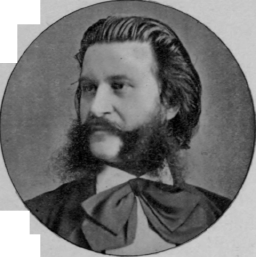
Johann Strauss.

Statue Of Schubert.
Every city, like every man, has its peculiarities sharply defined and characteristic, which give it an individuality that is well adapted to produce upon the traveler, who studies it in its varying moods, a certain definite impression, unlike that received by him from any other locality.
To the citizens of the Austrian capital, more than any other people I have ever met, can be applied the almost untranslatable adjective gemuthlich. The upper classes extend greetings with a quick, warm-hearted hospitality that is in striking contrast to the cold reserve of northern Germany; and in the middle and lower classes there seems to be a characteristic, universal merriment delightful to behold. Even the holiday crowds of France and Italy seem cold and conventional compared with those of Austria. The difference is as great as that between Strauss' waltzes and those of other composers. Listen to a fine rendering of the waltz king's "Beautiful Blue Danube," "Wine, Women, and Song," and "Artist's Life," and you will find your pulse beating in unison with that of the great heart of the Austrian Empire.
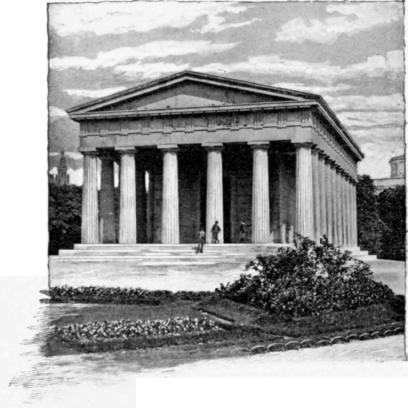
The Temple Of Theseus In The Volksgarten.
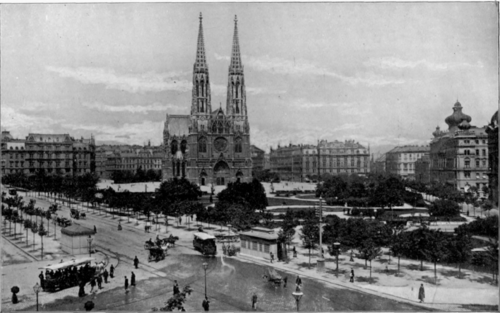
Maximilian Platz.
Well-dressed civilians, handsome officers, and pretty Viennese ladies here form a charming picture that quickens the pulse, and makes one feel good-natured toward the world. The scene is that of southern merriment and vivacity, and every one appears to be without a trace of care or sadness. At such a time we cannot wonder that the Viennese say enthusiastically of their loved capital : " Es giebt nur eine Kaiser-stadt; es giebt nur ein Wien ! " -" There's only one imperial city ; there's only one Vienna!"
Yet, as even through the melodies of Strauss there often runs a minor strain of sadness, so in the midst of all this merriment a face is sometimes seen which seems to be at variance with its surroundings. One night, as I was seated in Vienna's City Park, I perceived at a table near me a party of Americans. I recognized them all without surprise, save a young lady whom I assuredly should not have known apart from her companions; for when I had last seen her, fifteen years before, she was a little child. Her subsequent history, however, had been known to me, as one of the kind that wrecks life's happiness irretrievably, and rolls upon the sepulchre of buried hopes a massive stone. I sat and watched her altered face, while the wild, passionate music rose and fell, and, as I did so, realized sadly that the joyous girl whom I had known was dead. I could remember her as a sensitive, impressionable little creature, so close to Nature's heart that she loved and was tender to everything living, even to grass and mosses; and, in her happy innocence of evil, feared nothing on the earth, or under it, or above it. She was a plump, dimpled child, - with the pink and white of the flowers in her cheeks, and the brown and gold of autumn leaves in her flying curls and shining eyes, and the notes of the birds in her childish voice, as it rippled all day long in mirth and glee. There was the freedom of the wind in the quick movements of her tireless feet and nimble hands, and the sunshine of God was in her gladsome face, as round and shining then as a miniature sun. She loved to tell me of the fairies who slid down the moonbeams at night to visit her, swung on the spider-webs, lurked in the flower-bells, showed her their banquet halls, and told her all their secrets.
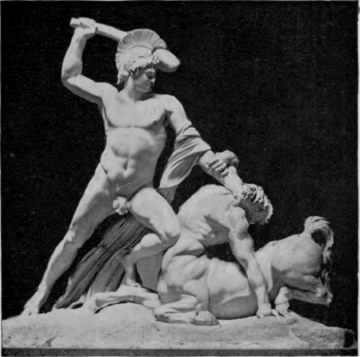
The Statue Of Theseus.
Continue to:


My Books

