


The Upper Danube. Part 6
Description
This section is from the book "The Upper Danube - John L. Stoddard's Lectures", by John L. Stoddard. Also available from Amazon: John L. Stoddard's Lectures 13 Volume Set.
The Upper Danube. Part 6

Hans Sachs, The Meistersinger.
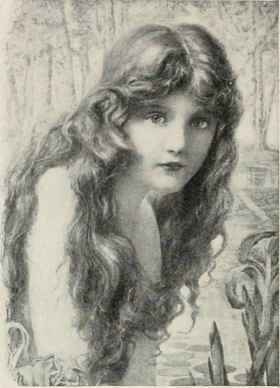
Undine. Ryland.
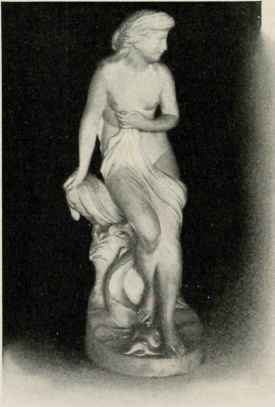
Undine Property Of Princess Salm-Sai.M, Karlsruhe.

Fountain Of Undine At Baden, Near Vienna.
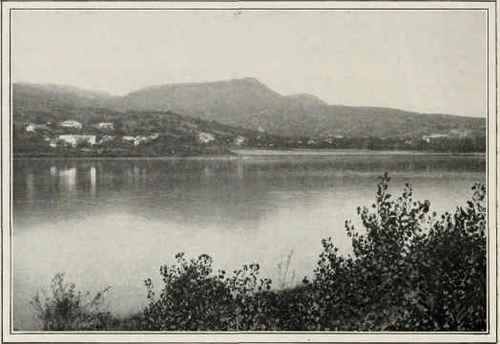
The River Of Undine.
All rivers, howsoever rich in scenery, would grow in time monotonous, could one discover on their banks no trace of man's achievements. A week upon the Amazon, when once the novelty of tropical surroundings has been lost, is hardly worth a day upon the Danube. For, as "The little pool in street or field apart Glasses the heavens and the rushing storm," so any spot, however small and poor, becomes transfigured when associated with heroic deeds, and may endear itself to millions. Such thoughts occurred to me, when halting for the night in the comparatively unimportant town of Neuburg, fifty miles from Ulm. Its situation, it is true, is picturesque, and its enormous castle, now used largely as a barrack, built upon a terrace just above the curving river, is imposing. Still, I should not have thought of lingering there but for the fact that I could drive thence easily on the morrow to the battlefield of Oberhausen, where La Tour d'Auvergne, the best-loved grenadier of France, was killed. This soldier was conspicuous even in that age of heroes - a veritable primus inter primos; and as commander of the company, known from the volcanic character of its attacks as the "Infernal Column," acquired such a reputation that his promotion to the rank of general would have been assured had not D'Auvergne preferred the purely honorable title, -"First Grenadier of the Republic".
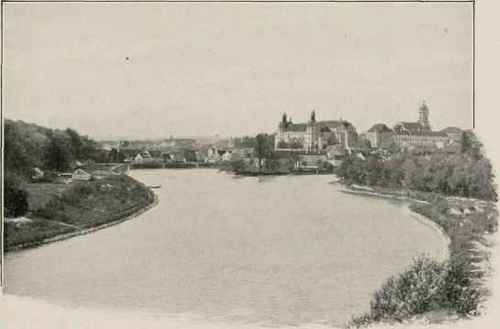
Neuburg On The Danube.
Although compelled by failing health to leave the service, he nevertheless resolved to take the place of the last son of an old friend, who had been drawn as a conscript, and once more set out for the army of the Danube carrying the musket and the knapsack of an ordinary grenadier. Here, on the 27th of June, 1800, he fell in an engagement with the Austrians, fighting bravely with his gallant troops. Such was the admiration for him in the ranks, that the drums of the regiment were for three days hung with crape, and his embalmed heart was thereafter carried into battle by his soldiers in a silver vase, as that of Bruce had been borne into conflict by his Scottish warriors, centuries before. His sword was also hung in the famous church of the Invalides in Paris; and Bonaparte - a master in the art of kindling the imagination of his followers - gave orders that from that time on, whenever the roll of his brave company was called, LaTourdAu-vergne should be commanded to appear; in answer to which summons the oldest sergeant was to step forth and, saluting, make the following reply : "Dead on the Field of Honor!"
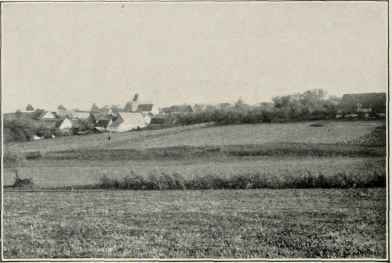
Oberhausen And The Battlefield.
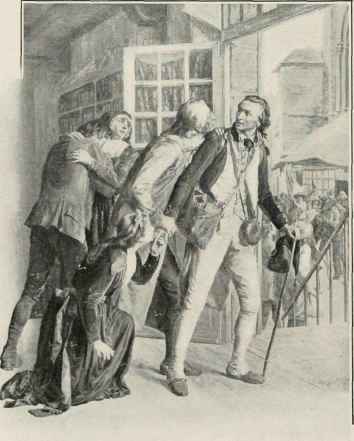
La Tour D'Auvergne Goes To War Again As Substitute For His Friend's Only Son.
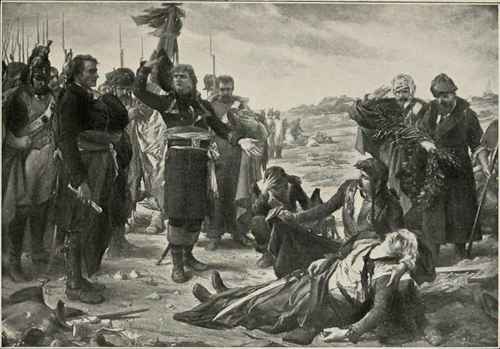
The Death Of La Tour D'Auvergne.
" ' Nay, heed not me, the hero cried, And faintly waved his hand; 'Back to the charge! till Austria's pride Be prostrate on the strand! Cherish my fame, avenge my death; To-day your laurels earn! Glory survives the loss of breath!' So died the brave D'Auvergne".
Not far from this historic site, the traveler on the Danube comes into a region rich in reminiscences, suggested by memorials of an older past. Few strangers visit it. For, since the regular tourist steamboat-service does not begin until a hundred miles below, at Passau, the Upper Danube is to many continental visitors unknown. Yet one can easily reach this portion of the stream by rail; and after taking clean, if not luxurious, lodgings in the little inn at Kelheim, can be conveyed from one attractive point in the neighborhood to another by competent and careful boatmen. In pleasant weather in the spring or autumn this mode of travel is enchanting. I know of nothing on the Rhine to equal it, because the latter river has become so thoroughly commercialized that steamers, rafts, and long flotillas make of it a crowded thoroughfare. The Danube, on the contrary, has much less traffic; and in the place to which I now allude one's rowboat floats apparently upon a mountain lake. The scenery can have scarcely changed since Trajan stood upon these shores. Huge bluffs, four hundred feet in height, have saved the banks from exploitation, and immemorial forests clothe for miles the storied hills. On entering this section of the Danube, one feels not only the dark shadow of the sombre cliffs, but also the effect of that still vaster, spiritual shadow, cast by the Roman eagle when its mighty wings, stretched to their utmost limit, overspread the world. In fact, from this point on, reminders of the Romans rise like beacon lights alone: the Danube's waves. Thus, close by a diminutive village, now called Eining, have been unearthed extensive ruins, which prove to be the remains of Abusina - the most important station of the empire on this frontier. It was the meeting place of several roads, built to connect the countries of the Rhine and Danube after the victories of Drusus, fifteen years before the Christian era. Trajan particularly strengthened it at the close of the first century. Indeed, memorials of this emperor are to be found in many places on the borders of the Danube, even as far east as Servia and Bulgaria, reminding us of his supremely difficult, but finally successful, conquest of the Dacians, the most enduring monument of which is the imposing column - girdled with two thousand five hundred figures in relief-still towering far above the site of Trajan's Forum in the Eternal City. None of the Roman fortresses upon the Danube seems to have been more highly prized than this at Abusina; for, amid all the fluctuating fortunes of repeated wars between the Romans and Germans, it was, with but three interruptions, held by the empire for four hundred years, till finally the last of the Danubian garrisons was withdrawn to meet the host of Alaric in Italy. One of the most remarkable proofs of Rome's prodigious energy is here seen in the traces of the ancient wall, which, starting from this point, extended in one long, unbroken mass over all intervening mountains, hills, and valleys for a distance of three hundred and sixty miles, to Neuweid on the Rhine! Every one knows of the similar rampart built by the Romans in the north of England; but this far longer and more difficult barrier is little spoken of save in scientific circles. I shall not soon forget my admiration and astonishment when I realized its audacious magnitude. Its height is estimated to have been from twelve to eighteen feet, according to the country's needs, and it was guarded not alone by watch-towers, built at regular intervals, but also by a moat originally lined with palisades. Behind it ran a military road, on which were castles, blockhouses, and barracks, more than one thousand of which have been identified. Moreover, since this was a very vulnerable part of the great empire, the entire boundary was patrolled by troops, continually on the alert against their wily foes. In fact, the region around Eining, including the adjacent site of an old stronghold, afterward converted into the monastery of Weltenburg, served as the principal base for operations against Germany, and to this outpost Roman fleets came up the river frequently to render aid. One sometimes thinks of the old Roman world as wholly given over to debauchery and cruelty; and certainly within the palace of the Caesars and in some large cities this was often true. But while a few of the world's rulers at that time were cruel and depraved, some of the wearers of the purple rank among the noblest and most energetic of mankind. Trajan and Marcus Aurelius, for example, have, for certain qualities, hardly been surpassed in history. Yet both these emperors fought beside the Danube, and the latter died there. It must have taken a strong character to renounce the luxuries of Rome, with all that absolute power could procure upon the Palatine, and to endure for years, as many of those leaders did, the dangers and discomforts of these savage wilds.
Continue to:


My Books

